
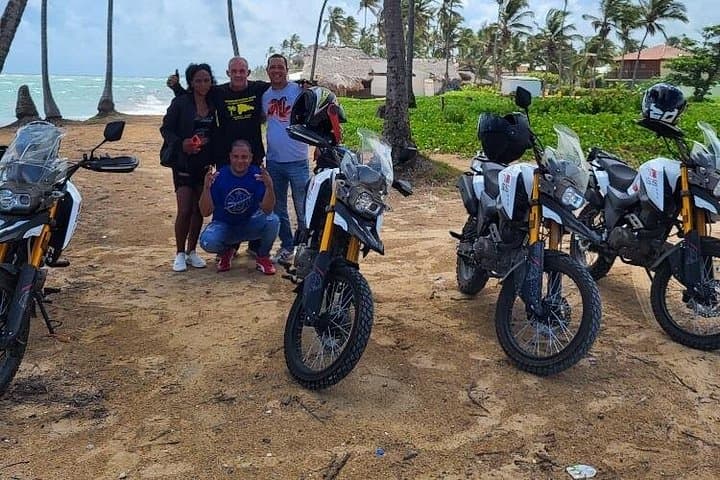
What the day feels like
You kick the starter and the world rearranges. The bike settles, a low-ready hum beneath you, and the first inhale of Caribbean air—hot, sharp with diesel and salt—feels like permission to go. You roll past rows of sugar cane that stand like green sentinels, their blades slicing the sunlight. The road peels toward the coast, and every turn reveals a different blue: lagoon, bay, horizon. By midmorning the sea begins to call, a distant, constant presence that tugs at the edges of the ride.
This is not a race. The Moto Adventure Tour in Punta Cana is calibrated for appetite rather than speed—a 150-kilometer loop that takes roughly seven hours and folds local culture, coastal panoramas, and lowland agricultural landscapes into one day. You’ll share the road with palms and pick-up trucks, cross bridges that span lazy rivers, and find a pub cupped against the Caribbean where coffee and a cold soda are offered with the same easy hospitality as the view.
History and place arrive quietly here. In San Rafael de Yuma, a museum honors one of the figures that thread through Caribbean maps: Juan Ponce de León. The surrounding hills and the mouth of the Yuma River were waypoints long before tour groups came through—native settlements, colonial trade routes, and later sugar plantations that reshaped the land and local economies. If you lean into the shoreline at Boca de Yuma, you’ll see the foundations of an old port and the remnants of coastal fortifications that once watched for corsairs and currents.
Geologically the ride is coastal plain and alluvial lowlands—flat expanses forged by rivers flowing to the sea, threaded with limestone and pockets of marl. The sugar cane fields are not only scenic; they are a signal of century-long land use that still feeds local industries and community life. The rhythm of the place is steady: wind in the cane, the sun overhead, fishermen mending nets by the bay.
Culturally, this loop is intimate. The towns you pass are small, hands-on places: roadside vendors selling fried fish and plantain chips, a fisherman repairing a net under the shade of a tamarind, a museum where a guide will explain Spanish-era navigation and local stories of survival and trade. Food tastes here are direct—seafood, tubers, and bold savories that pair naturally with a cold Presidente beer or a robust coffee in the morning.
What you get in a day is more than points on a map. There’s the tactile satisfaction of a long ride—the steady vibration under you, the wind that rearranges your hair and your plan, the micro-decisions at each bend. There’s the micro-economy of the region: a short stop at a family-run restaurant with panoramic sea views, the aroma of frying garlic and citrus, the generosity of locals used to welcoming travelers. And there’s the kind of quiet lesson only travel gives: how road and river meet, how sugar cane fields are stitched to the coastline, how history sits beside present-day life without dominating it.
Practicalities matter on a day like this. The listed price—starting at about $120 per motorcycle, typically covering one bike for up to two people—included guide services, fuel, and soft drinks, plus the coffee stop in that seaside pub. Expect to be in the saddle for about seven hours total: that’s time for two-way rides, stops, and a relaxed lunch. The road surfaces vary from paved stretches to secondary roads that may have dips and occasional gravel; a competent rider and a well-maintained bike are essentials.
Start early. Capitalize on cooler morning temps and lighter traffic. Wear layers—light, breathable fabrics that still protect against wind and sun—and a helmet that fits well. Hydration is simple but critical: even with soft drinks provided, carry a hydration pack or water bottle. And budget time to wander in San Rafael de Yuma and at Boca de Yuma—those small detours are often the most memorable parts of the day.
The tour’s tone is social and grounded. You’re in a group, but the focus is on the terrain and the towns, not an adrenaline checklist. Guides typically know the rhythm of the route—where to stop for the best light, who makes the crispiest empanada, which stretch of shoreline is worth a longer look. This makes the experience accessible to riders who enjoy exploration rather than long-distance endurance.
For photographers, the light in the late afternoon is generous: the coastline softens, the sea takes on bruised cobalt, and sugar cane fields throw long shadows that make for cinematic compositions. For culture seekers, the museum in San Rafael de Yuma and the family-run eateries along the bay provide concise, human-scaled windows into local life. For riders, the variety of road surfaces and scenery keeps attention engaged without being technically demanding.
If you want to make the day richer, combine the ride with a morning swim at a nearby beach or an afternoon visit to a local artisan market. Practice basic respect: ask before photographing people, buy a coffee or a snack from a local vendor, and keep noise—and your impact—low when passing through small communities.
At day’s end you’ll roll back toward Punta Cana with 150 kilometers recorded on the odometer and a collage of small, distinct moments stored in memory: the taste of citrus on the tongue, the sound of waves against the bay, a guide’s story about an old fort, the sway of sugar cane beside the road. It’s a day turned into an arc—simple in logistics, rich in texture—and the kind of experience that keeps a place from simply being a point on a map. It’s a reason to slow down on two wheels and look closely at what the eastern Dominican Republic has been holding in plain sight.
Trail wisdom
Small choices, better day.
Start Early
Leave at or before 8 a.m. to avoid midday heat and enjoy lighter traffic on rural roads.
Hydrate and Snack
Carry a liter of water and electrolyte snacks—stops include drinks but having your own supply keeps you comfortable between towns.
Tire and Brake Check
Confirm tire pressure and brakes before departure; some secondary roads have gravel or uneven pavement.
Local Etiquette
Ask before photographing people and buy a snack or coffee from local vendors to support small businesses.
Local knowledge
Read the place, not just the route.
Watch for native species including Brown pelican, Mangrove crabs.
Keep an eye out for wildlife during the transition between areas and habitats. Respect distance guidelines.
Many coastal and river habitats here are sensitive—avoid leaving trash, stay off fragile shoreline vegetation, and support local businesses rather than single-use plastics.
Follow the guide's instructions on size limits, ethical handling, and leave-no-trace practices.
A small family-run restaurant in Boca de Yuma with seaside seating. A short riverside walk near the mouth of the Yuma River where local fishermen assemble their boats
Locally recommended viewpoints and quiet spots known best to local operators.
The route passes through communities shaped by colonial-era trade and long-standing sugar-cane agriculture, with local museums that reference early Spanish navigation history.
Maritime roots and regional tradition shape the waterways and working coasts.
Seasonal guide
Four versions of the same landscape.
Spring
Best forMild temperatures · Lush green sugar cane · Fewer tourists
ChallengesOccasional rain showers · Variable road conditions after rain
Spring brings green fields and comfortable riding temperatures—expect brief showers that can make minor roads slick.
Summer
Best forWarm sea swims · Long daylight hours
ChallengesHigher heat and humidity · More afternoon storms
Summer is hot and humid with a higher chance of afternoon storms; rides in early morning or late afternoon are most pleasant.
Fall
Best forStable weather windows · Good light for photography
ChallengesPotential hurricane season impacts (early/late fall)
Fall offers strong light and comfortable rides but remain aware of regional hurricane advisories during the season.
Winter
Best forDry, sunny days · Peak visibility · Tourist season amenities
ChallengesHigher visitor numbers · Warmer midday temps
Winter is the optimal season for drier, sunlit days—expect more tourists but consistently good riding conditions.
Operator details
What the booking data adds.
Included
- ✓Bottled water
- ✓Tour Guide
Not included
- —Alcoholic Beverages
Good to know
- ✓Not recommended for pregnant travelers
- ✓Not recommended for travelers with poor cardiovascular health
- ✓Suitable for all physical fitness levels
- ✓to drive A driver's license is required. The trip is not suitable for small children. The child must reach the footrests of the motorcycle.
Pack with intention
What to bring.
Good to know
Common questions.
The route covers approximately 150 km and the guided tour lasts about seven hours including stops for coffee and lunch.
Plan the edges
The details that make the day easier.
Punta Cana and Boca de Yuma are in La Altagracia province, the easternmost province of the Dominican Republic, an area shaped historically by coastal trade and agriculture.
After the ride, head to a beachfront restaurant in Boca de Yuma for fresh fried fish and plantains; try a cold Presidente beer and ask about mamajuana, a local spiced drink. In Punta Cana, small seafood shacks and markets provide a direct, flavorful counterpoint to the resort scene.
- Closest airport
- Punta Cana International Airport (PUJ); Driving distance: Punta Cana to Boca de Yuma ~1.5–2 hours by road (route totals ~150 km roundtrip); Cell service: reliable in towns, patchy on secondary roads; Permits: none typically required—booking confirmation will list any specifics.
This route passes sensitive coastal and riverine habitats—pack out all trash, avoid disturbing shoreline vegetation or wildlife, and support local vendors to help the community benefit from tourism.
Explore by topic
Follow the threads.
Keep exploring
Make the story part of the trip.
Set out from Bass Harbor for a private, customizable day on Blue Hill Bay — lighthouses, puffins, seals, and the chance to feel Acadia from the water. Small groups, local captains, unforgettable views.
In four hours you can move from shaded canyon ferns to wind-scoured coastal ridgelines, guided by someone who knows where the light—and the hidden views—live. This private half-day hike on the Monterey Peninsula or Big Sur is compact, curated, and perfect for travelers who want depth without a multiday commitment.
 Related story
Beneath a sky of shifting light, Skaftafell’s ice reads like a map of time. This three-hour guided glacier hike mixes technical instruction with geology and culture: compact, safe, and unforgettable.