
What the day feels like
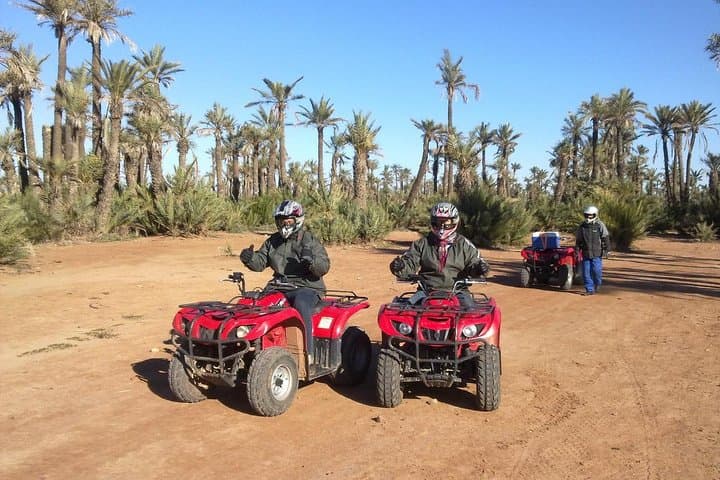
At first light the palms stand like quiet sentinels, their fronds knitting a slatted pattern across the sky. The quad’s engine warms under your palms, a low purr that promises mischief more than menace, and the desert around Marrakech seems to lean in—an audience of ochre earth, clay walls, and distant, blue-slate ridges. You point the handlebars toward a ribbon of track that threads through the Palmeraie, and the ride becomes a conversation: the machine wants speed, the palms demand respect, and the landscape keeps its secrets.
This is not a manic off-roading marathon. It is a three-hour pulse of speed, intimacy, and local color. The Palmeraie, that sprawling palm oasis to the northeast of Marrakech, is equal parts culture and ecology—an irrigated green lung made visible against the dry palette of the surrounding plains. Riding here, you pass satellite villages and fields fed by centuries-old water management, and, farther on, the foothills of the High Atlas begin to silhouette themselves. The palms whisper; the quad answers.
Geology and history are scribbled into these trails. The soils are alluvial, deposited by streams that once coursed more freely from the High Atlas. That geology makes the ground forgiving in places, firm and rutted in others, a mix that keeps the ride honest. Culturally, the Palmeraie became a cultivated refuge for Marrakech's inhabitants long before the modern tourist boom—an agricultural and social space shaped by irrigation systems, local palm cultivation, and centuries of trade. Today, quad tours thread between small hamlets and farms, giving visitors a way to see daily life without becoming an intrusion.
The tour also folds in the living landscape of the region. You’ll notice the khettaras, underground channels that have been coaxing water to the surface for generations, and you may spot elders repairing irrigation furrows. In the villages, olive and argan trees anchor courtyards, and women in bright headscarves may wave as a line of quads goes by. These human elements punctuate the ride: a child chasing a goat, the smell of wood smoke from a breakfast fire, the distant hum of the city.
For many travelers the appeal is straightforward: it’s fast, a little wild, and it reveals a side of Marrakech beyond the medina walls. But it’s also practical fun. Tour operators equip riders with helmets and a short safety brief; tracks are chosen to balance exhilaration and local sensibility, steering clear of agricultural plots and private properties. The route usually winds for about 40–60 kilometers of varied terrain—firm tracks, sandy stretches, and compact dirt lanes—over roughly three hours, with brief stops for pictures and water. If the High Atlas is visible, it offers a cinematic backdrop; when clouds or dust roll in, the mountains pull focus, lending the ride immediate drama.
What to expect physically: the terrain alternates between playful surface and serious ruts. You’ll stand on the pegs sometimes, letting your legs and core absorb shocks; other stretches call for seated control. Beginners adapt quickly—quads are stable and forgiving—but awareness is the true skill. Watch for soft sand where the machine leans and slides; respect sightlines on cambered turns; give way when local traffic or livestock appears. Guides are local people who know the tracks and the etiquette, and supporting them means your ride is safer and more authentic.
When to go matters. Spring and fall are near-perfect: warm days, cooler mornings, and dust that adds drama without choking the lungs. Summers bring heat that flattens appetite and intensity; winters can be chilly in the mornings and fine in the afternoon. Morning departures are common because the light is clean, temperatures manageable, and the Palmeraie is quieter before midday visitors arrive.
Practicalities you should not skip: a full-face or at least chin-protective helmet, goggles to keep palm dust out of your eyes, a lightweight hydration pack, and layers to peel when the desert sun climbs. Expect to pay roughly the price advertised—tours often include transfers from central Marrakech and all safety gear, but verify the inclusions on booking. Most operators promise free cancellation windows and private or small-group options for a more tailored pace.
Beyond the throttle, the Palmeraie offers quieter rewards. Disembark from the quad, and the smell of dates and olive oil seems louder. Stand beneath a mature palm and the canopy will creak like an old ship—there’s a sense of time, the steady accumulation of seasons that makes the grove feel like both refuge and archive.
A quad tour is not a replacement for walking the medina or sipping mint tea in Jemaa el-Fna. Rather, it’s a way to mix velocity with intimacy: a chance to see farming life, catch sight of local artisans, and feel the ground change under your wheels as the city recedes. For travelers who want a shot of adrenaline with cultural context—who prefer to meet a place at 25 miles per hour instead of crawling past it—this ride is a concise, efficient dose of Morocco’s layered landscape.
If you go, be curious and courteous. Learn a few Arabic or Tamazight phrases; carry small cash for local stops; ask your guide about the irrigation channels and the plants you pass. The best rides end not with spectacle but with a conversation—about where the water flows, who tends the palms, and what the horizon looks like at sunset. The Palmeraie will answer, in wind and shadow and palm dust.
Trail wisdom
Small choices, better day.
Goggles On
Wear sealed goggles to protect eyes from palm dust and sand; sunglasses alone aren’t enough.
Hydrate Early
Start with a full water bladder—three hours in the sun adds up quickly even if morning feels cool.
Respect Fields
Avoid riding over agricultural plots; follow the guide’s route to protect crops and local livelihoods.
Layer Lightly
Bring a wind layer for cool mornings and a bandana to keep dust from settling on your face.
Local knowledge
Read the place, not just the route.
Watch for native species including Desert lizards and skinks, Common kestrels hunting over open fields.
Keep an eye out for wildlife during the transition between areas and habitats. Respect distance guidelines.
Stick to marked trails, avoid riding through cultivated plots, and support operators who reinvest in local communities to reduce grazing and erosion pressures.
Follow the guide's instructions on size limits, ethical handling, and leave-no-trace practices.
Small artisan cooperatives on the edge of the Palmeraie where argan oil and woven goods are made. Quiet rooftop cafes in nearby villages offering mint tea and views of the palms
Locally recommended viewpoints and quiet spots known best to local operators.
The Palmeraie evolved as an irrigated palm oasis supporting Marrakech’s agriculture and grew over centuries using traditional khettara water systems.
Maritime roots and regional tradition shape the waterways and working coasts.
Seasonal guide
Four versions of the same landscape.
Spring
Best forPleasant temperatures · Blooming palms and agriculture · Clear mountain views
ChallengesOccasional spring dust · Variable mornings and afternoons
Spring offers the most comfortable weather, easy riding, and vivid landscape colors—ideal for morning departures.
Summer
Best forLong daylight hours · Dusty early-morning light
ChallengesHigh daytime heat · Dehydration risk
Summer rides require early starts to avoid scorching afternoons; expect strong sun and warm nights.
Fall
Best forMild temperatures · Clear skies for Atlas views · Less tourist congestion
ChallengesCooler mornings · Occasional windy days
Fall mirrors spring in comfort and scenery, with crisp air that highlights Atlas silhouettes.
Winter
Best forCrisp light for photos · Cool, comfortable afternoons
ChallengesChilly mornings · Limited daylight
Winter mornings are cool and require warm layers; afternoons warm up and make good riding windows.
Operator details
What the booking data adds.
Included
- ✓Hotel pick up and drop off
- ✓Necessary equipments (gloves, helmet,
- ✓Professional Quad guide
- ✓Transport in an Air conditioned 4wd or Minivan fuel included
- ✓Professional driver
Not included
- —Food and drinks
- —Tips and gratuities
Good to know
- ✓Not recommended for travelers with spinal injuries
- ✓Not recommended for pregnant travelers
- ✓Specialized infant seats are available
- ✓Not recommended for travelers with poor cardiovascular health
- ✓Suitable for all physical fitness levels
- ✓Children must be accompanied by an adult
- ✓Dress code is smart casual
- ✓A minimum of 2 people per booking is required
- ✓Children under 16 must be with an adult
Pack with intention
What to bring.
Good to know
Common questions.
The standard experience lasts about three hours, including brief stops for photos and short breaks.
Plan the edges
The details that make the day easier.
The Palmeraie of Marrakech is irrigated by traditional khettara systems—underground channels that have supplied water to the oasis for centuries.
After the ride, head into the Medina for a tagine and mint tea or visit a riad terrace for sunset. For a Palm-Grove dinner, nearby restaurants and performance venues offer Moroccan cuisine and folklore shows; try local olive oil and fresh-date desserts.
- Closest airport
- Marrakech Menara (RAK); Driving distance to Palmeraie: ~15–30 minutes from central Marrakech; Cell service: generally good near the city, intermittent on remote tracks; Permits: none for tourist tours, but respect private property and local farming areas
Choose operators who avoid agricultural plots and limit group sizes; pack out packaging, avoid disturbing irrigation ditches, and consider tipping local guides directly to support community livelihoods.
Explore by topic
Follow the threads.
Keep exploring
Make the story part of the trip.
Set out from Bass Harbor for a private, customizable day on Blue Hill Bay — lighthouses, puffins, seals, and the chance to feel Acadia from the water. Small groups, local captains, unforgettable views.
In four hours you can move from shaded canyon ferns to wind-scoured coastal ridgelines, guided by someone who knows where the light—and the hidden views—live. This private half-day hike on the Monterey Peninsula or Big Sur is compact, curated, and perfect for travelers who want depth without a multiday commitment.
 Related story
Beneath a sky of shifting light, Skaftafell’s ice reads like a map of time. This three-hour guided glacier hike mixes technical instruction with geology and culture: compact, safe, and unforgettable.