
What the day feels like
You step off the plane and the wind announces Baku before the city does. It arrives across the Caspian with a dry, salt-tinged insistence that tugs at your jacket and pushes you toward the water. In the distance the Flame Towers catch the light like three cupped hands; in the Old City the stone alleys hold the warm, smoky smell of kitchens and tea. This is a short trip that feels long: three days of compact discoveries that move from urban grit to geological oddity and back again.
On a Short Break Adventure Tour, the narrative is as much about the elements as it is about monuments. Azerbaijan has been called the Land of Fire for good reason. Natural gas seeps in places like Yanar Dag and the Ateshgah Fire Temple have been burning for centuries, a geological curiosity that became the basis of local ritual and industry long before modern petroleum extraction. Walk through Icherisheher, the medieval walled Old City, and you encounter a layering of empires: Persian, Russian, Ottoman and Soviet marks overlap in stone, script and cuisine. Then drive outward to the low, rolling steppe where volcanic mud domes spatter the earth and Gobustan's carved cliffs keep mute witness to millennia of human movement.
Geology here is tactile. The Caspian basin sits below sea level, and oil and gas have pooled under these plains for eons. Where pressure finds a seam, it escapes as flame or bubbling mud. The region's mud volcanoes are not alpine spectacles; they are odd, stubbled moonscapes that look improvised by nature. They are quick to put a tactile hook in you: the glossy, saline crust, the hot steam, the smell of sulfur turning slowly familiar. Culturally, these phenomena shaped cosmology and commerce. Local communities used seep oil for lighting long before wells and refineries transformed the landscape and economy.
This tour is not a mountaineer’s epiphany or a wilderness endurance test. It is a curated compression of Azerbaijan's highlights that rewards curiosity and a readiness to move. Expect a pace that mixes city walks of a few miles with short drives to sites that are often only an hour or two from central Baku. The practicalities are pleasingly simple: most roads are paved, the sites have modest paths, and daily elevation gain is minimal, though there are rocky surfaces and uneven steps at heritage sites.
Why travel here now? For many, it's the collision of old and new. Baku's waterfront promenade is modern and confident, lined with cafes and cyclists, and yet you can duck into a centuries-old caravanserai for black tea poured from a tall silver pot. The price point of this packaged experience also makes it accessible: three days to see the arc of Azerbaijani identity without an exhausting itinerary.
Practical notes that matter. Weather can be decisive; spring and fall deliver the most comfortable temperatures, while summer brings sharp sunshine and winter can be windy and surprisingly cold, given the city's maritime position. Shoes with good grip are wise for uneven cobbles and mud volcano edges. Bring cash in local currency for small purchases, and a phrasebook or translation app; English will be common at major sites but patchy elsewhere. Respect for religious sites and local dress norms goes a long way toward a smoother visit.
Itinerary highlights typically include the Old City with its winding alleys and Maiden Tower, the Heydar Aliyev-designed waterfront and modern skyline, the burning fields of Yanar Dag and the Ateshgah Fire Temple where pilgrims once tended eternal flames, and the stark, UNESCO-protected petroglyphs of Gobustan with nearby mud volcanoes. Each stop offers a different register of experience: architectural intimacy, industrial geology, ritual history and raw natural wonder.
On the logistics side, this is an ideal first trip to the South Caucasus. The tour is often sold as a private or small-group experience, making it lively and flexible. If you prefer to walk more slowly through museums or linger over lunch, speak with your guide in advance; a good local guide is the difference between a checklist and a story-backed experience.
Safety is straightforward but active: stay hydrated in summer, mind road speeds between small towns, and avoid getting too close to active mud vents or unmanned gas seeps. For conservation, do not take samples from mud volcanoes or remove artifacts from cultural sites. These are fragile features and part of a shared landscape that benefits from respect.
Three days gives you the rhythm of a place: a morning market, an afternoon of geological oddities, evenings spent sampling plov and kebabs in a neighborhood restaurant. It’s compact travel with room for unexpected sidesteps, an excellent primer for a longer return trip into the Caucasus mountains or the ancient silk-road towns inland.
Trail wisdom
Small choices, better day.
Hydrate and protect from sun
Carry at least 1.5 liters of water daily and use sunscreen and a wide-brimmed hat, especially from late spring through early fall.
Sturdy shoes
Wear shoes with good grip for cobbled alleys and uneven volcanic terrain.
Carry small local cash
Bring some Azerbaijani manat for tea houses, tips, and small entrance fees where cards aren’t accepted.
Dress respectfully at religious sites
Bring a light scarf to cover shoulders when visiting temples or mosques.
Local knowledge
Read the place, not just the route.
Watch for native species including Steppe birds such as larks and eagles, Caspian seal along the broader Caspian Sea if you take coastal excursions.
Keep an eye out for wildlife during the transition between areas and habitats. Respect distance guidelines.
Mud volcanoes and petroglyph sites are fragile; avoid removing samples and stick to marked paths to protect archaeological and geological features.
Follow the guide's instructions on size limits, ethical handling, and leave-no-trace practices.
A quiet teahouse tucked inside Icherisheher for afternoon tea. A low bluff viewpoint on the seafront promenade for sunset and lights of the Flame Towers
Locally recommended viewpoints and quiet spots known best to local operators.
The region’s oil and gas seepages fueled religious flame worship and early industry; sites like the Ateshgah reflect that continuity between natural geology and culture.
Maritime roots and regional tradition shape the waterways and working coasts.
Seasonal guide
Four versions of the same landscape.
Spring
Best forcomfortable temperatures · wildflower displays · city walking tours
Challengesoccasional rain · windy days
Spring is often the most pleasant season with mild temperatures ideal for walking Baku’s Old City and nearby field trips.
Summer
Best forlong daylight hours · seafront dining · mud volcano visits when paths dry
Challengesstrong sun · busy tourist crowds
Summer brings heat and clear skies; plan early starts and stay hydrated to avoid the midday heat.
Fall
Best forcomfortable touring · clear visibility for landscape views · harvest-season food
Challengescooler evenings · shorter days
Fall mirrors spring’s comfort with crisper air and fewer crowds, making it ideal for culture and geology stops.
Winter
Best foroff-season rates · moody coastal skies
Challengeswind, occasional storms · limited daylight
Winters are mild but windy; some outdoor sites may be less pleasant, but museums and cafes are lively.
Operator details
What the booking data adds.
Included
- ✓Entry Fees: The Complex of Shirvanshahs` Palace, Gobsustan Rock Reserve, Yanardagh, Ateshgah
- ✓Hotel pickup and drop-off with Air-conditioned vehicle
- ✓Airport Transfers (Arrival & Departure)
- ✓Taxi Fee to Mud Volcanoes
- ✓Professional Licensed Guide & Driver Service
Not included
- —Meals & Drinks
- —Personal Expenses
- —Accommodation
- —Things not marked in the includes list
Good to know
- ✓Suitable for all physical fitness levels
Pack with intention
What to bring.
Good to know
Common questions.
Guides typically speak English and Russian; check in advance if you need another language and the tour operator may arrange a translator.
Plan the edges
The details that make the day easier.
Baku is the lowest-lying national capital in the world, sitting roughly 28 meters below sea level.
After a day of stone and flame, sit down for plov and kebabs with Azerbaijani black tea. Visit a neighborhood teahouse for a late-afternoon pause and try local pastries with sweet tea; small family-run restaurants often offer the truest flavors.
- Closest airport
- Heydar Aliyev International Airport (GYD); Base city
- trailhead
- central Baku; Driving from Baku to nearby sites: typically 30–90 minutes; Cell service: good in city, patchy in remote lowland areas; Permits: none required for standard tourist sites, entrance fees may apply to some locations.
Natural gas seeps, mud volcanoes and petroglyphs are sensitive; do not remove materials, avoid off-trail walking, and choose local guides to support community-based tourism.
Explore by topic
Follow the threads.
Keep exploring
Make the story part of the trip.
In four hours you can move from shaded canyon ferns to wind-scoured coastal ridgelines, guided by someone who knows where the light—and the hidden views—live. This private half-day hike on the Monterey Peninsula or Big Sur is compact, curated, and perfect for travelers who want depth without a multiday commitment.
 Related story
Beneath a sky of shifting light, Skaftafell’s ice reads like a map of time. This three-hour guided glacier hike mixes technical instruction with geology and culture: compact, safe, and unforgettable.
 Related story
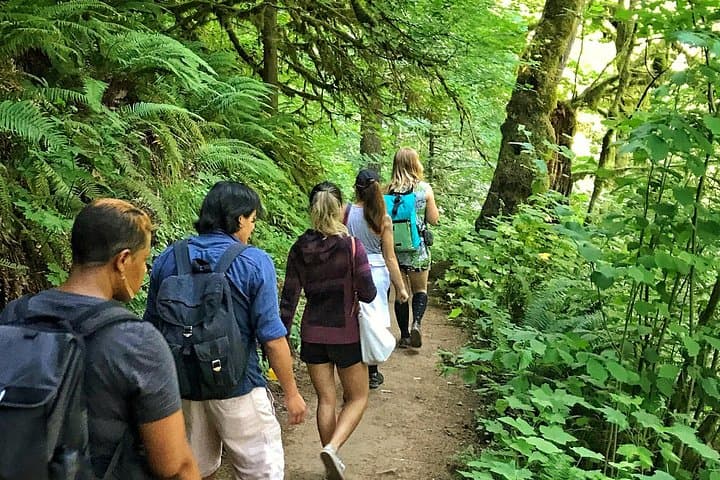
Lose the city for a few hours without leaving it: this 5-mile, 900-foot-gain Forest Park loop threads old-growth pockets, city viewpoints, and cultural landmarks for a compact taste of Portland’s wild side. Expect moss, roots, and stories.