
What the day feels like
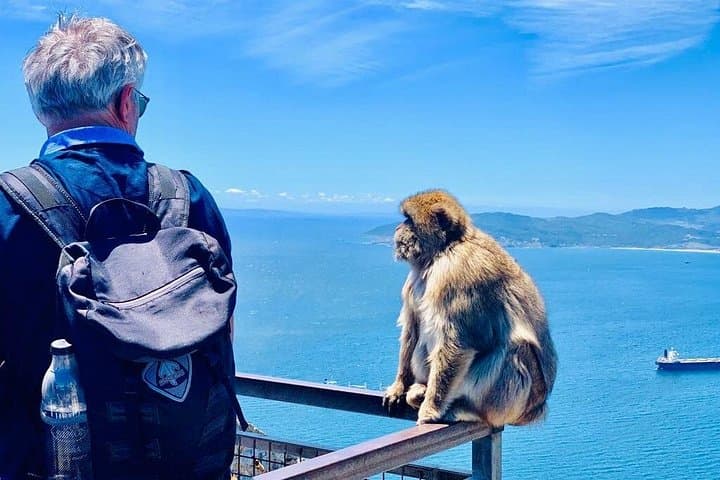
The Rock announces itself long before you touch its limestone flank. Crossing the border from Spain, you walk past the unlikely runway checkpoint, the breeze arriving salted and insistent, pushing you toward the prow of the peninsula. A levante cloud drapes over the summit like a cap, the Strait purring below, and Gibraltar’s macaques—those quick-eyed, street-smart locals—hold court on the guardrails as if they own the place. In a way, they do. On the Standard Tour of Gibraltar, helmed by an official local guide who’s been showing travelers around since 1992, the territory’s contrasts sharpen into focus: British yet Mediterranean, ancient yet humming, all carved into a story-rich monolith that has watched empires pass like ships in the tide.
Your guide’s van climbs the steep switchbacks into the Nature Reserve, the city falling away into a cluster of rooftops and bastions. The Rock leans into the sky—Jurassic limestone riddled with more than 200 caves, a karst cathedral lifted by tectonic drama. First stop: St. Michael’s Cave. Inside, cool air shakes off the sun. Stalactites reach down like an organ’s pipes; flowstone drapes and columns glow with subtle, color-washed light. The cave has seen Roman myth and World War II strategy (a secret military hospital was prepared here and never used), and even now the walls seem to hum with stories. Outside, the macaques—Europe’s only wild monkey population—play their own games, testing zippers, posing for photos, reminding you that this is their stage. Keep food tucked away; they are curious, quick, and hilariously confident.
At the top, the lookout puts everything in context. The Strait of Gibraltar doesn’t just separate continents; it stitches them together. Africa rises across the water in a blue haze; the Atlantic pushes forward, daring the Mediterranean to hold its line. On windy days, whitecaps race like a cavalry charge. Your guide names the promontories—Jebel Musa in Morocco, the ships anchored mid-channel—and notes the flight paths of migrating raptors, a seasonal sky parade that follows thermals along the cliffs. The Rock’s role in history clicks into place: the Pillars of Hercules to the ancients, the keystone of naval power to the British, a refuge and crossroads to everyone in between.
The van descends to the Moorish Castle’s Tower of Homage, its crenellations weathered by centuries of siege and salt. You hear about the 18th-century Great Siege, when Gibraltar endured nearly four years of bombardment and blockade. The place has a resilient posture—part fortress, part maritime hub—and yet it’s not all cannon and stone. There’s a softer register in the Llanito chatter on Main Street, in the colorful doorways, in a cup of tea placed next to a plate of fried boquerones. Gibraltar’s culture is a blend of British order and Mediterranean ease, with a Moroccan breeze drifting across the Strait for good measure.
The Standard Tour is efficient by design—about 1 hour and 45 minutes that hits the greatest hits without feeling rushed. That’s thanks to the choreography of someone who knows traffic patterns, sea fog moods, and when the macaques are most active. The highlights stack up neatly: St. Michael’s Cave, the Apes’ Den, sweeping vantage points, and Europa Point. At the territory’s southern tip, the lighthouse stands guard where waters meet, its red-and-white cylinder interrupting the blue-on-blue horizon. The Ibrahim-al-Ibrahim Mosque rises nearby, a striking nod to Gibraltar’s Muslim community and the area’s broader crossroads identity. When the wind is up—often—it has opinions, tugging at your shirt, urging you to lean toward the sea.
And yes, the beaches: tucked coves of pale sand on the Mediterranean side, with Catalan Bay’s pastel-hued houses watching over fishermen’s skiffs. Though many visitors simply pass through on day trips, this is a place worth lingering. Eat at the pubs lining Casemates Square, where the fortress walls frame late light and conversation. Walk the alleys. Let the Rock redraw your idea of a borderland—less a line, more a living seam.
Practicalities are straightforward. Border crossing requires a valid passport and often a few extra minutes for queues, especially in summer. The terrain is mostly seated touring with short walks to viewpoints and steps inside St. Michael’s Cave; sturdy shoes help. The van is comfortable, and the pacing works for families, cruisers with tight windows, and anyone who prefers curated stories to following a map. Your guide flips seamlessly between English and Spanish, sometimes in the same sentence, the way this place naturally does. If you’re curious, ask about the Windsor Suspension Bridge or the Great Siege Tunnels; guides can adjust stops for private tours if time and traffic allow.
By the time you roll back toward town, the Rock feels less like a postcard and more like a character you’ve met. It lifts its cloud cap, revealing more than you expected; it nudges you to look past the headline attractions into the layered past and the daily rhythms; it sends the wind to keep you honest. It’s not the longest tour you’ll ever take, but it stays with you—the taste of brine in the air, the look a macaque gives you, the way continents share a horizon as if it were a table between old friends.
For travelers who want an experience that’s both vivid and efficient, the Standard Tour of Gibraltar does exactly what it promises: it brings the Rock to you—its stories, its quirks, its edges—without wasting a minute.
Trail wisdom
Small choices, better day.
Bring Your Passport
You’ll cross an international border; carry a valid passport and allow extra time for queues during peak hours.
Hands Off the Monkeys
Keep food sealed and give Barbary macaques space—no feeding, no touching. They’re fast and protected by law.
Footwear for Caves and Viewpoints
Wear sturdy shoes with grip—St. Michael’s Cave has damp steps, and viewpoints can be uneven underfoot.
Wind at Europa Point
Expect strong gusts at the lighthouse—pack a light layer and secure hats and loose items.
Local knowledge
Read the place, not just the route.
Watch for native species including Barbary macaques, Peregrine falcons.
Keep an eye out for wildlife during the transition between areas and habitats. Respect distance guidelines.
The Barbary macaques are protected; feeding them harms their health and behavior. Stick to marked paths in the Nature Reserve and pack out all litter.
Follow the guide's instructions on size limits, ethical handling, and leave-no-trace practices.
Windsor Suspension Bridge for a short, scenic walk between ravines. Great Siege Tunnels to understand Gibraltar’s defensive ingenuity
Locally recommended viewpoints and quiet spots known best to local operators.
Gibraltar’s Tower of Homage dates to the 14th-century Marinid dynasty, while the Rock’s WWII network prepared St. Michael’s Cave as an emergency hospital that was never used.
Maritime roots and regional tradition shape the waterways and working coasts.
Seasonal guide
Four versions of the same landscape.
Spring
Best forMild temperatures · Clear views · Migratory birds
ChallengesOccasional showers · Variable winds
Spring brings comfortable touring weather, wildflowers on the cliffs, and strong visibility across the Strait.
Summer
Best forBeach time after the tour · Long daylight · Consistent schedules
ChallengesHeat and humidity · Crowds · Levante fog can reduce views
Hot and busy; start early or late to beat heat and queues, and expect occasional sea fog from easterly winds.
Fall
Best forWarm seas · Fewer crowds · Soft golden light
ChallengesChance of storms · Unpredictable winds
Autumn eases the crowds and heat while keeping sea temps inviting; brief weather fronts can roll through.
Winter
Best forQuiet sites · Crisp air · Dramatic skies
ChallengesShort daylight · Rainy spells · Chilly wind at viewpoints
Winter is calm and moody with occasional rain; dress in layers for cool winds, especially at Europa Point.
Operator details
What the booking data adds.
Included
- ✓All taxes, fees and holding charges
- ✓Tickets to the Gibraltar Nature Reserve
- ✓4 Sites included in this Tour
- ✓English and Spanish speaking Guide
- ✓Small Tour Group
Good to know
- ✓Infants and small children can ride in a pram or stroller
- ✓Service animals allowed
- ✓Infants are required to sit on an adult’s lap
- ✓Specialized infant seats are available
- ✓Suitable for all physical fitness levels
Pack with intention
What to bring.
Good to know
Common questions.
Yes. Gibraltar is a British Overseas Territory with border control; carry a valid passport and allow time for crossing.
Plan the edges
The details that make the day easier.
Gibraltar hosts Europe’s only wild monkey population—the Barbary macaques—likely introduced centuries ago and now legally protected.
After your tour, grab fish-and-chips or a pint in Casemates Square, then wander to Queensway Quay for waterfront tapas as the masts tint gold at sunset. For a cultural detour, visit the Ibrahim-al-Ibrahim Mosque at Europa Point or the Gibraltar National Museum to connect the day’s sights with deeper context.
- Closest airport
- Gibraltar International (GIB); Malaga (AGP) is about 1.5–2 hours by car. Typical pickup: border, cruise port, or central hotels. Expect good cell coverage but potential roaming charges. No special permits required; carry your passport for border control and allow extra time in peak season.
You’re touring the Gibraltar Nature Reserve—pack out all litter, keep food away from macaques, and stay on designated paths to protect fragile limestone habitats.
Explore by topic
Follow the threads.
Keep exploring
Make the story part of the trip.
 Related story
Less than two hours from Nairobi, Kereita Forest pairs hands-on canopy adventure with quiet montane trails and a sobering colonial history—perfect for families, teams, and curious travelers seeking a full-day pulse of nature.
Set out from Bass Harbor for a private, customizable day on Blue Hill Bay — lighthouses, puffins, seals, and the chance to feel Acadia from the water. Small groups, local captains, unforgettable views.
In four hours you can move from shaded canyon ferns to wind-scoured coastal ridgelines, guided by someone who knows where the light—and the hidden views—live. This private half-day hike on the Monterey Peninsula or Big Sur is compact, curated, and perfect for travelers who want depth without a multiday commitment.