
What the day feels like
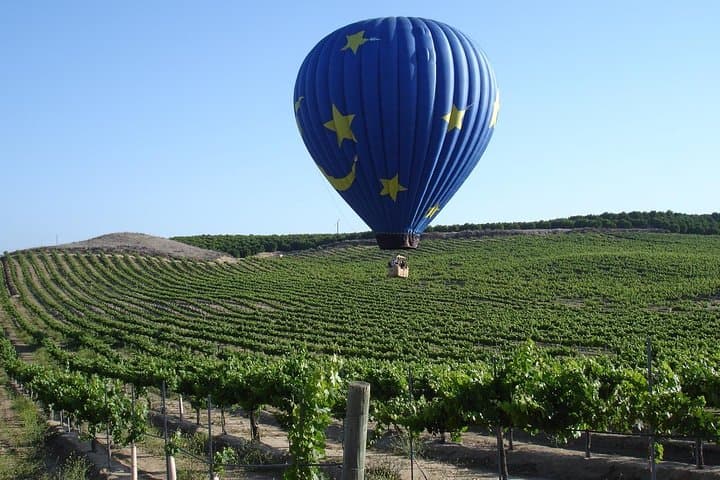
The wind arrives with a whisper in Temecula Valley, not a gale but a polite invitation: come rise. You meet the balloon at that blurred hour before sunbreak, when the vineyards are a patchwork of shadow and silver dew. Crews bend to the canvas like seamstresses unrolling a giant sleeping animal. The burner coughs and the envelope swells; heat lifts fabric, and the valley — a landscape of irrigated rows, oak-studded hills and low, domestic mountains — leans forward as if to peek.
Boarding is deliberately ceremonial: a light-footed hop or, when the operator’s basket has a door, a walk-on ease that keeps the ritual accessible for anyone not wanting to climb a five-foot wall. Then, for roughly an hour suspended above the Temecula Wine Country, the scene simplifies. Vine rows resolve into lines of human intention; the freeway becomes a ribbon pulled taut; fog fingers the lowest canyons and releases them. The pilot negotiates thermals and gentle eddies with patient skill, and the balloon becomes a quiet observatory moving with the air rather than against it.
This shared flight — a three-hour experience on the books, priced from about $179 per person — is part spectacle, part soft engineering. The pilot becomes a storyteller, translating wind and topography into a route for the day. A professional photographer aboard or on the ground captures those easy grins and champagne-toasted landings, so you leave with more than a memory: you leave with a set of images that feel like proof you were small and in the right place.
Temecula’s valley is young in geologic terms but rich in human history. Long before vineyards appeared in the 20th century, the Luiseño people lived here, tending acorn groves and moving seasonally across the land. European settlers established more permanent agriculture, and the valley’s modern identity shifted again in the 1960s and ’70s toward grape-growing. Today, more than 40 wineries and tasting rooms make the region a magnet for weekenders from Southern California, and the aerial perspective reframes the industry: vineyards that look orderly from the ground reveal the microtopography that makes each block unique.
The balloon ride is as much a cultural vignette as a scenic one. Landings are negotiated over private property and farm fields with the cooperation of local ranchers and vintners; pilots are often longtime community members familiar with early-morning tractor schedules and local cattle gates. That neighborly choreography is part of the ride’s practical charm — the crew’s pickup truck and trailer arrive to gather you like a small traveling circus.
For travelers, the appeal is clear: an effortless high-adrenaline moment without the physical strain of climbing or paddling. It’s accessible to families, couples, and solo travelers who want a nontechnical aerial escape with a social finish. The shared aspect lowers cost and provides a friendly, group dynamic that eases any nerves.
Practicalities matter here. The Viator listing notes a 150-minute total duration (about 2.5 hours), instant confirmation, professional photos, and a weight fuel surcharge policy — $25 if a passenger is over 225 lbs., $50 over 255 lbs., collected at check-in. Crews often require a pre-dawn meeting time for a sunrise lift; bring a jacket even on warm days because the air can be surprisingly crisp at altitude. Wear closed-toe shoes — you’ll be standing for the flight and walking across uneven fields at landing. Operators take safety seriously and will brief you on how to brace for a landing and where to hold the basket.
Timing is everything. Early morning flights maximize calm air and give the valley that luminous, honeyed light photographers dream about. Book far in advance for weekends and holidays — these shared flights are flagged as likely to sell out — and expect cancellation windows if the weather refuses to cooperate. The pilot’s call is final: better a grounded tour than a rushed, choppy ascent.
Practical tips: hydrate before you arrive (it’s still easy to underestimate morning sun and elevation), stow small loose items so they don’t blow away at landing, and put your phone on airplane mode — you won’t be using data at 1,500 feet, but you will want photos. If mobility is a concern, check the basket type: many baskets have walk-on doors, removing the need to climb.
Beyond the basket, Temecula rewards an unhurried day. Many flights wrap with a bubbly toast and a drive back to Old Town Temecula or a nearby winery. Spend the afternoon chewing over varietals at tasting rooms, poking through antique shops, or grabbing a lunch of farm-to-table small plates. For travelers who like to thread activities together, a sunrise balloon followed by a vineyard lunch and a late-afternoon hike on local trails makes a fulfilling 24-hour adventure.
Is it for you? If you crave drama without exertion, a fresh perspective on California’s inland wine country, and a tidy dose of storytelling with your travel snaps, yes. The ride balances airy romance with grounded logistics: check weight policies, dress in layers, and plan for early starts. Do that and the valley will reward you with a morning that feels both private and public — a communal ascent over a landscape that has learned how to be cultivated without losing its capacity to surprise.
In short, Temecula’s shared hot-air balloon ride is an elegant, low-impact way to get above the region’s textures and rhythms. It’s a reminder that some of the best vantage points are earned not by effort of the legs or hands, but by trusting the air and those who read it well.
Trail wisdom
Small choices, better day.
Dress in layers
Temperatures drop at altitude and in the pre-dawn; a light jacket and long sleeves are wise even on warm days.
Wear sturdy shoes
You'll stand for the flight and may walk uneven field ground at landing — closed-toe shoes protect ankles and toes.
Arrive hydrated
Bring water and avoid heavy meals right before the flight to stay comfortable with early starts and gentle motion.
Check weight policy ahead
Operators charge a fuel surcharge for passengers over specified weights; confirm and be prepared to settle surcharges at check-in.
Local knowledge
Read the place, not just the route.
Watch for native species including Red-tailed hawk, Mule deer.
Keep an eye out for wildlife during the transition between areas and habitats. Respect distance guidelines.
Pilots coordinate landings with local landowners to minimize disturbance; choose operators who practice leave-no-trace and respect private property.
Follow the guide's instructions on size limits, ethical handling, and leave-no-trace practices.
Early-morning vantage points in Vail Lake area for post-flight photos. Small family-run tasting rooms off De Portola Road with fewer crowds
Locally recommended viewpoints and quiet spots known best to local operators.
Temecula Valley was historically inhabited by the Luiseño people; modern viticulture expanded here in the late 20th century and the region is now a recognized AVA.
Maritime roots and regional tradition shape the waterways and working coasts.
Seasonal guide
Four versions of the same landscape.
Spring
Best forWildflower views · Mild temperatures
ChallengesMorning fog · Occasional spring wind
Spring brings green hills and wildflowers; mornings can be foggy so flights occasionally cancel or reschedule.
Summer
Best forLonger daylight · Stable summer mornings
ChallengesWarmer afternoons · Possible heat later in the day
Summer yields predictable early-morning conditions ideal for flights, but bring sun protection for post-flight time in vineyards.
Fall
Best forCrisp mornings · Wine harvest activity
ChallengesVariable harvest traffic · Cooler temperatures
Fall is prime for excellent light and harvest scenes below; book early as weekends fill with wine-country traffic.
Winter
Best forClear, still days · Fewer crowds
ChallengesCooler air heats needed · Higher cancellation chance from storms
Winter flights can be serene and uncrowded but be prepared for chilly pre-dawn starts and occasional weather holds.
Operator details
What the booking data adds.
Included
- ✓Two for one wine tasting tickets to 6 local Temecula wineries
- ✓Champagne or Mimosas
- ✓Bottled water
- ✓Individually wrapped breakfast items as part of a continental breakfast
- ✓Free souvenir pictures and a commemorative flight certificate
Not included
- —Gratuities
- —Weight fuel surcharge of $25 if over 225 lbs. (to be paid directly on site)
- —Weight fuel surcharge of $50 if over 255 lbs. (to be paid directly on site)
- —Weight fuel surcharge of $75 if over 300 lbs. (to be paid directly on site)
Good to know
- ✓Not recommended for travelers with spinal injuries
- ✓Not recommended for pregnant travelers
- ✓Not recommended for travelers with poor cardiovascular health
- ✓Suitable for all physical fitness levels
Pack with intention
What to bring.
Good to know
Common questions.
The full experience is about 150 minutes (roughly 2.5 hours) with approximately 45–60 minutes airborne, depending on wind and route.
Plan the edges
The details that make the day easier.
Temecula Valley American Viticultural Area (AVA) was recognized in 1984 and today includes more than 40 wineries — a big reason the valley is famous for its aerial vineyard patterns.
After your flight, head to Old Town Temecula for hearty brunch patios and craft breweries, or drive into the Wine Country for a tasting flight at Wilson Creek or a quieter boutique room — many wineries offer picnic lawns perfect for lingering after a morning in the air.
- Closest airport
- Ontario International (ONT) ~50 miles; Driving from Los Angeles: ~85 miles; Meeting
- launch sites vary across Temecula Wine Country (operator will confirm); Cell service
- generally reliable; Permits: none for passengers, but pilots coordinate landowner permissions and collect on-site weight surcharges.
Support operators who follow local land-use agreements, minimize fuel burn by efficient routing, and practice leave-no-trace on landing sites; avoid releasing confetti or balloons that can harm wildlife.
Explore by topic
Follow the threads.
Keep exploring
Make the story part of the trip.
Set out from Bass Harbor for a private, customizable day on Blue Hill Bay — lighthouses, puffins, seals, and the chance to feel Acadia from the water. Small groups, local captains, unforgettable views.
In four hours you can move from shaded canyon ferns to wind-scoured coastal ridgelines, guided by someone who knows where the light—and the hidden views—live. This private half-day hike on the Monterey Peninsula or Big Sur is compact, curated, and perfect for travelers who want depth without a multiday commitment.
 Related story
Beneath a sky of shifting light, Skaftafell’s ice reads like a map of time. This three-hour guided glacier hike mixes technical instruction with geology and culture: compact, safe, and unforgettable.