
What the day feels like
Morning light slides across Pack Square like a curtain lift, warming the limestone facades and waking the city’s Art Deco grin. The Blue Ridge ridgelines hold the horizon, a quiet amphitheater around Asheville’s downtown stage. You gather at the heart of it with a small group, shoes on concrete, ready to let the streets do the talking. Your guide is a historian, the kind who can read cornices like footnotes and treat brickwork as a primary source. One hour, one square mile—or close to it—and a century of boom, bust, and stubborn resilience written in stone.
Asheville’s story rises with the railroad, which arrived in 1880 and pulled this mountain town from isolation into prominence. The streets you’ll walk follow a timeline: ornate Victorians shoulder up to sleek Art Deco towers, and modern infill bows to the past with respectful lines. You’ll likely pause at the S&W Building, its teal terra cotta flashing like a peacock feather, and trace the edges of the Grove Arcade, a 1929 dream that survived decades of dormancy to become a bustling market. Even the air seems to carry the city’s layered persistence—you’ll hear how Asheville chose to pay its Great Depression debt in full, a decision that slowed development but preserved the bones of downtown when other cities were trading heritage for parking lots.
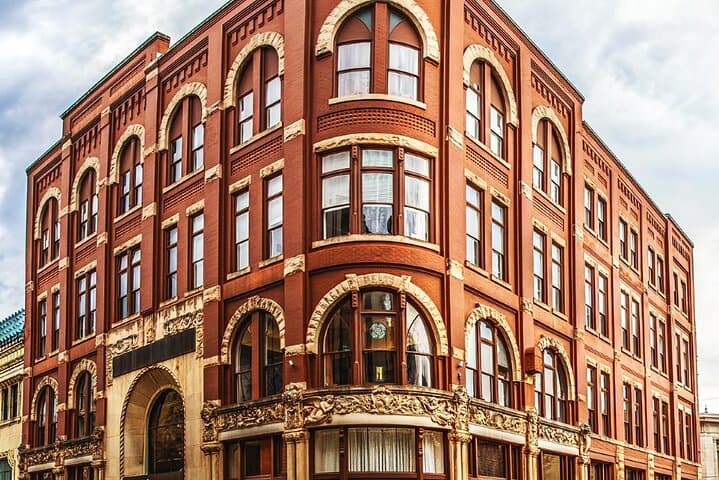
Stand on a corner off Pack Square and look up: geometry leans into sunlight, and a façade becomes a timeline. Your guide points out bas-reliefs that mirror mountain forms, the repetition of arches that echo the rhythm of an old Southern train. Around another corner, the Flat Iron sculpture nods toward the Flatiron Building’s wedge-shaped elegance, a playful tribute to an urban quirk born of converging streets. Even on the move, the city invites you to linger. Window reflections create accidental collages: old neon over new coffee shops, a century-old cornice perched above a mural painted last spring. The sidewalks carry conversations for blocks—architecture daring you to look closer, history asking for a reread.
This is a walking tour with a dose of mountain air. The French Broad River, older than the hills it snakes through, paces the city from the west like a patient companion. You’ll feel the slope in your calves in places—Asheville’s downtown rolls gently, a reminder that even urban miles can have a little altitude. Stop by the Basilica of Saint Lawrence if time permits; it isn’t always part of a short tour, but its clay tile domes, built by master craftsman Rafael Guastavino, seem to float. Your guide may talk about how his fireproof tile vaulting changed American architecture, and how Asheville, improbably, became one of its most beautiful survivors.
You come for architecture, but culture is the mortar here. Street buskers pull bowstrings and guitar riffs from alleyways. A bakery’s morning bread cuts through the air. Local craft breweries fill old warehouses with new conversations. Your historian frames it: preservation wasn’t just about saving nice buildings, it was about saving the stage where Asheville’s next act could play out. Adaptive reuse is the norm, where former department stores now house art galleries and restaurants that keep the doors swinging long after office hours.
The tour itself is light on logistics and heavy on insight. Expect roughly an hour on mostly level sidewalks with a handful of mild inclines and frequent stops. You’ll cover about a mile, give or take, as you thread together stories of moneyed visionaries, unheralded craftspeople, and everyday residents who did the slow work of keeping a city intact. It’s approachable—good for families, curious first-time visitors, or seasoned travelers who like their culture with a side of street-level texture.
If you want the most photogenic light, start early or close to dusk; the golden hour flatters the grooves and flourishes of Art Deco like a soft spotlight. On rainy days, reflections turn crosswalks into painterly scenes, and glass storefronts bloom with color. Summer afternoons can bring quick storms that rattle the awnings and then move on. Winter air sharpens edges, revealing crisp lines and long shadows. The city is different in each season, but its character holds—steadfast, a little idiosyncratic, generous with its details if you give it time.
Beyond the route, Asheville’s setting rounds out the day. Within minutes, you can pivot from cornices to canopy—the Blue Ridge Parkway unfurls just east of town, and the French Broad River Greenway offers an easy post-tour stroll along one of the oldest rivers on the continent. But there’s no need to rush. Downtown deserves your lingering curiosity. Grab a coffee in a repurposed bank, trace your fingers along a seam of hand-chiseled stone, listen as a saxophone drifts across the square. The city keeps telling its story, block by block.
Practicalities matter. Wear comfortable shoes with grip; Asheville’s sidewalks are mostly smooth, but you’ll meet a few brick sections and the occasional curb cut. Bring water, especially in summer; a lightweight rain shell is smart any time of year. Most of the route has good cell coverage and plenty of places to duck inside if weather turns. Parking garages sit within a few blocks of Pack Square and the Grove Arcade; meters line many streets, but garages are your best bet for stress-free timing.
Book ahead to secure your spot and receive the precise meeting point from the operator—tours run rain or shine. Consider a morning session to beat the crowds and heat, or an evening slot to catch the city as lights flick on and the buildings exhale after office hours. Either way, come ready to look up. Asheville rewards the attentive traveler, the one who understands that a city’s soul lives in the details—how a hand-laid tile catches the sun, how a cornice curves to meet the sky, how a community chose patience over demolition and ended up with a downtown that still knows who it is.
Trail wisdom
Small choices, better day.
Aim for Golden Hour
Morning or late-day light flatters Asheville’s Art Deco lines and makes for better photos—and cooler temps in summer.
Footwear Matters
Wear comfortable shoes with grip for brick sections and mild hills; you’ll be on your feet for most of the hour.
Rain-Ready Mindset
Mountain weather changes fast. Pack a compact shell and embrace reflections on wet sidewalks for great images.
Park Smart
Use downtown garages near Pack Square or the Grove Arcade; they’re easier than hunting for metered curb spots.
Local knowledge
Read the place, not just the route.
Watch for native species including Chimney swifts at dusk over downtown rooftops, Red-tailed hawks riding thermals above Pack Square.
Keep an eye out for wildlife during the transition between areas and habitats. Respect distance guidelines.
Support historic preservation by patronizing businesses in restored buildings and treading lightly—stick to sidewalks, respect public art, and pack out any trash.
Follow the guide's instructions on size limits, ethical handling, and leave-no-trace practices.
The Grove Arcade’s second-floor balcony views. Alleyway murals off Lexington Avenue
Locally recommended viewpoints and quiet spots known best to local operators.
After the 1929 crash, Asheville chose to repay its massive debt in full over decades, preserving much of its downtown architecture instead of demolishing and rebuilding.
Maritime roots and regional tradition shape the waterways and working coasts.
Seasonal guide
Four versions of the same landscape.
Spring
Best forBloom-filled squares · Comfortable temps
ChallengesPollen · Occasional showers
Spring offers mild weather and vibrant street life; a light layer and allergy meds can be helpful.
Summer
Best forLong daylight · Bustling downtown energy
ChallengesHumidity · Pop-up thunderstorms
Expect warm afternoons and sudden showers—morning tours are cooler and less crowded.
Fall
Best forCrisp air · Leaf-color backdrops
ChallengesPeak-season crowds · Higher lodging prices
Autumn brings color to surrounding ridgelines and strong shadows for striking architectural photos.
Winter
Best forClear views · Quieter sidewalks
ChallengesChilly winds · Occasional ice
Bundle up; cold, dry air sharpens details and the city feels local again.
Operator details
What the booking data adds.
Included
- ✓Tour of Asheville's history and architectural heritage
Not included
- —Guests should bring their own bottled water
Good to know
- ✓Wheelchair accessible
- ✓Infants and small children can ride in a pram or stroller
- ✓Service animals allowed
- ✓Public transportation options are available nearby
- ✓Infants are required to sit on an adult’s lap
- ✓Specialized infant seats are available
- ✓Transportation options are wheelchair accessible
- ✓All areas and surfaces are wheelchair accessible
- ✓Suitable for all physical fitness levels
Pack with intention
What to bring.
Good to know
Common questions.
Expect roughly 1–1.5 miles over about an hour with frequent stops on mostly level sidewalks.
Plan the edges
The details that make the day easier.
Asheville once held the highest per capita debt in the United States after the Great Depression and chose to pay it off over decades—an approach that preserved much of its historic downtown architecture.
After your walk, grab tapas at Cúrate or biscuits at Early Girl Eatery, then sample Asheville’s brewing scene at Wicked Weed or Burial Beer Co. For something sweet, visit French Broad Chocolate Lounge. If you have extra time, detour to the River Arts District to see working studios in repurposed warehouses.
- Closest airport
- Asheville Regional (AVL), ~20–25 minutes by car. Meeting point: Central downtown; exact location provided after booking (often near Pack Square). Parking: Multiple city garages within a few blocks. Cell service: Strong across downtown. Permits: None required for this guided walk.
This is a low-impact urban experience—walk, refill your bottle at local cafes, and support preservation by choosing businesses in restored buildings. Respect public spaces and avoid leaning on delicate façades.
Explore by topic
Follow the threads.
Keep exploring
Make the story part of the trip.
Set out from Bass Harbor for a private, customizable day on Blue Hill Bay — lighthouses, puffins, seals, and the chance to feel Acadia from the water. Small groups, local captains, unforgettable views.
In four hours you can move from shaded canyon ferns to wind-scoured coastal ridgelines, guided by someone who knows where the light—and the hidden views—live. This private half-day hike on the Monterey Peninsula or Big Sur is compact, curated, and perfect for travelers who want depth without a multiday commitment.
 Related story
Beneath a sky of shifting light, Skaftafell’s ice reads like a map of time. This three-hour guided glacier hike mixes technical instruction with geology and culture: compact, safe, and unforgettable.