
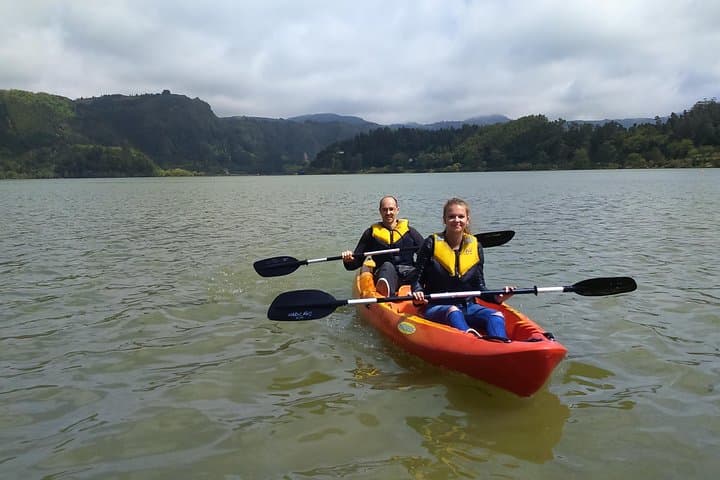
What the day feels like
The day begins with a hush: low mist unspooling across Lagoa das Furnas and the shoreline grasses nodding as if to say, let’s move. Steam sighs from earth vents along the far bank, and the lake—calm but intent—nudges your kayak forward with the slightest pulse. Overhead, a buzzard circles, inspecting the caldera as if it were a private amphitheater. Furnas, in the heart of São Miguel, has a way of greeting travelers with quiet drama. The valley doesn’t shout. It simmers.
The put-in is simple: a gravel slip, a clink of paddles, the lake opening like a page you’ve been waiting to read. On the water, the world narrows and deepens. Your paddle dips into green reflections of hills thick with cedars, laurel, and hydrangea hedges, while the lake holds your route steady. The steam fields across the water keep time, letting off a warm breath that smells faintly of minerals and stories. Around you, the crater walls are lush and steep, a reminder you are floating inside a volcano’s broad, old heart.
Furnas is volcano country, and it doesn’t hide its lineage. The last significant eruption in 1630 changed this valley’s history, sending ash across nearby villages and carving a new chapter in the island’s geology. Today, the volcano sleeps lightly, expressing itself in hot springs, fumaroles, and bubbling mud pots that knit the landscape into a living science museum. Locals have long made peace with the heat below—burying pots in the steamy ground to slow-cook cozido das Furnas, a hearty Azorean stew of meats and root vegetables that comes out tender and smoky with the valley’s signature. If the lake teases your sense of calm, the cozido rewards your patience.
Paddle the shoreline and you’ll feel the environment engage. Reeds whisper. Ducks trace contrails of ripples like careful calligraphy. The current doesn’t boss you; it suggests. When you draw near to the caldeiras by the lake, the earth breathes heavier and the steam drifts across your bow with a polite but unmistakable warmth—a reminder to keep a respectful distance. Then you turn for the middle and the lake opens, giving you that expansive, you-are-small feeling that adventure travelers chase not for the ego reset, but for the clarity that follows.
By midday, you trade water for wheels. The dirt tracks around Furnas roll easy at first—wide, forgiving, and framed by emerald hedges. Then the path tucks into forest. The trail pitches, angles, and occasionally slicks with dew. Your tires hum over old volcanic soils and roots glistening with moisture. The islands’ famous hydrangeas, depending on season, flank the ride in blue-white bursts. It’s not technical so much as attentive riding: the ground asks for balance and the handlebars answer with small corrections. When you break into a clearing, the lake appears again, a green mirror that doesn’t mind being admired twice.
The cultural spine of the day runs through the gardens and village of Furnas. Terra Nostra Park—lauded since the 18th century for its thermal pools and exotic trees—invites a post-ride soak in a rust-colored, iron-rich pool that warms the bones in the best way. The village streets are quiet, cobbles washed clean by frequent rain, and if you time it right you can watch locals lift steel-lidded pots from the steaming ground near the lakeshore, strands of vapor clinging to the lids as if reluctant to let go. That stew? It tastes like the valley’s handshake.
Geologically, Furnas is a textbook caldera disguised as a garden. The basin collects rain, fog, and runoff, gifting the lake its fullness and the hills their relentless green. Active management projects—led locally by the Furnas Landscape Laboratory—have targeted eutrophication, replanting native species and easing nutrient loads to keep the lake healthier. Travelers who come here become part of that story. Stay on established paths by the fumaroles. Keep soaps and sunscreen away from the water. The valley remembers what you leave.
Practically, the day asks for sensible preparation and rewards it with ease. Figure seven to eight hours for paddling and riding, with pauses to walk the caldeiras and dig into a late lunch. Bring a light rain shell—São Miguel’s weather turns on a dime—and quick-dry layers that breathe when the sun leans in. Closed-toe water shoes or light hikers handle both dock and dirt. Hydration matters, even in cool weather; the valley’s humidity can be sly.
Spring and fall are quietly excellent here. Spring brings wildflowers and softer light, a palette that flatters both photos and mood. Fall trims the crowds and often lays down calmer winds. Summer is bright and buoyant, with warmer water and busier trails. Winter is verdant, dramatic, and wet—you’ll earn your hot soak.
What the day ultimately delivers is balance: paddle strokes that move you without hurry, trails that ask for presence, and a valley that still cooks dinner by the power of its past. The lake is patient. The forest listens. The steam negotiates every breeze. You leave with legs pleasantly tired, lungs cleared out, and a sense that the island wasn’t conquered so much as met on equal terms. And that, in adventure, is the definition of enough.
Trail wisdom
Small choices, better day.
Give Steam Its Space
Stay on marked paths around the caldeiras; vents can be unstable and extremely hot even a few feet away.
Layer for Microclimates
Weather flips fast in Furnas—carry a light rain shell and a warm layer even on sunny mornings.
Tread Smart on Roots
Dirt tracks can be slick; drop tire pressure slightly and brake before corners rather than in them.
Time Lunch at the Caldeiras
Aim to be near the lakeshore steam fields around midday to watch locals lift cozido from the ground.
Local knowledge
Read the place, not just the route.
Watch for native species including Azores buzzard (Buteo buteo rothschildi), Eurasian coot and other lake birds.
Keep an eye out for wildlife during the transition between areas and habitats. Respect distance guidelines.
Lake restoration projects target nutrient reduction and native plant recovery; help by staying on marked paths, not feeding wildlife, and packing out all waste.
Follow the guide's instructions on size limits, ethical handling, and leave-no-trace practices.
Pico do Ferro viewpoint for a full caldera panorama. Parque Grená’s waterfall trail on the lake’s eastern shore
Locally recommended viewpoints and quiet spots known best to local operators.
Furnas’s 1630 eruption reshaped the valley; by the 18th–19th centuries, Furnas gained fame as a thermal spa and botanical haven centered on Terra Nostra Park.
Maritime roots and regional tradition shape the waterways and working coasts.
Seasonal guide
Four versions of the same landscape.
Spring
Best forWildflower color · Cooler temps
ChallengesIntermittent rain · Variable wind
Mild temperatures and lush hillsides make spring ideal for paddling and riding with fewer crowds.
Summer
Best forWarmer water · Long daylight
ChallengesBusier trails · Strong sun
Expect bright days and more visitors; start early and pack sun protection for time on the lake.
Fall
Best forQuieter paths · Stable weather
ChallengesOccasional storms · Shorter days
Calmer winds and softer light are perfect for photography and steady rides around the lake.
Winter
Best forLush scenery · Thermal soaks
ChallengesFrequent rain · Chilly water
Wet but atmospheric—dress for rain and bring a dry change for post-ride hot springs.
Operator details
What the booking data adds.
Included
- ✓Local guide
- ✓Use of bicycle
- ✓Lunch
- ✓Use of helmet
Not included
- —Souvenir photos (available to purchase)
Good to know
- ✓Public transportation options are available nearby
- ✓Suitable for all physical fitness levels
- ✓Children must be accompanied by an adult
- ✓May be operated by a multi-lingual guide
- ✓Vegetarian option is available, please advise at time of booking if required
Pack with intention
What to bring.
Good to know
Common questions.
Basic paddling and bike handling are sufficient; the lake is generally calm and the dirt tracks are non-technical.
Plan the edges
The details that make the day easier.
Locals cook cozido das Furnas—an Azorean meat-and-vegetable stew—underground in geothermal pits, using volcanic heat for a slow six-hour braise.
Post-ride, sample cozido das Furnas at Tony’s or a local tasca, then drift to Terra Nostra Park for a soak in the thermal pool under camellias and cedar. Sip estate-grown tea at nearby Gorreana or Chá Porto Formoso; finish with a locally brewed beer and São Jorge cheese at a village café.
- Closest airport
- João Paulo II (PDL), Ponta Delgada. Drive time to Furnas: ~45–50 minutes via EN1-1A
- EN3-2A. Meeting point often near Lagoa das Furnas boat ramp; parking available. Cell service
- patchy by the lake, better in the village. Permits: none for lake
Furnas Lake is part of an active restoration program—avoid feeding birds, rinse bikes and shoes before/after to limit invasive species, and keep clear of fragile geothermal crusts and shoreline vegetation.
Explore by topic
Follow the threads.
Keep exploring
Make the story part of the trip.
In four hours you can move from shaded canyon ferns to wind-scoured coastal ridgelines, guided by someone who knows where the light—and the hidden views—live. This private half-day hike on the Monterey Peninsula or Big Sur is compact, curated, and perfect for travelers who want depth without a multiday commitment.
 Related story
Beneath a sky of shifting light, Skaftafell’s ice reads like a map of time. This three-hour guided glacier hike mixes technical instruction with geology and culture: compact, safe, and unforgettable.
 Related story
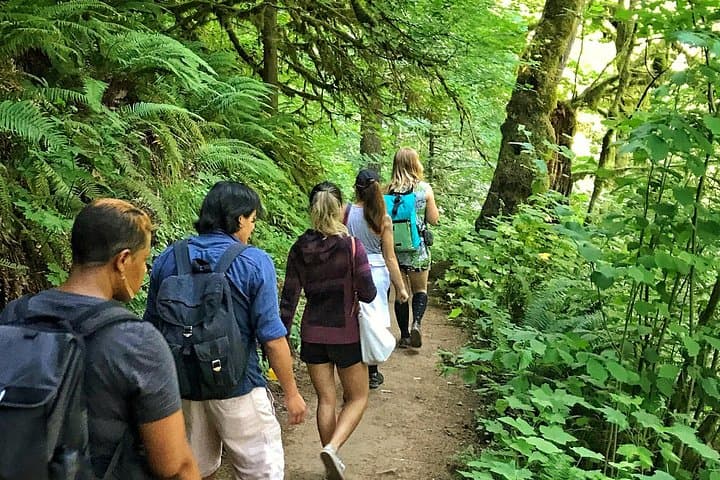
Lose the city for a few hours without leaving it: this 5-mile, 900-foot-gain Forest Park loop threads old-growth pockets, city viewpoints, and cultural landmarks for a compact taste of Portland’s wild side. Expect moss, roots, and stories.