
What the day feels like
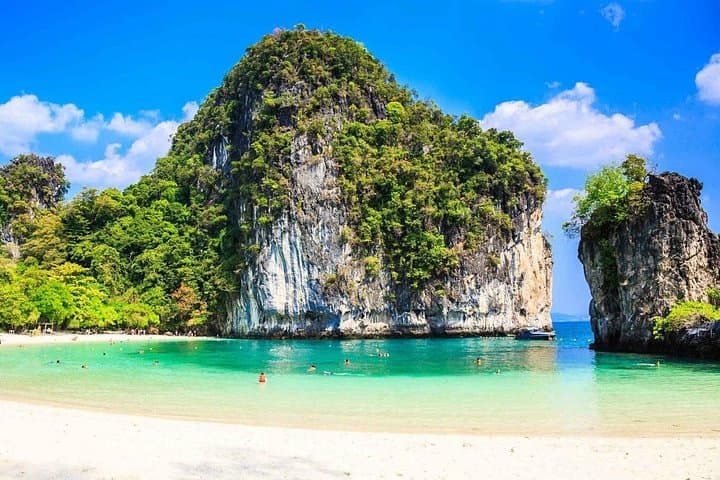
The morning light slants through a low curtain of haze as the speedboat cuts loose from Phuket's shoreline and steers into a scatter of limestone teeth rising from the Andaman Sea. Salt smells of shrimp paste and diesel mingle; gulls wheel and a breeze pushes the boat forward as if the bay itself insists you move. Phang Nga Bay is not static scenery—it breathes, shifts and rearranges itself: caves opening like mouths, narrow channels that dare you to thread them, and rock columns where tiny fronds of green cling to impossible precipices. By mid-morning the engine eases, the boat drifts, and Hong Island’s crescent of powder-white sand appears like a small, private reef kingdom. You step into water so clear it tricks your eyes, and the day collapses into one long, vivid present: snorkeling, sea canoeing, a floating village lunch and a cinematic stop at the notorious James Bond Island.
This speedboat tour stitches together several of Southern Thailand’s most iconic pieces—Hong (Krabi), Panak and Panyee Islands, Talu’s sea-cave canoe routes and Koh Tapu (James Bond Island)—into a seven-hour loop that balances adrenaline with idle beach time. Geologically, Phang Nga Bay is a karst landscape in active motion. Millennia of wave action, rain and subterranean dissolution have hollowed the limestone into caves and karst towers that rise like sentinels. Those towers are both fragile and theatrical: their silhouettes change with the light, and narrow channels slice between them, offering sudden, sheltered glimpses of mangrove roots and hidden lagoons.
Culturally, the route threads into coastal livelihoods. Panyee is a floating fishing village long inhabited by the local sea-gypsy community (Moken descendants and Muslim fishermen), where restaurants are set on wooden stilts and daily life has adapted to tides. The area is used to visitors brought by tours like this one; the boats offer a chance to see traditional life balanced against the pressure of tourism and environmental change.
On Talu Island, guide-led sea canoes are an entirely different pace: quiet, intimate, and a little slippery. Paddling through dark water tunnels, you’ll likely touch a paddle only to find the cave’s scale absorbing your noise—rock murmurs, drip sounds and the occasional piercing call of a hornbill. On Hong Island, the water lays claim to you: currents push you gently toward the beaches; corals hold small fish like jewels; and the forest behind the sand keeps its cool as an inland refuge.
Why go? For a day’s worth of clearly different coastal experiences: fast transit that amplifies the sensation of remoteness, time in a karst cathedral for paddling, a snorkeling stop where fish and soft corals cluster, and the cultural pause of a floating-village lunch. Practical advantages are tangible: the tour includes hotel transfers in Phuket, a buffet-style seafood lunch on Panyee Island, life jackets, and an English-speaking guide—everything set up to make the day feel effortless while still delivering variety.
If you’re planning it, there are a few realities to keep in mind. Boats run on a schedule; tides influence where and when you can enter sea caves; and popular stops like James Bond Island can get crowded by late morning or early afternoon. For photos, come prepared for strong mid-day sun and harsh shadows. For conservation, pick reef-safe sunscreen, avoid touching corals and be mindful of single-use plastics—this bay’s ecosystems are resilient but sensitive.
Logistics are straightforward: expect about seven hours onboard including transfers, and moderate physical effort—more standing and getting on/off small boats than full-on exertion. Bring a small dry bag, reef-safe sunscreen, a hat and shoes that can get wet. Basic swimming confidence helps for snorkeling and when clambering into canoes. Guides will brief novices before sea-canoe legs, and life jackets are required.
The best time to visit is during Thailand’s dry season when seas smooth out and visibility improves (November–April), but even within that window mornings are cooler and calmer—the sweet spot for photos and quiet waterways. For a more sociable, cultural experience ask to time lunch on Panyee with high tide, when the village sits most comfortably afloat.
This is not an expedition for technical paddling or deep diving, nor is it wilderness solitude—it's a curated coastal circuit that gives you a direct, sensory-rich taste of Phang Nga’s karst geography and maritime culture in a single day. Come with curiosity, a moderate level of fitness, a camera and the intent to leave only footprints (and the occasional delighted groan from a full plate at a floating-table lunch). The limestone towers loom; the water nudges; the bay expects you to explore respectfully and come back with more than a photo—an impression of how landscapes and communities shape each other on the edge of the sea.
Trail wisdom
Small choices, better day.
Start early
Morning departures usually mean calmer seas, better light for photos and fewer crowds at James Bond Island.
Use reef-safe sunscreen
Oxybenzone-free sunscreen protects local coral communities—apply at least 20 minutes before entering the water.
Bring a small dry bag
Keep phone, wallet and a spare shirt dry during transfers between speedboat and canoe.
Practice basic paddling
If you’re new to sea canoes, ask the guide for a quick demo and sit near the stern for easier coordination.
Local knowledge
Read the place, not just the route.
Watch for native species including Brahminy kite (sea eagle), Green sea turtle.
Keep an eye out for wildlife during the transition between areas and habitats. Respect distance guidelines.
Many operators encourage reef-safe sunscreen, limit single-use plastics and avoid anchoring on coral; respect local guidelines to protect fragile karst and coral ecosystems.
Follow the guide's instructions on size limits, ethical handling, and leave-no-trace practices.
Panak Island’s hidden sea-cave lagoons (accessible by canoe). The mangrove channels behind Hong Island—calmer paddling and birdwatching in the morning
Locally recommended viewpoints and quiet spots known best to local operators.
Koh Tapu became world-famous after appearing in the 1974 James Bond film The Man with the Golden Gun; Panyee Island reflects generations of stilt-house fishing culture.
Maritime roots and regional tradition shape the waterways and working coasts.
Seasonal guide
Four versions of the same landscape.
Spring
Best forWarmer sea temperatures · Clear snorkeling · Fewer rainy squalls than summer
ChallengesOccasional haze · Variable winds in late spring
Spring brings warm water and good underwater visibility, but expect intermittent wind that can ruffle small boat crossings.
Summer
Best forLush coastal scenery · Lower shoulder-season crowds · Cheaper travel rates
ChallengesShort, heavy rains and choppier seas · Reduced visibility for snorkeling
Summer is greener and less busy but prone to storms; check weather closely and expect some cancellations.
Fall
Best forCalm skies after monsoon · Good visibility for diving · Moderate temperatures
ChallengesTransitional weather early fall · Some tour schedules adjust seasonally
Fall’s transition gives clearer waters and comfortable temps—ideal for paddling and photos if the monsoon has subsided.
Winter
Best forLowest rainfall · Calmest seas · Peak visibility for snorkeling
ChallengesHigh-season crowds · Higher prices and full hotels
The dry season (Nov–Feb) is the most reliable for flat seas and excellent snorkeling; book ahead to avoid sold-out tours.
Operator details
What the booking data adds.
Included
- ✓Lunch, bottled water, morning tea, light refreshments
- ✓Travel insurance
- ✓Phang Nga Bay sea cave canoeing
- ✓English speaking guide
- ✓Speedboat cruise
- ✓Hong Island (Krabi) viewpoint
- ✓Hotel pickup and drop-off by air-condition minivan in Phuket Province
- ✓Use of snorkeling equipment
- ✓Use of paddle boarding
- ✓Local taxes
Not included
- —National park fees: 600 THB/adult and 300 THB/child (Must be paid to our guide upon check-in!!!)
- —Gratuities
- —Fins - to rent for 200 THB at Royal Phuket Marina
- —Hong Krabi & James Bond Islands
Good to know
- ✓Infants are required to sit on an adult’s lap
- ✓Not recommended for travelers with spinal injuries
- ✓Not recommended for pregnant travelers
- ✓Not recommended for travelers with poor cardiovascular health
- ✓Suitable for all physical fitness levels
- ✓Children must be accompanied by an adult
- ✓Vegetarian option is available, please advise at time of booking if required
- ✓The boat tour is not suitable for children under 3 years of age
Pack with intention
What to bring.
Good to know
Common questions.
The experience is approximately seven hours (420 minutes) including hotel transfers in Phuket province.
Plan the edges
The details that make the day easier.
James Bond Island (Koh Tapu) rose to international fame after appearing in the 1974 film The Man with the Golden Gun, dramatically increasing tourism to Phang Nga Bay.
After the tour, head to a beachfront seafood shophouse in Phuket or Ao Nang for grilled fish and a cold beer; in Phuket Old Town try a bowl of khao man gai (chicken rice) or a local market for fresh tropical fruit.
- trailhead
- Phuket International Airport; Driving distance from Phuket town: 30–90 minutes depending on pickup; Cell service: intermittent in sheltered bays; Permits: none required for tourists, but national park fees may apply and are usually included in tour price.
Phang Nga Bay’s coral and mangrove habitats are sensitive—use reef-safe sunscreen, minimize plastic waste, and follow guides’ instructions to avoid damaging corals or disturbing wildlife.
Explore by topic
Follow the threads.
Keep exploring
Make the story part of the trip.
Set out from Bass Harbor for a private, customizable day on Blue Hill Bay — lighthouses, puffins, seals, and the chance to feel Acadia from the water. Small groups, local captains, unforgettable views.
In four hours you can move from shaded canyon ferns to wind-scoured coastal ridgelines, guided by someone who knows where the light—and the hidden views—live. This private half-day hike on the Monterey Peninsula or Big Sur is compact, curated, and perfect for travelers who want depth without a multiday commitment.
 Related story
Beneath a sky of shifting light, Skaftafell’s ice reads like a map of time. This three-hour guided glacier hike mixes technical instruction with geology and culture: compact, safe, and unforgettable.