
What the day feels like
Morning in Central Park arrives like a rehearsal: joggers warm up, dog walkers cue their companions, and the city’s noise softens into a distant hum. You tap the app, rub the condensation off your phone, and suddenly Central Park feels less like a place you pass through and more like the stage for a caper. The Metropolitan Museum’s most coveted painting has been stolen, and your team—two to six friends, family, or coworkers—becomes a squad of detectives. The map on your screen nudges you toward your first clue. You push off a bench, and the chase is underway.
This is not a theme-park puzzle or a timed race. It’s a self-guided, app-driven scavenger hunt built to unfurl across the park’s 843 acres—though this particular route keeps you in the park’s cultural heart. Over the course of roughly an hour you’ll cover 1.5–2 miles, moving between recognizable landmarks: a willow-shadowed path near the Conservatory Water, the architectural drama of Bethesda Terrace, and the granite outcrops that break the park’s lawns. The app layers history and local color into each riddle; at clue points it pauses to explain what you’re looking at, from the Metropolitan Museum’s bulging neoclassical façade to the bedrock that makes Manhattan possible.
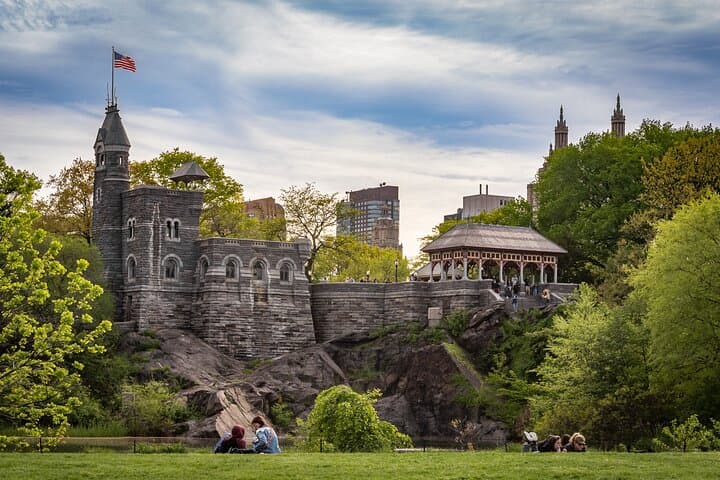
Central Park’s story is quietly grand. Designed by Frederick Law Olmsted and Calvert Vaux in the 1850s as a democratic refuge for a growing metropolis, the park was carved out of a mix of swamp, tenements and glacially scoured rock. That geology is visible in the park’s exposed Manhattan schist—those rounded ledges you can sit on—which once resisted glaciers that shaped the island. The park’s creators bent and molded the land to feel natural; today, pathways, bridges and vistas still succeed because they read as inevitabilities rather than constructions.
There’s a cultural choreography to the park at any hour. Early on, you’ll share routes with peloton-style runners and solitary tai chi practitioners; later, families swell the meadows and street musicians begin staking out corners. The scavenger-hunt format plays well in this ecosystem: it slows you into observation without asking for a full-day commitment. You learn the facts—why the Mall is lined with American elms, how the Ramble was designed as a deliberately wild-feeling thicket—while you search statues and inscriptions for the next answer. The narrative twist (recover the Met’s missing painting) adds a frame that keeps even kids and historically indifferent adults engaged.
Practicalities are straightforward. The game is self-paced and runs on your phone, with built-in hints to unstick teams that get bogged down. Walks involve paved paths, paved stairs, and short gravel sections; total elevation gain is minimal—expect under 200 feet of climbing if you take the scenic routes. Because the experience is delivered digitally and immediately (instant confirmation after booking) it’s ideal for last-minute plans or when a handful of travelers want something social and low-commitment. The listed duration is 60 minutes, but plan for 75–90 minutes if you want to stop for photos or read the background passages at each stop.
For planners: the price point is low (from $7 per person), bookings are refundable under the provider’s free cancellation policy, and you can run the adventure as a private group. The route is largely flat and family-friendly; accessible players should expect some stairs at Bethesda Terrace and limited accessibility in the Rock Outcrop areas. Cell service is generally reliable in the park, but battery life matters—this is a phone-first experience.
Gear and timing shape the experience. Mornings are quieter; golden-hour light on the Mall makes photos pop but can also crowd the paths. Avoid the heat spike of mid-afternoon in summer; shoulder seasons—late spring and early fall—offer temperate weather and strong foliage color without the throng. Bring a fully charged phone, a small power bank, shoes with grip for wet stone, and a lightweight layer for wind off the reservoir.
Beyond the thrill of solving clues, the escape adventure is an effective, friendly way to meet the park’s layers: its 19th-century design ideals, its role as a public commons for protests and picnics, and its ecology of songbirds and resilient shade trees. Players come away with quick facts that stick—why the Mall aligns with the lake, how the park’s designers used forced perspective—and with a practical sense of where to go next in the park: stand at Bethesda Terrace for a sweeping photo, step down to the boathouse for a boat-rental peek, or drift toward the Conservatory Garden when you want a quieter corner.
If you’re thinking about doing this with a mixed group of explorers—teens, grandparents, coworkers—the format works because it balances competition and cooperation. You can sprint between clues or meander and savor the stops. The app’s hint system means you never feel stranded, and the private option makes it a safe team-building exercise or a celebratory outing without an overbearing guide.
One last thing: play responsibly. Central Park is both a living landscape and a fragile urban ecosystem. Stay on paths, dispose of trash, and keep noise in check at dawn and dusk. Treat the sculptures and plaques like the historical artifacts they are—look, don’t touch.
In sixty minutes, you’ll have solved a museum heist, walked through the layered history of an engineered landscape, and left with a new mental map of New York’s most theatrical park. It’s a short adventure that manages to feel like a full morning of discovery—a compact, accessible way to rediscover Manhattan’s green heart.
Trail wisdom
Small choices, better day.
Charge Your Phone
This experience runs through your mobile device—start at 100% and bring a small power bank if you plan photos or extra stops.
Wear Grippy Shoes
Stately plazas and exposed rock can be slick; low-profile hiking shoes or sneakers with good traction keep you steady.
Start Early
Mornings are quieter and cooler—ideal for photos and faster clue-solving with fewer crowds.
Use Hints Strategically
The app’s hint system prevents stalls: use one when you’re stuck to keep momentum and the group engaged.
Local knowledge
Read the place, not just the route.
Watch for native species including Eastern gray squirrel, Songbirds such as northern cardinal and American robin.
Keep an eye out for wildlife during the transition between areas and habitats. Respect distance guidelines.
The park is actively managed by the Central Park Conservancy—stay on paths, avoid feeding wildlife, and pack out trash to protect plantings and bird habitat.
Follow the guide's instructions on size limits, ethical handling, and leave-no-trace practices.
Conservatory Water (quiet model-boat spot east of the Mall). The Whispering Gallery under Bethesda Terrace
Locally recommended viewpoints and quiet spots known best to local operators.
Central Park was designed by Frederick Law Olmsted and Calvert Vaux in the 1850s as a public greenspace; its construction transformed varied terrain into the planned landscapes New Yorkers use today.
Maritime roots and regional tradition shape the waterways and working coasts.
Seasonal guide
Four versions of the same landscape.
Spring
Best forBlossoms and mild temperatures · Family outings · Photography
ChallengesUnpredictable rain · Crowds on sunny weekends
Late April through May yields comfortable weather and blooming trees—excellent for walking and photos, but bring a light rain shell.
Summer
Best forLong daylight hours · Evening plays and concerts
ChallengesHeat and humidity · Larger crowds
Summer brings high energy and events; schedule early-morning or evening slots to avoid midday heat and dense crowds.
Fall
Best forFall foliage · Crisp air and clear light
ChallengesCooler mornings · Popular weekend windows
October offers vivid leaves and crisp weather—prime conditions for a scenic, leisurely hunt.
Winter
Best forQuiet, reflective walks · Holiday decorations
ChallengesCold, snow and ice on paths · Limited foliage
Winters are quiet and atmospheric; dress warmly and expect occasional icy patches on stone surfaces.
Operator details
What the booking data adds.
Included
- ✓Historical Facts and stories about the Central Park
- ✓Self-Guided - so freedom to go at your own pace
- ✓Insanely fun puzzles
Not included
- —Gratuities
Good to know
- ✓Infants and small children can ride in a pram or stroller
- ✓Service animals allowed
- ✓Public transportation options are available nearby
- ✓Suitable for all physical fitness levels
- ✓This is not wheelchair accessible.
Pack with intention
What to bring.
Good to know
Common questions.
The route is self-guided via the app and begins near the Metropolitan Museum area; the app gives specific GPS directions to your first clue so you can start from nearby park entrances.
Plan the edges
The details that make the day easier.
Central Park covers 843 acres and was designed by Frederick Law Olmsted and Calvert Vaux in the 1850s; it was designated a National Historic Landmark and remains one of the most-visited urban parks in the United States.
After the adventure, head to the Loeb Boathouse for waterside views, or grab a quick bite at the nearby Shake Shack on the 77th Street Esplanade; Museum Mile cafes and the Met dining room offer solid options for a relaxed post-game meal.
- Closest airports
- JFK (~45–60 min) or LGA (~20–40 min); Start near the Metropolitan Museum (5th Ave & 79th St); Driving
- Taxi from Midtown
- 10–30 min depending on traffic; Cell service: generally good in the park; Permits: none required for this self-guided experience.
Central Park is managed by a nonprofit conservancy—respect plantings, use existing paths, carry out trash, and avoid feeding wildlife to minimize your impact.
Explore by topic
Follow the threads.
Keep exploring
Make the story part of the trip.
 Related story
Less than two hours from Nairobi, Kereita Forest pairs hands-on canopy adventure with quiet montane trails and a sobering colonial history—perfect for families, teams, and curious travelers seeking a full-day pulse of nature.
Set out from Bass Harbor for a private, customizable day on Blue Hill Bay — lighthouses, puffins, seals, and the chance to feel Acadia from the water. Small groups, local captains, unforgettable views.
In four hours you can move from shaded canyon ferns to wind-scoured coastal ridgelines, guided by someone who knows where the light—and the hidden views—live. This private half-day hike on the Monterey Peninsula or Big Sur is compact, curated, and perfect for travelers who want depth without a multiday commitment.