
What the day feels like
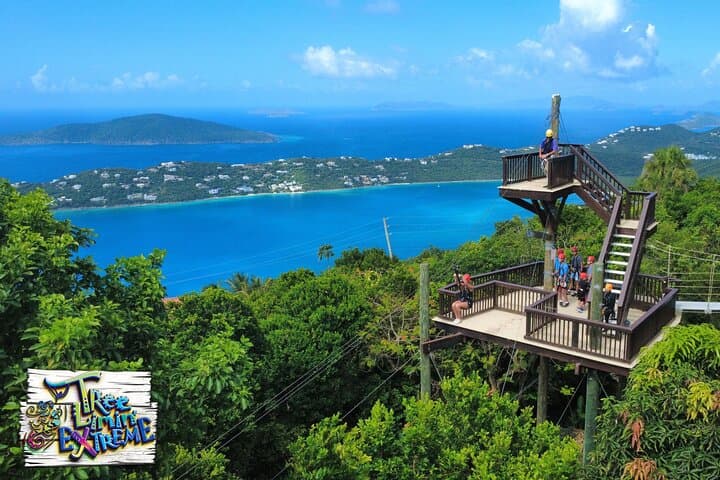
You clip in and the Caribbean breathes beneath you—an expanse of teal that catches the sun in a hundred tiny flashpoints, a crescent of white sand tucked into a green bowl, and the distant silhouette of St. John and the British Virgin Islands like punctuation on the horizon. The first platform is a wooden heartbeat in the canopy; the guide checks your knots with steady hands, then sends you out over a slope that feels impossibly steep for such a small island. You accelerate, wind carving a private lane through the palms, and the world shifts from shoreline to sky in a single, thrilling sweep.
Tree Limin' Extreme Zipline is built for that exact pivot: the small, sharp joy of moving through three-dimensional space with nothing between you and the view. The course runs across a stitched series of platforms and cables that crown the ridge above Magens Bay, the island’s most famous beach. The highlight—and what makes this course headline-worthy—is the final element, the Yo-Yo: a shuttle-style return that sends you forward and then reels you back for a second surge, essentially two zips in one. The operators tout it as the only zipline of its kind in the Caribbean, and it feels distinct—part coaster, part theatrical moment.
Geology and human history meet in that overhead panorama. The hills of St. Thomas are the product of ancient volcanic activity and long erosion, folded into steep ridgelines that drop quickly to sea level. Those slopes, now carpeted in tropical dry forest and peppered with stately almond and gumbo-limbo trees, were once dotted by Danish-era sugar estates; today the island balances tourism, fishing, and the remnants of colonial agriculture. Magens Bay itself has a civic history: purchased for public use in the 1940s and preserved as one of the most accessible beaches on the island, it's a living reminder that this coastline is as much for locals as it is for visitors.
Culturally, St. Thomas is a hybrid—Caribbean rhythm braided with U.S. influence, and a legacy of Danish governance that lingers in place names and architecture. Local guides on Tree Limin' are often multi-lingual and conversational about the island’s ecology and history: they’ll point out frigatebirds wheeling over the water and explain how private land conservation helped protect the ridge where the zipline now sits. The guides also handle the setup and safety briefings with practiced calm—your job is to breathe, take the picture, and enjoy the squeeze of adrenaline.
This is an accessible adrenaline fix. The whole experience runs about two and a half hours (the Viator listing puts it at 150 minutes), including transport and the full course. Physically you’ll climb stairs and step across platforms; you don’t need technical climbing skills—guides handle harnessing and belaying—but you should be comfortable with exposure and able to manage short walks on uneven trail. Expect a mix of shaded forest and exposed platforms that offer unobstructed views.
Practicalities make or break days like this. Mornings are cooler with clearer visibility, and the light over Magens Bay is flatter and more photogenic before noon; opt for an early slot to avoid midday heat and boat traffic below. Wear closed-toe shoes with good grip—sandals and flip-flops aren’t recommended—and leave bulky jewelry and scarves in the provided locker or with your driver. Bring sunscreen (reef-safe preferred), a reusable water bottle, and a small camera or phone tether that the guides can secure to you. Hydration matters: the Caribbean sun is deceptively punishing even when breezes make it feel mild.
You’ll likely be dropped back near major beaches afterward; many guests choose to pad the adventure with a swim at Magens Bay or a late lunch in Charlotte Amalie. The ride is a focused, high-quality dose of adrenaline, but it’s also a way to quickly read the island from above—topography, shoreline, and the small communal rhythms of life that are easier to see from a wire than from a road.
For people planning this as a highlight of an island visit, timing and expectations matter. The course is certified through the ACCT (Association of Challenge Course Technology), and the staff run a methodical safety routine, so the main uncertainties are weather and your own tolerance for speed and height. If you have a fear of heights, consider watching others before jumping in; many participants find the motion itself—the sense of being carried—eases anxiety once they’re moving.
Why go? Because it’s immediate, scenic, and brief—an easy morning that leaves the rest of the day open for snorkeling, food, or a lazy beach nap. Because the Yo-Yo is an attention-grabbing endnote to a classic Caribbean vista. And because the island, when seen from above, gives you a quick course in why these small, rocky places hold outsized appeal: they pack variety into compact parcels.
If you go, respect the island’s ecosystems and the local operators who steward them. Use reef-safe sunscreen, take your trash, and listen to guides about where to step; these trails and platforms exist because people cared enough to protect them. You’ll leave with the kind of photograph that gets re-shared, yes—but also with a clearer sense of the ridge-and-cove geography that defines St. Thomas, and the small, human decisions that keep those views intact.
Trail wisdom
Small choices, better day.
Book an early time slot
Morning runs have cooler temps and clearer views, and you'll avoid midday crowds at Magens Bay.
Wear closed-toe shoes
Sturdy sneakers with grip will keep your footing secure on platforms and trail approaches.
Use a phone tether
Bring a wrist or chest tether for cameras/phones—guides can secure devices so you can shoot hands-free.
Choose reef-safe sunscreen
Apply before arrival to protect coral ecosystems and avoid greasy harness straps.
Local knowledge
Read the place, not just the route.
Watch for native species including Brown Pelican, Magnificent Frigatebird.
Keep an eye out for wildlife during the transition between areas and habitats. Respect distance guidelines.
Operators encourage reef-safe sunscreen and staying on marked paths; protecting shoreline reefs and island vegetation is a local priority.
Follow the guide's instructions on size limits, ethical handling, and leave-no-trace practices.
Drake’s Seat viewpoint for a sweeping island panorama. Magens Bay Beach—go early for still water and quieter sands
Locally recommended viewpoints and quiet spots known best to local operators.
The ridge above Magens Bay sits on land that was historically used for small-scale agriculture and later conserved for public and recreational use.
Maritime roots and regional tradition shape the waterways and working coasts.
Seasonal guide
Four versions of the same landscape.
Spring
Best forlighter crowds · pleasant temperatures
Challengesoccasional showers · variable wind
Spring on St. Thomas brings warm, comfortable days and fewer cruise crowds than winter—watch for afternoon squalls.
Summer
Best forlong daylight · good water temps
Challengeshotter temps · higher humidity · hurricane season risk
Summer gives bright skies and calm seas some days, but plan for heat and the broader hurricane season window.
Fall
Best foroff-peak pricing · quiet runs
Challengeshigher storm probability · some tours reduce frequency
Fall can be a value season with lighter tourism, but weather is less predictable—keep travel insurance in mind.
Winter
Best forcrystal-clear views · peak season conveniences
Challengesbigger crowds · higher prices
Winter is high season for good reason: cooler trade winds and excellent visibility make for spectacular zips—book early.
Operator details
What the booking data adds.
Included
- ✓Harness and Helmet
Good to know
- ✓Not recommended for travelers with spinal injuries
- ✓Not recommended for pregnant travelers
- ✓Not recommended for travelers with poor cardiovascular health
- ✓Travelers should have at least a moderate level of physical fitness
- ✓Guests will be weighed in upon check-in. MAXIMUM WEIGHT 275lbs.
- ✓Please enter your weight in Pounds.
- ✓Height requirements: minimum 44", maximum 6'6"
- ✓Weight requirements: 70-275lbs to zip solo. Guest under 70lbs may tandem zip with an adult as long as the maximum weight does not exceed 275lbs.
Pack with intention
What to bring.
Good to know
Common questions.
The full experience, including safety briefings, transport, and the course, runs about 2–2.5 hours (listed as 150 minutes).
Plan the edges
The details that make the day easier.
Magens Bay was purchased and preserved for public use in the mid-20th century and is consistently ranked among the Caribbean’s top beaches.
After your run, head down to Magens Bay for a swim and a casual beach picnic; for a taste of local cuisine, make the short drive to Charlotte Amalie where Gladys Café serves classic Caribbean plates and nearby bars offer rum punches and cold beer.
- Closest airport
- Cyril E. King Airport (STT)
- Typical drive from Charlotte Amalie
- 20–30 minutes
- Cell service
- generally good on main roads, spotty on forested ridges
- Permits
- none required for the zipline itself—bookings handled by the operator
This ridge and shoreline are sensitive habitats—use reef-safe sunscreen, pack out all trash, and follow guide instructions to minimize erosion and disturbance.
Explore by topic
Follow the threads.
Keep exploring
Make the story part of the trip.
Set out from Bass Harbor for a private, customizable day on Blue Hill Bay — lighthouses, puffins, seals, and the chance to feel Acadia from the water. Small groups, local captains, unforgettable views.
In four hours you can move from shaded canyon ferns to wind-scoured coastal ridgelines, guided by someone who knows where the light—and the hidden views—live. This private half-day hike on the Monterey Peninsula or Big Sur is compact, curated, and perfect for travelers who want depth without a multiday commitment.
 Related story
Beneath a sky of shifting light, Skaftafell’s ice reads like a map of time. This three-hour guided glacier hike mixes technical instruction with geology and culture: compact, safe, and unforgettable.