
What the day feels like
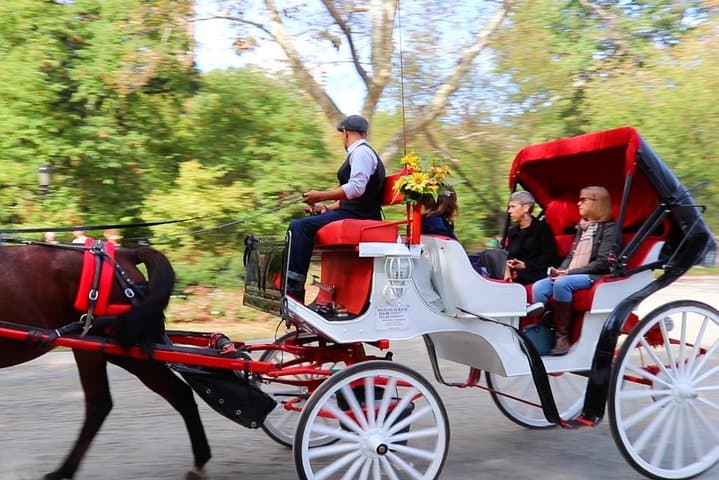
The carriage moves like a punctuation mark through a page of city noise—an old-world carriage clopping down an unfamiliar paragraph of asphalt and leaf mold. You step in at the south edge of Central Park and, within minutes, the city’s hard angles soften: skyscrapers loom like sentries beyond the trees, joggers keep their rhythm, and a lake breathes calm between two bridges. For 40–45 minutes, the horse sets the pace, and the park unfurls on its own terms.
There is a deliberate intimacy to the ride. At roughly 2.5 miles, the route threads past Cherry Hill and Friends Fountain—one of the park’s most photographable pauses—sweeps near the Mall’s elms, and offers a view of the Bow Bridge’s elegant arc. You’re not racing a subway or twitter feed; you’re being steered through a landscape designed to slow you down. Frederick Law Olmsted and Calvert Vaux conceived Central Park in the 1850s as an antidote to industrial stress, and the carriage feels like a surviving artifact of that intention: an analog way to be inside a public garden.
That history matters. Central Park was one of the first large-scale urban parks in the United States—843 acres carved out of Manhattan’s grid, with paths, meadows, and waterways moved into place by human hands and engineering. Stonework and planting beds conceal hills built from displaced earth; the park’s topography masks the city beneath, making it feel, briefly, like a different world. The carriage ride is as much about those design choices as it is about the horse and driver. Drivers double as guides—telling short, pointed stories about the park’s creation, its role in New York’s social life, and the famous islands of the park’s micro-history: Bethesda Terrace, the Ramble, Sheep Meadow.
There’s a practical economy to the experience as well. The booking is per carriage (not per person): up to four adults fit comfortably; two children under 12 count as one adult. The advertised price point reflects the private nature of the ride and the care required for the animals and equipment. The industry is regulated; operators are required to adhere to municipal standards for horse care, vehicle maintenance, and route limitations. If animal welfare is a concern—which is fair—look for operators who are transparent about stabling, rest rotations, and veterinary care.
Sensory details build against the practical backdrop. The clip of hooves punctuates conversations; leaves whisper across old stone; pigeons scatter and return as if keeping pace. In spring the park smells of damp earth and new leaf; in winter the horses’ breath fogs in front of the driver’s lantern. The pace allows for moments you’d miss in a walking tour—small architectural details on the Bethesda Arcade, a hidden bench tucked into a grove, a shy great blue heron fishing at the lake’s edge.
This ride is eminently accessible as a city experience: you can be off a flight and in a carriage within an hour, and it pairs well with a neighborhood afternoon. Hop off at Cherry Hill to photograph the fountain, then cross toward the Loeb Boathouse for lunch. If you want a quieter extension, a walk up to the Shakespeare Garden or a detour into the Ramble will keep the mood contemplative.
Timing matters. Golden hour—late afternoon in summer and fall—gives the oak-lined paths a filigree of light; spring is a tender, crowded time when cherry blossoms and daffodils make the park sing; winter rides feel cinematic if the air is crisp, though weather can lead to cancellations. For a first-time visitor, a weekday mid-morning ride will avoid the biggest crowds and give you more room to hear the driver’s short historical pulls.
Practicalities: the route is about 40–45 minutes and roughly 2.5 miles; rides are private per carriage and billed accordingly. Bring a small, easily managed bag—pocketable camera, light layer for wind, comfortable shoes for a post-ride walk. Expect polite interaction with the driver, some local lore, and a gentle pace. Remember that the park is a shared public space; yield to runners and cyclists in busier corridors and respect signage.
If you’re considering this as a romantic outing, it fits the bill: the carriage isolates you from the city’s rush in a way that feels curated and intimate. For families, it’s a manageable novelty—children tend to love the horses and the rhythm of the ride. For photographers, aim for the softer hours of the day, keep a medium telephoto for framed shots of faces and bridgework, and be ready to catch a candid moment when the horse sniffs a passing tree.
Central Park by carriage is not about conquering terrain; it’s about practicing attention. The park invites you to slow down, and the carriage enforces that gentle discipline. It’s an urban ritual with roots in landscape design, municipal life, and a simple human desire to move through beauty without hurrying.
Booking notes: rides are instant-confirm and often come with free cancellation policies; confirm start locations and pick-up within the park’s south carriage areas. The experience costs more than a typical tour but offers privacy, a private narrative voice from the driver, and a slower, more reflective way to experience one of the world’s busiest cities.
In a place designed to make you forget the grid, a horse-drawn carriage is an elegant answer: small, deliberate, and exactly at the right pace for remembering why cities need quiet places.
Trail wisdom
Small choices, better day.
Bring a small camera
The route includes multiple iconic photo stops—pack a compact camera or phone and avoid bulky gear.
Check the weather
Rides run year-round but are weather-dependent—confirm before you go and dress in layers.
Respect the animals
Ask operators about horse-care practices if concerned; choose companies transparent about stabling and rest.
Tip your driver
Carriage rides are private and drivers often provide local insights—plan to tip for good service.
Local knowledge
Read the place, not just the route.
Watch for native species including Great Blue Heron, Red-tailed Hawk.
Keep an eye out for wildlife during the transition between areas and habitats. Respect distance guidelines.
Respect lawns and waterways—stick to paths, don't feed wildlife, and choose operators who follow city animal-care regulations.
Follow the guide's instructions on size limits, ethical handling, and leave-no-trace practices.
Shakespeare Garden (quiet planted garden). The Ramble (wooded, birding paths)
Locally recommended viewpoints and quiet spots known best to local operators.
Central Park was designed by Frederick Law Olmsted and Calvert Vaux in the 1850s as one of America’s first major landscaped public parks.
Maritime roots and regional tradition shape the waterways and working coasts.
Seasonal guide
Four versions of the same landscape.
Spring
Best forBlossoms & Photography · Mild Weather
ChallengesCrowds on weekends · Mud after rains
Spring brings new leaf and bloom—visually rich but busier on weekends; schedule a weekday ride for quieter conditions.
Summer
Best forLong Days · Golden Hour Photos
ChallengesHeat on carriage seats · Larger crowds
Summer offers long daylight and vibrant green but bring sun protection; late-afternoon rides are most comfortable.
Fall
Best forFall Color · Crisp Air
ChallengesUnpredictable rain · Shorter daylight
Autumn’s color makes the park cinematic—book around peak color and aim for mid-afternoon light.
Winter
Best forQuiet Park Atmosphere · Cinematic Scenes
ChallengesCold, possible cancellations · Limited foliage
Winter rides feel cinematic if it’s crisp—dress warmly and expect possible weather-related changes.
Operator details
What the booking data adds.
Included
- ✓Live customer service
- ✓Photos taken by the guide
- ✓Roof (for rain or sun, optional)
- ✓All taxes, fees and handling charges
- ✓Treats for the horses
- ✓Licensed professional guide (licenses are authorized by New York City authorities)
- ✓Blankets (during winter)
- ✓Accommodation as per itinerary
- ✓Prices are per carriage, NOT per person. A carriage takes up to four adults.
Not included
- —Gratuities
Good to know
- ✓Wheelchair accessible
- ✓Infants and small children can ride in a pram or stroller
- ✓Service animals allowed
- ✓Public transportation options are available nearby
- ✓Infants are required to sit on an adult’s lap
- ✓Transportation options are wheelchair accessible
- ✓All areas and surfaces are wheelchair accessible
- ✓Suitable for all physical fitness levels
- ✓Popular for romantic couples
- ✓Popular with kids
- ✓Maximum of 4 adults for each carriage. 2 children under the age of 12 are considered one adult.
- ✓Children must be accompanied by an adult
- ✓Complete Operator information, including local telephone numbers at your destination, are included on your Confirmation Ticket. Our Product Managers select only the most experienced and reliable operators in each destination, removing the guesswork for you, and ensuring your peace of mind.
Pack with intention
What to bring.
Good to know
Common questions.
The ride lasts approximately 40–45 minutes and covers around 2.5 miles through Central Park.
Plan the edges
The details that make the day easier.
Central Park spans 843 acres and was created in the 1850s by designers Frederick Law Olmsted and Calvert Vaux as a deliberate landscape escape from city life.
After your ride, head to the Loeb Boathouse for lakeside lunch or grab a classic New York slice and coffee near Columbus Circle; the Upper West Side offers cozy bakeries and local pubs for a relaxed post-ride meal.
- Closest airport
- LaGuardia (LGA) ~9 miles; Closest major trailhead: South Carriage Lanes near 59th St; Driving distance from Midtown: under 10 minutes depending on traffic; Cell service: generally good throughout the park; Permits
- passes
- none required for passengers—confirm operator rules for larger groups.
Choose operators who publicly detail horse-care practices and avoid feeding park wildlife; stick to pathways to reduce erosion and protect plantings.
Explore by topic
Follow the threads.
Keep exploring
Make the story part of the trip.
Set out from Bass Harbor for a private, customizable day on Blue Hill Bay — lighthouses, puffins, seals, and the chance to feel Acadia from the water. Small groups, local captains, unforgettable views.
In four hours you can move from shaded canyon ferns to wind-scoured coastal ridgelines, guided by someone who knows where the light—and the hidden views—live. This private half-day hike on the Monterey Peninsula or Big Sur is compact, curated, and perfect for travelers who want depth without a multiday commitment.
 Related story
Beneath a sky of shifting light, Skaftafell’s ice reads like a map of time. This three-hour guided glacier hike mixes technical instruction with geology and culture: compact, safe, and unforgettable.