
What the day feels like
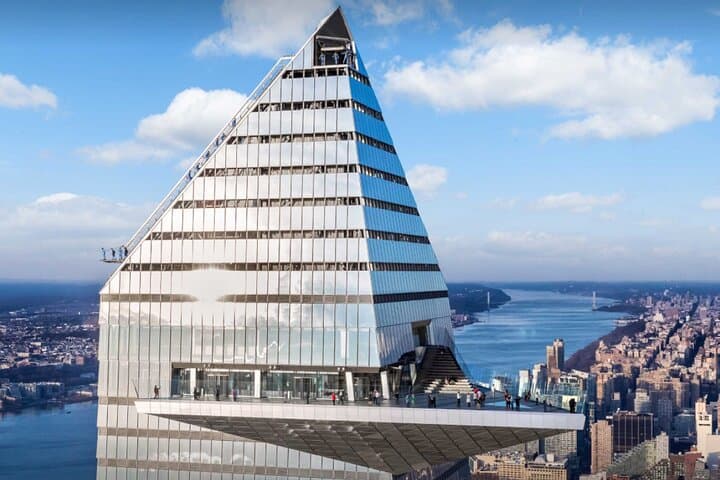
You step out of the elevator and the city exhales beneath you. Glass underfoot hums; the skyline tilts into a panorama you’ve seen a thousand times in photos and never like this — sliced and stripped down to geometry and light. The Edge at Hudson Yards doesn’t ask you to imagine the city; it insists you feel it: wind pushing at your jacket, the Hudson glinting like a ribbon, the Empire State and Statue of Liberty playing peekaboo between balconies of glass. That vertiginous first moment is the hook, but the tour has a second act — a soft landing at Little Island and a ribbon of urban wilderness on the High Line — and together the three create a compact lesson in New York’s past and present.
This three-hour, fully guided loop is city travel boiled to its most sensory elements. You begin above the grid, where the Edge places you roughly 1,100 feet above street level — the highest outdoor sky deck in the Western Hemisphere — with a steel-and-glass bite out into the air. The guide times the early access so you avoid the crowds that swell later, and the guide’s voice is a steady companion: quick historical notes, a few photo angles, and just enough silence for you to take in that drop-your-breath view. Then the tour reorients to river level: Little Island (Pier 55) feels like a secret garden dropped into the Hudson — a sculpted, undulating park that hums with plantings and performance spaces. Finally, you drift along the High Line, that celebrated conversion of 19th-century freight rail into a raised greenway, where steel and prairie plants argue playfully about what belongs to the city.
There’s history folded into each stop. The High Line’s reclamation by residents and designers changed how cities repurpose infrastructure; Little Island is the fruit of a controversial but ultimately realized public-private vision, designed to provide both open space and cultural programming on the river. Hudson Yards and the Edge represent New York’s 21st-century gamble: vertical mixed-use spaces where observation decks are as much urban theater as architecture. You feel the contradictions — commerce and consolation, surveillance and freedom — and that’s part of the appeal.
Geology plays a subtle role: from the bedrock that allowed Manhattan’s verticality to the Hudson’s brackish flow that once fed industry and now frames leisure. Culture and community tie together over coffee-break conversations with your guide: notes about how local artists use Little Island’s amphitheater, how peregrine falcons have nested on nearby skyscrapers, and where to slip away afterward for a quiet lunch.
Practicality is baked into the itinerary. The route is manageable — expect roughly one to one-and-a-half miles of walking spread across plazas, ramps, and boardwalks with benches and handrails. Elevation isn’t alpine — the Edge’s thrill comes from exposure, not climbing — but that glass floor and the angled walls change your sense of balance and speed. The tour length is three hours and it includes timed-entry tickets; it’s an efficient way to experience disparate city viewpoints without waiting in separate lines.
Why do this trip? Because it compresses the city’s vertical drama and waterfront calm into a morning that teaches you how New York looks and breathes from multiple vantage points. It’s perfect for people who want skyline photography without the line shuffle, for travelers who appreciate design-driven public spaces, and for anyone who enjoys a guided narrative that’s equal parts architecture, ecology, and city lore.
Timing matters. Early access means softer light on the glass and less jostling for the best angle. Weekdays are significantly quieter than weekends. Shoes with stable soles make the glass-floor moment less theatrical and more comfortable. Bring a windproof layer — exposure on the Edge is real — and leave bulky daypacks on the ground level; circulation on Little Island and the High Line is designed for nimble movement and local programming.
This is a tour that rewards curiosity. Ask about the reclaimed plants on the High Line, linger at Little Island’s cantilevered edges, and let the guide point out details you’d otherwise miss: the rivet pattern on an old rail, a plaque marking the neighborhood’s industrial past, or the way the Hudson’s light changes from bank to shore. It’s a short adventure with a long memory: you’ll leave with photos, a clearer sense of the city’s layered history, and the kind of small, urban stories that make New York feel freshly discovered.
Trail wisdom
Small choices, better day.
Go Early for Light and Lines
Early access reduces crowds and gives you softer morning light for skyline photos.
Glass Floor Prep
If heights unsettle you, keep your heels down and focus on the skyline horizon to steady your balance.
Pack Light
Small bags are easier to manage on Little Island’s paths and the High Line’s narrow sections.
Layer for Wind
The Edge is exposed; a windbreaker prevents the wind from turning pleasant into uncomfortable.
Local knowledge
Read the place, not just the route.
Watch for native species including Peregrine falcon (often nesting on skyscrapers), Double-crested cormorant and various waterfowl along the Hudson.
Keep an eye out for wildlife during the transition between areas and habitats. Respect distance guidelines.
Little Island and the Hudson River Park are part of urban conservation efforts to restore shoreline plantings and public access; stick to paths and respect planted areas.
Follow the guide's instructions on size limits, ethical handling, and leave-no-trace practices.
A quiet bench below 10th Avenue on the High Line with unfiltered river views. The west-side promenade near Little Island for sunset reflections
Locally recommended viewpoints and quiet spots known best to local operators.
The High Line transformed an elevated freight rail into a public park through community advocacy; Hudson Yards is a recent redevelopment of rail yards into a new mixed-use district.
Maritime roots and regional tradition shape the waterways and working coasts.
Seasonal guide
Four versions of the same landscape.
Spring
Best forWildflower displays on the High Line · Mild temperatures for walking
ChallengesUnpredictable rain · Busy weekends during blooms
Spring offers the most vivid plantings along the High Line and comfortable weather for the Edge and Little Island — bring a light rain shell.
Summer
Best forLong daylight for late photography · Vibrant cultural programming on Little Island
ChallengesHeat on exposed walkways · Higher humidity and larger crowds
Summer brings performances and long evenings; plan for hydration and sun protection, and expect more visitors.
Fall
Best forCrisp air and clearer skyline visibility · Autumn foliage contrasts on the High Line
ChallengesCooler winds on the Edge · Shorter daylight hours
Fall’s crisp light makes for clean skyline photos; layer up for wind on the Edge and cooler river breezes.
Winter
Best forStark, crystalline skyline views on clear days · Fewer crowds for an intimate experience
ChallengesCold, strong winds and potential closures · Icy or slippery surfaces
Winter can be spectacular on clear days but comes with real exposure — check closures and dress warmly.
Operator details
What the booking data adds.
Included
- ✓Expert first-class English speaking guide
- ✓Take photos of the spectacular and truly awe-inspiring Vessel
- ✓Includes timed easy access tickets to Edge Observation Deck & Little Island
- ✓Visit the spectacular and truly unique Little Island located offshore at Pier 55
Not included
- —Guide Tip
Good to know
- ✓Public transportation options are available nearby
- ✓Not recommended for travelers with spinal injuries
- ✓Travelers should have at least a moderate level of physical fitness
- ✓Please wear comfortable shoes as this tour involves a fair amount of walking, including over uneven surfaces, cobblestones, hills, inclines, declines and stairs.
- ✓Participants should be in good health - consult first with your doctor if you have any medical condition or are not used to regular exercise.
- ✓Wheelchairs, motorised scooters or any other device to assist mobility are not recommended, as we cannot guarantee: that all footpaths/sidewalks/curbs will have suitable ramps.
- ✓Anybody under the age of 18 years must be accompanied by somebody aged 18 years or older.
- ✓Not recommended for travellers with limited mobility
Pack with intention
What to bring.
Good to know
Common questions.
The Edge is secure and engineered to high safety standards; the experience involves exposed views and a glass floor, so those with strong vertigo may find it uncomfortable.
Plan the edges
The details that make the day easier.
The Edge at Hudson Yards projects roughly 1,100 feet above street level and is routinely described as the highest outdoor sky deck in the Western Hemisphere.
After the tour, head to Chelsea Market for a casual lunch and artisan bites, then walk the nearby streets of the Meatpacking District for rooftop bars and craft breweries — great places to trade notes and photos from the morning.
- Closest airports
- JFK, LaGuardia; Meeting point: Edge entrance at 30 Hudson Yards; Driving distance: within Manhattan — street parking limited; Cell service: reliable across all stops; Permits
- tickets
- Timed-entry tickets included with this tour; check for seasonal performance schedules at Little Island.
The Hudson River shoreline is ecologically sensitive; stay on designated paths, pack out trash, and use public transit to minimize emissions when visiting these high-traffic urban parks.
Explore by topic
Follow the threads.
Keep exploring
Make the story part of the trip.
Set out from Bass Harbor for a private, customizable day on Blue Hill Bay — lighthouses, puffins, seals, and the chance to feel Acadia from the water. Small groups, local captains, unforgettable views.
In four hours you can move from shaded canyon ferns to wind-scoured coastal ridgelines, guided by someone who knows where the light—and the hidden views—live. This private half-day hike on the Monterey Peninsula or Big Sur is compact, curated, and perfect for travelers who want depth without a multiday commitment.
 Related story
Beneath a sky of shifting light, Skaftafell’s ice reads like a map of time. This three-hour guided glacier hike mixes technical instruction with geology and culture: compact, safe, and unforgettable.