
What the day feels like
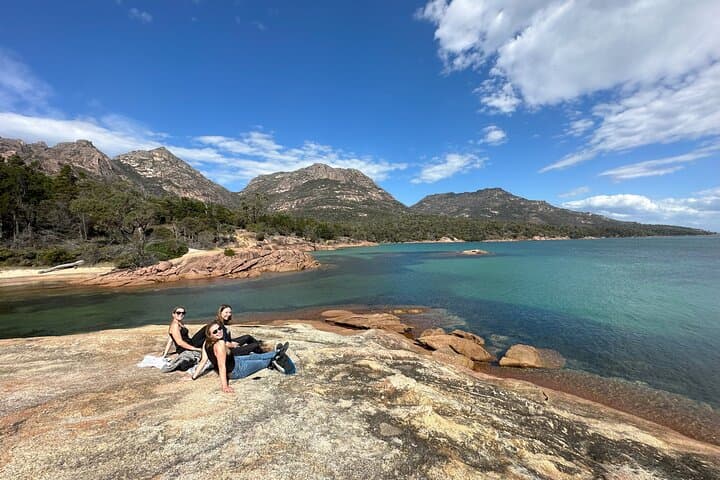
The van hums away from Hobart before dawn and the city’s sandstone chimneys blur into a horizon of blue and green. Within an hour the air has a different edge — cooler, salt-scented in places, laced with eucalypt oil — and the island begins to show the two faces that make Tasmania magnetic: alpine stone rising dark and ancient; coastlines that fold into impossibly bright bays. Over six days this guided loop stitches those extremes together: kunanyi/Wellington Park’s low ridges, the jagged silhouette of Cradle Mountain, the pastel sweep of Wineglass Bay in Freycinet, and the lichen-strewn granite of the Bay of Fires.
This is not a race. The itinerary leans on short walks and well-timed viewpoints, with opportunities to stretch into longer hikes if you want. Guides keep the rhythm — there’s time to watch a wallaby pick its way through button grass at dusk, to learn about Aboriginal palawa connections to the land, and to stand in a pocket of silence where only waves and wind make sound. Nature here has attitude: the ocean dares you to get closer, the rainforest holds its secrets, and the mountains insist you slow down and pay attention.
Geology and history are never far from the surface. Cradle Mountain’s fractured dolerite was pushed up in the Jurassic, then carved by ice into ridges and tarns; the coastal granite of Freycinet is older, polished by millennia of wind and sea. Human stories layer over this deep time — palawa people lived here for tens of thousands of years, and later European exploration and convict-era operations reshaped some parts of the coastline. Today, Tasmania balances conservation and tourism: much of the route passes through protected lands in the Tasmanian Wilderness World Heritage Area and state national parks, managed with an eye toward minimizing impact.
The practical prize here is variety in a compact package. Each day centers on a different ecosystem: quick, interpretive walks through wet rainforest under ancient myrtle and sassafras; a morning scramble to a Cradle Mountain lookout; a half-day on the pink-sand arc of Wineglass Bay where the water turns an impossible turquoise; and a final slow circuit along the Bay of Fires where lichen-painted rocks look almost deliberate. Wildlife sightings are frequent if you’re quiet — Tasmanian devils at sanctuary reserves, wallabies at dawn and dusk, seabirds wheeling off the headlands.
For travelers, this tour works two ways. If you’re short on time but want a curated snapshot of Tasmania’s highlights, it’s efficient: the group logistics, ferrying between landscapes, and knowledgeable guides mean you’re not wasting hours planning. If you prefer to linger, the itinerary is flexible: ask your guide for extensions or harder options on walking days to tailor the challenge. The trip is eco-certified, which matters: small-group sizes, emphasis on natural interpretation, and conscious choices about local suppliers reduce footprint and deliver a more meaningful engagement with place.
Practical details you’ll want to note: the walking is intentionally moderate — daily hikes are usually 30–90 minutes with optional half-day extensions; terrain ranges from coastal sand and boardwalks to rocky alpine paths and well-graded trails; expect changeable weather and pack layers; and the overall physical demand is light-to-moderate, but you’ll appreciate good footwear and a baseline fitness level for quick scrambles and uneven surfaces.
Beyond the trail, Tasmania’s food and craft culture are part of the reward. You’ll taste ocean-fresh scallops and oysters, meet producers of single-origin Tasmanian cheese, and likely get a table at a local pub with a solid beer list and stories from the guide about the town you’re passing through. Accommodation is a mix of comfortable guesthouses and small hotels — this isn’t a rough-and-ready expedition, it’s an approachable, sensory-forward tour of the island’s best bits.
If you go: move slowly at the edges of the tracks, carry water and a rain layer, and bring a camera with a good zoom for wildlife and wide-angle for the coastlines. Book early for summer months; the best viewpoints get busy. And leave with the sense that Tasmania resists simple labels: it’s both island and ancient continent, remote and intensely accessible in a single week. This tour hands you the map and a guide; what you do with the space between the ridges and the sea is your own kind of discovery.
Trail wisdom
Small choices, better day.
Layer for variable conditions
Weather shifts fast between coast and mountain — pack a lightweight waterproof shell and merino layers for warmth and breathability.
Good footwear matters
Choose supportive hiking boots or trail shoes with tread — tracks can be muddy, rocky or sandy on the same day.
Carry water and snacks
Daily walks are short but remote; bring at least 1–2 liters and high-energy snacks for longer options.
Respect wildlife distances
Tasmanian devils and wallabies are wild — use a zoom lens and avoid feeding or approaching.
Local knowledge
Read the place, not just the route.
Watch for native species including Tasmanian devil, Bennett's wallaby.
Keep an eye out for wildlife during the transition between areas and habitats. Respect distance guidelines.
This operator is eco-certified and emphasizes leave-no-trace practices; many sites are within the Tasmanian Wilderness World Heritage Area and protected by state park management.
Follow the guide's instructions on size limits, ethical handling, and leave-no-trace practices.
Clifftop lookout near Cape Tourville for sunrise views of Wineglass Bay. A short, unsigned trail to a quiet cove on the Bay of Fires accessible at low tide
Locally recommended viewpoints and quiet spots known best to local operators.
Tasmania’s landscape holds deep palawa Aboriginal heritage and later European colonial and convict-era changes that shaped settlement and coastal use.
Maritime roots and regional tradition shape the waterways and working coasts.
Seasonal guide
Four versions of the same landscape.
Spring
Best forWildflower displays · Milder hiking temperatures
ChallengesChangeable weather · Cooler nights
Spring brings bright wildflowers and active wildlife; days are pleasant but pack for wind and rain.
Summer
Best forCalmer coastal conditions · Longer daylight
ChallengesHigher park visitation · Occasional heat on exposed hikes
Summer is the most popular time to visit for beach clarity and extended daylight — book early and start hikes early to avoid crowds.
Fall
Best forCrisp light for photography · Fewer tourists
ChallengesShortening days · Cooler offshore winds
Autumn offers golden light and quieter trails; evenings cool quickly so bring warm layers.
Winter
Best forSnow-capped alpine vistas · Dramatic coastal storms
ChallengesSnow and ice at Cradle Mountain · Short daylight and colder temps
Winter rewards with stark landscapes and fewer visitors but requires warm gear and flexibility for weather-related changes.
Pack with intention
What to bring.
Good to know
Common questions.
Moderate fitness is ideal: days involve several short walks (30–90 minutes) with optional extensions; you don’t need technical climbing skills.
Plan the edges
The details that make the day easier.
Cradle Mountain is part of the Tasmanian Wilderness World Heritage Area, recognized for its outstanding natural and cultural values.
After a day on the trail, head back to Hobart for fresh seafood at Mures Lower Deck or a whisky tasting at Lark Distillery; Salamanca Market (Saturdays) is great for local produce and craft, and MONA offers a provocative cultural counterpoint.
- Closest airport
- Hobart International Airport (HBA)
- Typical driving from Hobart to first park
- 1–2 hours
- Cell service
- good near towns, patchy in national parks
- Permits
- no general park entry fee; camping fees may apply
- Confirmation
- Instant
The tour is eco-certified — small groups and responsible supplier choices reduce impact. Stay on marked tracks and pack out all litter to protect fragile coastal and alpine ecosystems.
Explore by topic
Follow the threads.
Keep exploring
Make the story part of the trip.
In four hours you can move from shaded canyon ferns to wind-scoured coastal ridgelines, guided by someone who knows where the light—and the hidden views—live. This private half-day hike on the Monterey Peninsula or Big Sur is compact, curated, and perfect for travelers who want depth without a multiday commitment.
 Related story
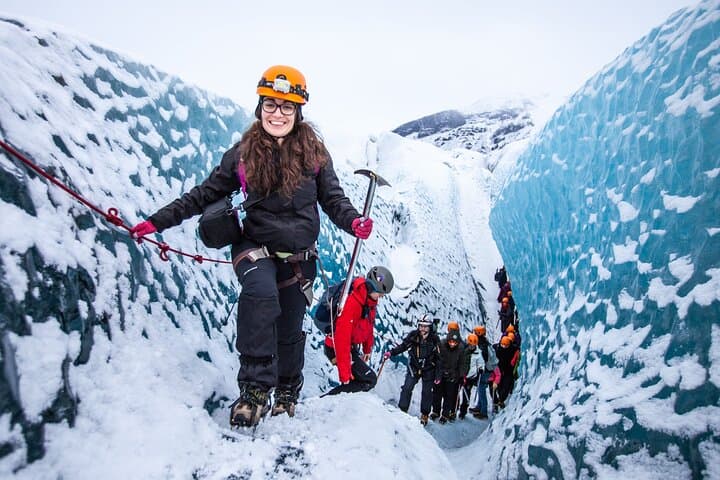
Beneath a sky of shifting light, Skaftafell’s ice reads like a map of time. This three-hour guided glacier hike mixes technical instruction with geology and culture: compact, safe, and unforgettable.
 Related story
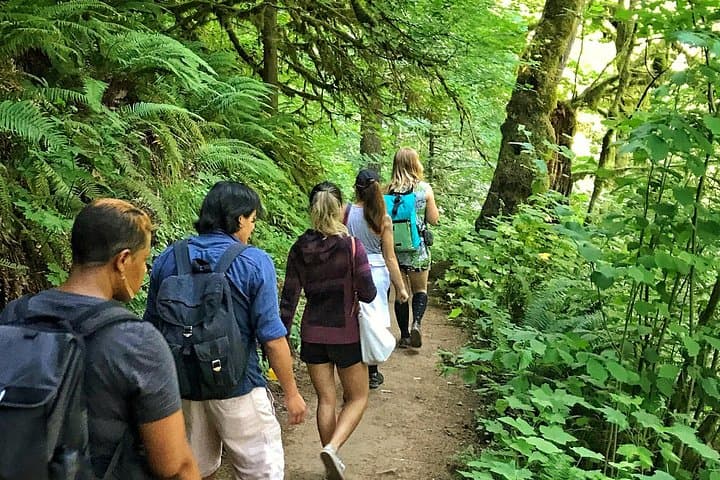
Lose the city for a few hours without leaving it: this 5-mile, 900-foot-gain Forest Park loop threads old-growth pockets, city viewpoints, and cultural landmarks for a compact taste of Portland’s wild side. Expect moss, roots, and stories.