
What the day feels like
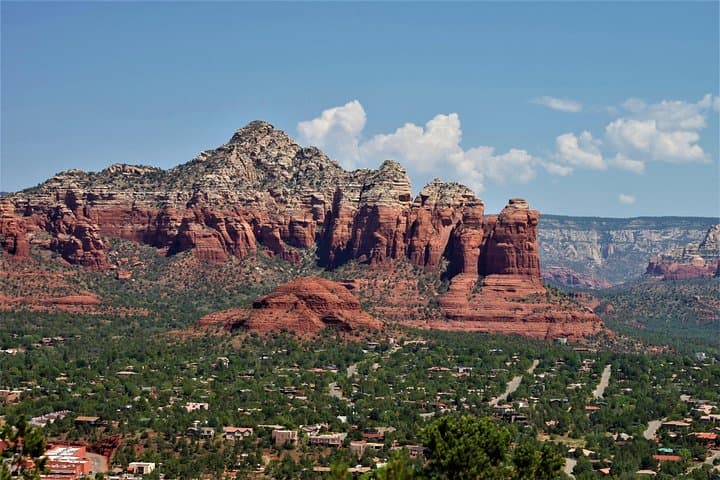
The pavement hums beneath the tires as Sedona’s skyline of sandstone ignites in the morning light. Cathedral Rock stands guard to the south, shoulders squared, as if it’s been waiting for you to arrive. Your guide eases the Jeep into the day—windows down, desert air moving like a slow river through the cabin—while the red walls crowd the horizon and invite closer inspection. In Sedona, the road doesn’t just get you somewhere; it narrates the landscape in real time.
This is the Highlights of Sedona, a private, on-road Jeep tour that trades white-knuckle jolts for a smooth roll through one of the Southwest’s most photographed amphitheaters. It’s two hours of curated viewpoints and context: the kind of drive where sandstone bluffs keep time with the sun and the guide’s stories stack layers of meaning onto each overlook.
Airport Mesa arrives first, a mesa with its own loyal following. You step out to the lookout and the city falls away behind you—just junipers, the distant hiss of the highway, and a view that explains why artists unpacked their lives here. The mesa looks deceptively calm, but the wind has a habit of nudging you toward the edge, reminding you that time moves fast in a place built by erosion. Below, Sedona’s checkerboard roads trace the red earth as if sketching. Your guide points out the Schnebly Hill Formation, those rust-red layers steeped in iron oxide, and suddenly the colors feel less like a coincidence and more like the outcome of an ancient chemistry experiment that never stopped running.
From there the asphalt threads toward the Chapel of the Holy Cross, a modernist cross pressed into the rock like a bookmark. Built in 1956, the chapel feels both audacious and inevitable—a line of quiet drawn across deep time. On most days the chapel’s terrace gathers a respectful hush. The rock faces here don’t just tower; they participate, throwing light back and challenging you to find the right angle. Your guide might tell you about Sedona Arabella Schnebly, namesake of the town, and the earlier caretakers of this landscape—the Yavapai and Apache peoples—who moved through these canyons long before the first road was surveyed. The story stretches out, and the pavement simply makes it easier to follow.
Cathedral Rock closes the loop with drama. Even at a distance, its buttes feel dynamic, like they’re laboring upward. Oak Creek sparkles nearby, cutting its own slow argument through the stone. On this on-road tour you won’t crawl into ruts or crest ledges; you’ll park at classic overlooks and walk short paths to frames you’ve seen in magazines and postcards. It’s friendly to knees and backs, to grandparents and toddlers, to anyone who wants a big landscape without the rough ride.
There’s a practical brilliance to staying on the asphalt in Sedona. The paved pullouts give you easy access to top-tier vistas—Airport Mesa, the Chapel, Cathedral—and the guide’s commentary turns rocks into chapters. Geology becomes biography. The Schnebly Hill sandstone formed when this was a desert of dunes; later, Oak Creek carved a ribbon of shade and water through a hard country, and today those layers express themselves in improbable towers. In monsoon season, clouds muscle up from the south and add a theater of light; in winter, a dusting of snow turns the red into something cinematic. The road knows all of these versions and carries you to them with minimal fuss.
Beyond the views, this tour is a tidy introduction to Sedona’s culture. You pass galleries where painters and sculptors wrestle with color and form; you pass trailheads where hikers trade gaiters for camera straps and back again; you pass spiritual centers where the vortex lore lives on. Your guide may share how Sedona became a hub for wellness seekers and outdoor lovers alike, and how local conservation efforts keep the fragile desert soil from being loved to death. It’s a reminder that the red rock experience is both accessible and delicate—and that respect travels well on four wheels.
Even the logistics feel easy. Two hours is enough time to find a rhythm, to absorb the landmarks and their backstories without rushing. There’s no technical skill required—just curiosity, a hat, a water bottle, and a camera. Leave with pockets full of facts and a mental map you can use to plan the rest of your day: maybe a stop at Crescent Moon Picnic Area to watch Cathedral Rock catch the afternoon light, or a walk along the Airport Loop Trail if your legs are itching for motion.
Sedona’s beauty has a way of rewriting your sense of distance. On this private, on-road loop, the city and the wilderness sit in the same frame, negotiating with one another. The rocks—tall, stubborn, endlessly expressive—lean in as the Jeep rolls past, and for a couple of hours you get to listen. No bumping, no scrambling. Just a straightforward conversation with a landscape that knows how to hold one.
Practical Edge: Expect roughly two hours from pickup to drop-off, with short, easy walks at overlooks. The tour is private and remains on paved roads—ideal for families, seniors, or anyone sensitive to rough terrain. Bring sun protection year-round; summer afternoons can be hot, and winter mornings can feel sharp. If you’re chasing the best light, book early or late in the day. And remember that the Chapel is an active place of worship; treat it with the same respect you offer the trail.
For travelers balancing inspiration with logistics, this is a smart first move in Sedona. You’ll collect the highlights, understand the geology, and set your bearings—all without leaving the comfort of the road. Then, with a tuned-in eye and a sense of the place’s tempo, you can decide how to spend the rest of your time in the red rock maze beyond the windshield.
Trail wisdom
Small choices, better day.
Chase the best light
Book sunrise or golden hour for softer contrast and fewer crowds at Airport Mesa and Cathedral Rock viewpoints.
Hydrate even on wheels
Desert air dehydrates quickly—carry at least 1 liter per person, even though you’re mostly on the road.
Bring a polarizer
A circular polarizing filter deepens blue skies and cuts glare off red rock, especially after monsoon rains.
Respect the Chapel
The Chapel of the Holy Cross is an active place of worship—keep voices low and dress modestly; parking can be limited.
Local knowledge
Read the place, not just the route.
Watch for native species including Mule deer, Javelina.
Keep an eye out for wildlife during the transition between areas and habitats. Respect distance guidelines.
Stick to paved pullouts and established paths to protect fragile desert soils and vegetation; pack out all trash and avoid climbing on cryptobiotic crust.
Follow the guide's instructions on size limits, ethical handling, and leave-no-trace practices.
Crescent Moon Picnic Area for the classic Cathedral Rock reflection on Oak Creek. Sedona Airport Scenic Overlook at sunset for panoramic color shifts
Locally recommended viewpoints and quiet spots known best to local operators.
Sedona sits on ancestral lands of the Yavapai and Apache peoples; the Chapel of the Holy Cross was completed in 1956, a modernist landmark integrated into the red rock.
Maritime roots and regional tradition shape the waterways and working coasts.
Seasonal guide
Four versions of the same landscape.
Spring
Best forMild temperatures · Wildflower edges in Oak Creek Canyon
ChallengesWindy afternoons · High visitation during spring break
Expect comfortable days and clear views; mornings are best to beat traffic at major overlooks.
Summer
Best forDramatic monsoon skies · Early morning or sunset tours
ChallengesHigh heat by midday · Afternoon thunderstorms and lightning
Start early or go late; storms can pop quickly—guides monitor weather and may adjust stops for safety.
Fall
Best forStable weather · Cottonwood color along Oak Creek
ChallengesPeak-season crowds · Limited parking at top viewpoints
A sweet spot for visibility and comfort; book ahead for prime times and expect popular overlooks to be busy.
Winter
Best forSnow-dusted red rock photos · Quieter roads
ChallengesIcy mornings · Short daylight hours
Layer up—mornings can be cold. Light snow creates striking contrast, but some walkways may be slick.
Operator details
What the booking data adds.
Included
- ✓2 hour guided jeep tour
- ✓Please note: This is NOT an off-road experience.
- ✓Local taxes
Not included
- —Gratuities not included
- —Average gratuity is 15% - 20% if you enjoyed your tour
Good to know
- ✓Service animals allowed
- ✓Public transportation options are available nearby
- ✓Specialized infant seats are available
- ✓Not recommended for travelers with spinal injuries
- ✓Not recommended for pregnant travelers
- ✓Not recommended for travelers with poor cardiovascular health
- ✓Suitable for all physical fitness levels
- ✓A minimum of 2 people per booking required
- ✓Please note: This is NOT an off-road experience.
- ✓Dogs are always welcome
- ✓Pregnant guests are able to do this tour
Pack with intention
What to bring.
Good to know
Common questions.
No. This is an on-road experience that uses paved roads and established pullouts for scenic overlooks.
Plan the edges
The details that make the day easier.
Sedona’s signature red color comes from iron oxide (hematite) staining in the Schnebly Hill Formation, deposited as ancient desert sand dunes over 250 million years ago.
After your tour, grab Sonoran-inspired plates at Elote Cafe or a burger and house-brewed pint at Sedona Beer Co. For coffee and pastries, stop at Indian Gardens in Oak Creek Canyon. If you want a short walk with a big payoff, head to Crescent Moon Picnic Area for sunset on Cathedral Rock—and then cap the night with stargazing at the Sedona Airport Overlook.
- Closest airports
- Flagstaff Pulliam (FLG, ~45 minutes) or Phoenix Sky Harbor (PHX, ~2 hours). Meeting point: Central Sedona (confirm with operator). Driving distance: 5–15 minutes between most stops. Cell service: Generally good in town; spotty near canyons. Permits: No trail permits for this tour; bring small cash for certain scenic parking areas and respect chapel parking rules.
Sedona’s desert crust and vegetation are fragile—use paved pullouts, keep to established paths, and never trample cryptobiotic soil. Sacred and cultural sites deserve quiet and respect; leave no trace so others can share the same experience.
Explore by topic
Follow the threads.
Keep exploring
Make the story part of the trip.
 Related story
Less than two hours from Nairobi, Kereita Forest pairs hands-on canopy adventure with quiet montane trails and a sobering colonial history—perfect for families, teams, and curious travelers seeking a full-day pulse of nature.
Set out from Bass Harbor for a private, customizable day on Blue Hill Bay — lighthouses, puffins, seals, and the chance to feel Acadia from the water. Small groups, local captains, unforgettable views.
In four hours you can move from shaded canyon ferns to wind-scoured coastal ridgelines, guided by someone who knows where the light—and the hidden views—live. This private half-day hike on the Monterey Peninsula or Big Sur is compact, curated, and perfect for travelers who want depth without a multiday commitment.