
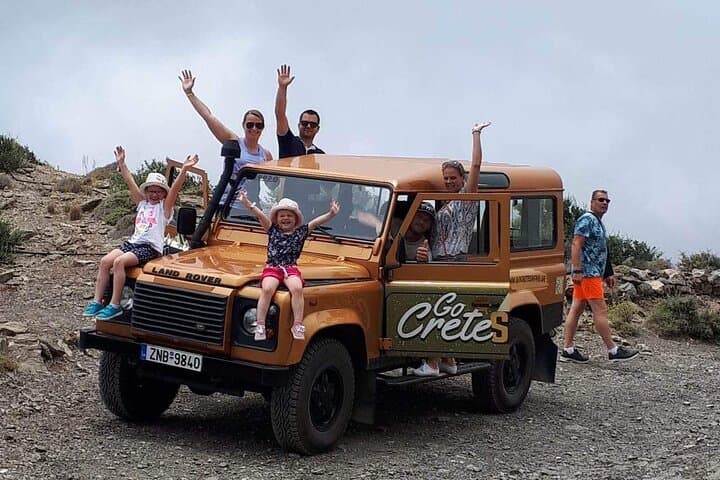
What the day feels like
By late morning the van peels away from Heraklion’s hum and the landscape unfurls—olive groves first, then terraces that look like patchworked quilts, and finally the south: a ragged line of cliffs and blue that refuses to be left behind. The Adventure Safari Tour Secrets of the southern Crete is the sort of day trip that organizes the island’s contradictions into a single, kinetic loop: ancient stone villages that have been lived in for millennia, narrow canyons that still feel primordial, a waterfall that appears like a private discovery, and a tidy slice of beach where the Mediterranean lets you forget time.
This is not a hike-only outing or a simple coastal cruise. It’s a curated cross-section of Crete—culture, geology and the sea—compressed into roughly eight and a half hours (510 minutes). Guides here are translators of place: they point out the seams where Minoan terraces give way to Byzantine chapels, where roof tiles and dovecotes punctuate a horizon that once hosted a maritime superpower. You’ll move at the island’s tempo, which means a steady curiosity, plenty of photo stops, and the occasional break for a small-town espresso and a chat with a shopkeeper whose family has lived in the same house for generations.
Geologically, southern Crete is more carved than cultivated. The limestone shoulders of the island have been chewed by weather and water into ribbons of gorge and canyon. In spring, melt and runoff give those cuts teeth—streams daring you forward with their rush. In summer, the same channels somberly conserve water, their dry beds holding the memory of winter storms in rust-colored pebbles. Where water lingers, plants thicken: oleander and tamarisk make the riverbanks feel deliberate, and at hidden pool edges you’re often met by the hush of birds more accustomed to secrecy than people.
Culturally the south is quieter than the north coast’s historical flashpoints—but its stories run deep. Small folklore museums preserve carved wedding chests, embroidered shirts and tools that map a life carved from the land. Villages trade on the local: fresh goat cheese, hand-pressed olive oil, and raki poured with a matter-of-fact warmth. History is never far—Knossos and the larger Minoan narrative sit as a backdrop to daily life, their influence felt in ruins, pottery motifs and the island’s agrarian rhythms.
The tour moves in layers: first the villages, then the canyons and waterfalls, and finally the sea. The route gives the canyon a moment to breathe: step into shadow and the temperature drops, the rock face is a textural map of millions of years, and if you listen close enough the canyon seems to speak—water remembers. When you arrive at the waterfall, it’s not necessarily Niagara drama; it’s intimacy. A cascade threading through moss and stone, a place for photos, a cooling splash and a quiet respect for the geology that made it possible.
The latter half of the day trades stone for sand. The southern beaches have a wilder temperament—waves and wind shaped by open Mediterranean fetch. The tour’s final act is typically a calm bay where you can swim in clear, blue water or simply sit on rocks and let the sea scrub away the day’s dust. Lunch is included on many departures: a showcase of Cretan home cooking that mirrors the route—simple, fresh and locally sourced.
Practicalities matter here. The day is long by design; comfortable shoes for uneven village streets and canyon rocks are non-negotiable. Bring a swim kit and a lightweight layer—shadows in the canyons and sea breeze late in the day can be cool, even when the sun is strong. If you want to shoot the day, bring a polarizer for the sea and a mid-range zoom for village and canyon portraits.
This tour is well-suited to travelers who want a condensed taste of Crete beyond the beach postcard. Families, active travelers and culturally curious visitors will all find something to keep them engaged. The pace is curated but generous—long enough to sink into place but short enough to be a day return to Heraklion.
For anyone tempted to linger after the tour: southern Crete rewards a slower return. Book a night or two in a coastal taverna village, hire a local guide for a canyon walk at dawn, or simply trace the coast by rental car. The island rewards slow curiosity: accept the invitation.
Why go? Because the Secrets of Southern Crete tour stitches together pieces of the island that feel both intimate and essential. It is a practical day of varied terrain, cooked food, and small discoveries—a deft introduction to an island whose easiest stories are only ever the beginning.
Trail wisdom
Small choices, better day.
Wear grip-friendly footwear
Village stone streets and canyon rocks can be slick—light hiking shoes or trail runners with good tread are ideal.
Bring swimwear and quick-dry towel
The tour typically stops at a calm bay—having your suit ready means you can jump in without delay.
Pack sun protection
Crete’s sun is strong: bring SPF 30+, a brimmed hat and sunglasses for midday stretches.
Carry local cash
Small village shops and tavernas may prefer cash for purchases and tips.
Local knowledge
Read the place, not just the route.
Watch for native species including Audouin’s gull and other coastal seabirds, Mediterranean gecko and local lizard species.
Keep an eye out for wildlife during the transition between areas and habitats. Respect distance guidelines.
Southern Crete has sensitive coastal and canyon habitats—respect posted signs, avoid disturbing shoreline caves (potential monk-seal habitat), and support local businesses to help sustain community economies.
Follow the guide's instructions on size limits, ethical handling, and leave-no-trace practices.
A quiet village square where locals gather for afternoon raki and card games. A small folklore museum preserving regional textiles and tools
Locally recommended viewpoints and quiet spots known best to local operators.
The south of Crete sits within the broader reach of Minoan and later Byzantine influence; small villages often preserve traditions and artifacts documenting rural island life.
Maritime roots and regional tradition shape the waterways and working coasts.
Seasonal guide
Four versions of the same landscape.
Spring
Best forWildflowers · Canyon streams · Cool hiking
ChallengesUnpredictable showers · Muddy canyon sections
Spring opens the canyons and terraces—water is present, wildflowers bloom and temperatures are comfortable for walking.
Summer
Best forSwimming · Long daylight hours · Village festivals
ChallengesHigh heat mid-day · Crowded beaches in peak spots
Summer guarantees warm sea swims; aim for early starts and late-afternoon canyon visits to avoid the hottest sun.
Fall
Best forWarm sea after summer heat · Wine and harvest culture · Clear visibility
ChallengesShorter daylight · Occasional autumn storms
Fall offers warm waters and mellow light—ideal for photography and lingering lunches in village squares.
Winter
Best forQuiet villages · Low-season pricing · Birdwatching
ChallengesCooler temperatures · Some stops may be closed
Winter is quiet and atmospheric; the landscape is greener but swimming is unlikely and services may be reduced.
Operator details
What the booking data adds.
Included
- ✓Experienced and informative drivers
- ✓Private transportation
- ✓Pick-up and return to your hotel
- ✓Lunch
- ✓Tour with 4WD vehicle & fuel
Not included
- —any private expenses
Good to know
- ✓Infants and small children can ride in a pram or stroller
- ✓Service animals allowed
- ✓Public transportation options are available nearby
- ✓Specialized infant seats are available
- ✓Not recommended for travelers with spinal injuries
- ✓Not recommended for pregnant travelers
- ✓Not recommended for travelers with poor cardiovascular health
- ✓Suitable for all physical fitness levels
- ✓Transportation is wheelchair accessible
- ✓Confirmation will be received within 48 hours of booking, subject to availability
- ✓Don't forget : Walking shoes, Sunscreen, Hat & Sun glasses, Jacket, Water
- ✓Gocretesafari reserves the right to change routes or stops for safety reasons
- ✓We provide child seats just let us know when you book your tour
- ✓Most travelers can participate
- ✓This tour/activity will have a maximum of 8 travelers
Pack with intention
What to bring.
Good to know
Common questions.
Most departures are from Heraklion; check the booking for included pickup—many options offer hotel pickup within the city limits.
Plan the edges
The details that make the day easier.
Matala’s cliffside caves were once Roman-era quarries and became a hippie haven in the 1960s; Crete is also the center of the ancient Minoan civilization—Knossos lies near Heraklion.
After the tour, head to a family-run taverna for dakos (Cretan barley rusk salad), grilled fish and local wine or raki; small coastal villages often host live music nights—ask your guide for a local recommendation.
- Closest airport
- Heraklion (N. Kazantzakis)
- Typical driving from Heraklion to south-coast stops
- 40–90 minutes
- Cell service
- mostly available but intermittent in deep canyons
- Permits
- none typically required
This coastline may host rare marine life; avoid entering sea caves, pack out what you bring, and choose operators who employ local guides and source food from nearby producers.
Explore by topic
Follow the threads.
Keep exploring
Make the story part of the trip.
Set out from Bass Harbor for a private, customizable day on Blue Hill Bay — lighthouses, puffins, seals, and the chance to feel Acadia from the water. Small groups, local captains, unforgettable views.
In four hours you can move from shaded canyon ferns to wind-scoured coastal ridgelines, guided by someone who knows where the light—and the hidden views—live. This private half-day hike on the Monterey Peninsula or Big Sur is compact, curated, and perfect for travelers who want depth without a multiday commitment.
 Related story
Beneath a sky of shifting light, Skaftafell’s ice reads like a map of time. This three-hour guided glacier hike mixes technical instruction with geology and culture: compact, safe, and unforgettable.