
What the day feels like
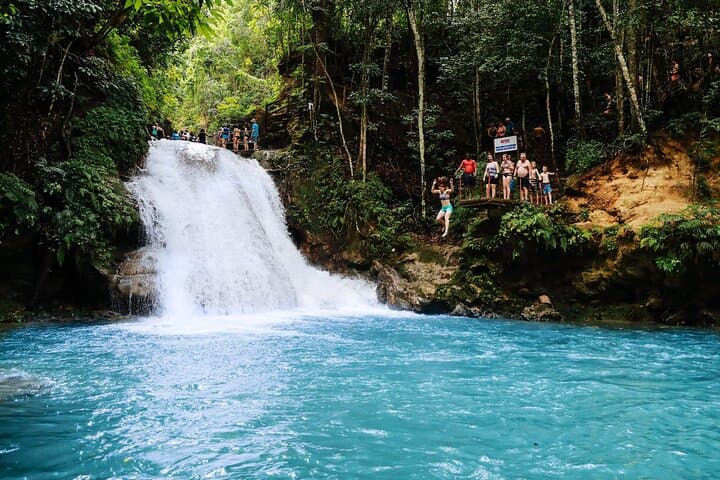
You arrive from the humid bustle of Ocho Rios in a van that hums along banana-lined roads; the air cools as the pavement gives way to a narrower lane and the sound of cascading water tucks itself into the background. At the gate a guide greets you like a familiar friend—part local historian, part safety officer—and leads the way through a gully where sunlight threads down between breadfruit and fig trees. Within five minutes the limestone opens up into a series of turquoise stepped pools: the Blue Hole. The water is impossible to ignore. It dares you in the only language nature seems to speak here—clear, inviting, and shockingly cold against a skin still warm from the Caribbean sun.
The Blue Hole near Ocho Rios—sometimes called Island Gully Falls or Secret Falls—is a compact, kinetic place. It’s not a single massive drop but a chain of small cascades and plunge pools carved into Jamaica’s limestone bedrock. The experience is kinetic in part because the site asks you to move: scramble up wet rock with a rope, let the current carry you through a narrow chute, or leap from a low cliff into a bowl of blue-green water. It’s a playground, but one framed by geology and history: ancient coral, uplifted and etched by water over millennia, now hosting a modern-day ritual of jumps, swims, and selfies.
There’s a practical choreography to getting the most from the Blue Hole. The half-day private tour from Ocho Rios typically lasts about 90 minutes on-site, with guides who adjust the pace to your group and ferry you round-trip from town. The walk around the pools is short—roughly 1 mile roundtrip with about 150 feet of cumulative elevation gain—yet parts are steep and slippery. You’ll cover slick limestone steps, narrow rock ledges and short, rooted stair sections under canopy. For most travelers the effort is moderate, but it pays off with high-reward swims and panoramic views back toward the coast.
Culturally, the Blue Hole sits in a pocket of St. Ann Parish where tourism and local life collide. Vendors sell cold drinks and grilled snacks outside the entrance; in the lane above you’ll sometimes hear the rhythm of dancehall or the scent of jerk seasoning. Like many Jamaican attractions, the Blue Hole is woven into local identity—guides are often born in nearby communities, and they’ll point out medicinal plants, bird species and the old stonework of small river crossings. The falls themselves are a reminder that Jamaica’s interior is as much an attraction as its beaches—small rivers and sinkholes, not coral reefs, create some of the island’s best day-trip moments.
Geologically, this place makes sense: Jamaica’s limestone plateau is riddled with caves and sinkholes where rainwater and streams have ground away rock for thousands of years. The pools take on that brilliant color because the water is clear and the light reflects off pale rock beneath—no tropical trickery, just chemistry and clarity.
If you’re planning the trip: book a private half-day that includes round-trip transport from Ocho Rios, especially if you don’t want to rent a car. Tours often run for about 90 minutes on-site and start times can be flexible—handy if you’re coordinating with a cruise arrival. Expect to pay from about USD 65 per person, and confirm whether lunch is included (most tours offer a lunch stop at your own expense). Guides will supply life jackets for weaker swimmers and ropes for the steeper climbs; bring water shoes or sturdy sandals with grip rather than bare feet and keep a dry bag for valuables.
Timing matters. Mornings before the heat peak are best for calmer pools and smaller crowds; afternoons can be noisier as multiple tour groups converge. Rain will change the experience—heavy rain can spike currents and make ledges slick; consider rescheduling if a tropical downpour moves through.
For photographers, the Blue Hole is generous: framed portraits on a rope swing, long-exposure shots of silky cascades, close-ups of water-worn rock and macro compositions of moss and lichen. But remember—shooting from wet rock means steady footing is non-negotiable.
The Blue Hole is an easy, high-reward adventure. It’s not a multi-day expedition or a technical climb—it’s a place meant to be felt: the brief sting of cool water, the weightless moment after a jump, the satisfying scrape of a palm on limestone when you haul yourself to the next pool. It’s ideal for travelers who want a compact dose of nature, movement, and local color without a big logistical load. Bring appropriate footwear, respect the guides (they know the current and the tricks to keep everyone safe), and leave with wet hair, a sun-creased smile, and a better sense of Jamaica beyond the shore.
Trail wisdom
Small choices, better day.
Wear water shoes
Slick limestone is common—grippy water shoes protect feet and provide traction for scrambling between pools.
Go early
Arrive in the morning to avoid crowds and the heat; morning light also makes for cleaner photos.
Use the guide
Local guides know safe jump spots and current conditions—follow their instructions for a safer visit.
Protect electronics
Store phones and cameras in a dry bag or waterproof case—water + limestone = instant disaster for gear.
Local knowledge
Read the place, not just the route.
Watch for native species including Jamaican Iguana (sightings rare; more likely to see small lizards and anoles), Kingfishers and other freshwater birds.
Keep an eye out for wildlife during the transition between areas and habitats. Respect distance guidelines.
High visitor traffic can stress fragile riverbeds—support local guides who help manage access, avoid sunscreen and insect repellents that wash into pools, and pack out all trash.
Follow the guide's instructions on size limits, ethical handling, and leave-no-trace practices.
A short uphill trail above the falls that opens to a quiet overlook toward the coast. Small roadside jerk stalls near the entrance serving patties and fresh coconut water
Locally recommended viewpoints and quiet spots known best to local operators.
The falls sit within St. Ann Parish, an area shaped by plantation-era land use; local guides often share stories about community history and traditional uses of river plants.
Maritime roots and regional tradition shape the waterways and working coasts.
Seasonal guide
Four versions of the same landscape.
Spring
Best forcalmer water · fewer crowds · full greenery
Challengesoccasional showers · muddy approach after rain
Spring falls in Jamaica’s drier window; pools are clear, vegetation is lush, and rainfall is usually lighter than summer.
Summer
Best forwarmest swim temperatures · longer daylight · vibrant vegetation
Challengesheavier rain showers and potential flashier currents · higher humidity
Summer brings warmer air but also frequent brief downpours—check the forecast and avoid visiting right after heavy rain.
Fall
Best foroff-peak travel · mild weather · good light for photos
Challengeshurricane season risk (Aug–Nov) and more unsettled weather
Fall can be quieter but carries hurricane-season volatility—keep travel insurance up to date and monitor weather.
Winter
Best fordry conditions · cooler breezes · prime tourist season
Challengeshigher visitor numbers · book tours early during peak months
Winter (Dec–Apr) is the island’s dry season and the most reliable time for sunny, calm conditions—expect more tourists.
Operator details
What the booking data adds.
Included
- ✓Friendly guide
- ✓Bottled water
- ✓Air-conditioned vehicle
Good to know
- ✓Wheelchair accessible
- ✓Public transportation options are available nearby
- ✓Not recommended for travelers with spinal injuries
- ✓Not recommended for pregnant travelers
- ✓Not recommended for travelers with poor cardiovascular health
- ✓Travelers should have at least a moderate level of physical fitness
Pack with intention
What to bring.
Good to know
Common questions.
Expect about 90 minutes at Blue Hole on a private half-day tour; total door-to-door time varies with pickup location in Ocho Rios.
Plan the edges
The details that make the day easier.
The Blue Hole area is formed from limestone bedrock—many of Jamaica’s inland pools and sinkholes are carved from ancient coral and shell deposits uplifted over geological time.
After the swim, head back toward Ocho Rios for a plate of ackee and saltfish or a roadside jerk chicken stop—look for family-run spots where locals eat to get the most authentic flavors.
- Closest major airport
- Sangster Int'l (MBJ) ~1.5–2 hours drive; Driving distance from Ocho Rios town center: 10–25 minutes; Cell service: intermittent at the falls; Permits: none for day visitors, but respect local entrance fees and guide rules.
This is a sensitive freshwater site—use biodegradable sunscreen, bring reusable water bottles, and follow your guide’s instructions to minimize bank erosion and disturbance to aquatic habitats.
Explore by topic
Follow the threads.
Keep exploring
Make the story part of the trip.
 Related story
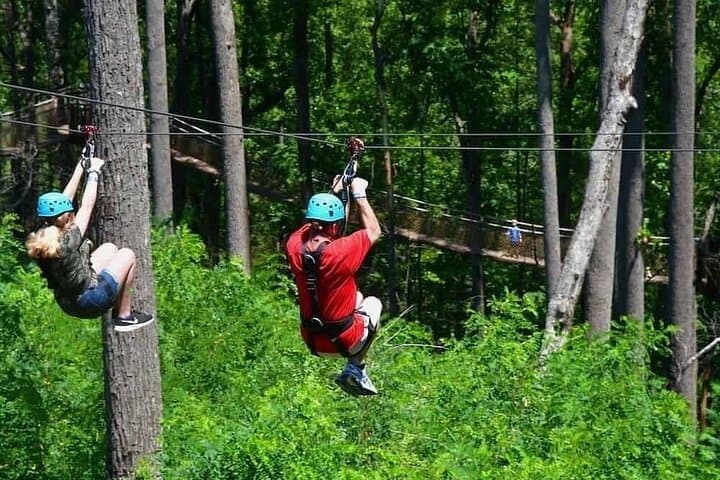
Less than two hours from Nairobi, Kereita Forest pairs hands-on canopy adventure with quiet montane trails and a sobering colonial history—perfect for families, teams, and curious travelers seeking a full-day pulse of nature.
Set out from Bass Harbor for a private, customizable day on Blue Hill Bay — lighthouses, puffins, seals, and the chance to feel Acadia from the water. Small groups, local captains, unforgettable views.
In four hours you can move from shaded canyon ferns to wind-scoured coastal ridgelines, guided by someone who knows where the light—and the hidden views—live. This private half-day hike on the Monterey Peninsula or Big Sur is compact, curated, and perfect for travelers who want depth without a multiday commitment.