
What the day feels like
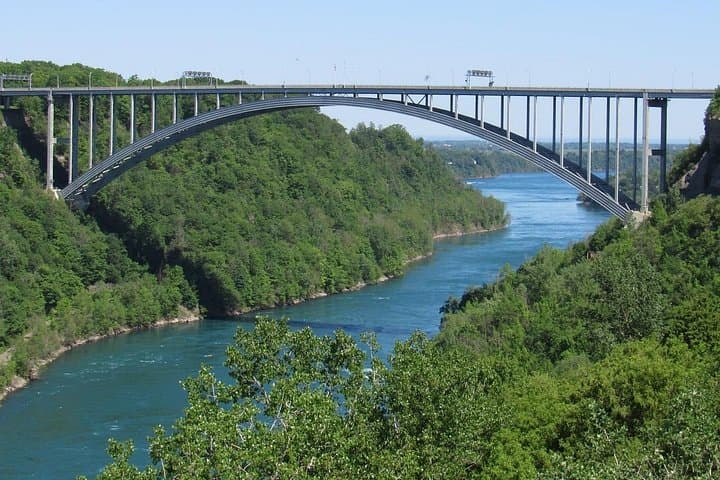
The path begins with a river’s insistence. You hear the Niagara River before you see it—an omnipresent hiss under the trees that pulls you toward the gorge. On a spring morning the mist hangs low in the maples, and the trail narrows to a single file as a New York State Licensed Hiking Tour Guide points out the Lewiston–Queenston Bridge across the river and the distant silhouette of Brock’s Monument. For the next three and a half hours you’ll walk 150 acres of Artpark–a place where public art, Industrial-era infrastructure, and the raw, wind-carved edge of the Niagara Escarpment collide.
Artpark is a curated kind of wilderness. Established as a cultural hotspot in the 1970s, the park’s concrete amphitheater and contemporary sculptures sit cheek-by-jowl with old rail grades, eroded shale outcrops, and a maze of footpaths that trace the river’s lip. The guided tour unspools this layered history—stories of the Underground Railroad whispered along the riverbank, of hydroelectric ambitions reflected in the mirrored faces of power plants, and of local legends that have stuck to these cliffs. It’s a place where geology and human history have both left readable scars.
Geologically, you’re on the Niagara Escarpment, a long band of dolomite and shale that resists erosion and forms the backbone of the region. A short scramble up exposed rock gives a grounded lesson: you can feel the escarpment’s teeth underfoot, the rounded layers offering handholds as the trail climbs toward a viewpoint with panoramic river vistas. On this tour there are two rhythms—an easy paved path that leads to sweeping overlooks, and a more athletic rock-scramble introduced for Spring 2025 that asks for balance, steady footing, and a willingness to use hands as much as feet.
Culturally, Artpark sits in the village of Lewiston, a compact gateway town with its own civic pride and small-business pulse. The riverfront was once a corridor for trade and, sorrowfully, a route toward freedom for people escaping slavery; guides on the tour fold these narratives into the landscape, giving context to the stone and the water you’re moving through. The walk itself feels like a local conversation—guide-led, intimate, and less about rushing to an Instagram frame than about noticing the moss on a rock, the call of a warbler, or the way the river bites at the cliff.
Why should travelers choose this over the louder, more crowded tourist routes near Niagara Falls? Two reasons: scale and perspective. Here the river is framed, not overwhelmed. You’re seeing the industrial face of Niagara—plants, bridges, monuments—without being swallowed by the spectacle. The guided format transforms the park from pretty backdrop to a layered landscape you can read and relate to.
Practical realities: the tour runs about 210 minutes (3.5 hours) and costs from $82 per person. It’s a mixed-terrain outing—paved park paths, compact dirt, exposed shale, and a short class-2 scramble if you opt for the climbing section. Expect cumulative elevation gain on the order of a few hundred feet; the scramble adds short sections of exposure but no technical ropework. Guides carry basic first-aid and context; the climb is suitable for hikers comfortable with hands-on scrambling and stable footing. The leisure option takes the paved route to the overlook for those who prefer a gentler pace.
If you’re planning the trip, time your visit for morning light and smaller crowds. Wear sticky-soled trail shoes rather than sneakers, bring 1–2 liters of water, and pack a light layer—the river gorge can feel markedly cooler. A small daypack, rain shell, and a camera with a wide-angle lens will cover most needs. Cell service is generally decent near the main parking and amphitheater but can be patchy along the gorge; treat the guide’s briefing as your primary navigational resource.
The new climbing scramble is exactly that—an introduction to exposed rockwork that rewards composure more than brute strength. If you have vertigo or want to avoid the rocks, choose the paved route; if you relish hands-on movement and panoramic rewards, let the guide know you want the scramble. The group size is kept small to preserve the experience and to keep the guide-to-guest ratio useful for both safety and storytelling.
Beyond the hike, Lewiston makes a pleasant bookend to the morning’s exertion. After the tour, head into town for coffee and a pastry, or drive a short way to the Niagara Wine Trail to sip Rieslings grown on the escarpment’s slopes. The experience here isn’t about conquering elevation so much as shifting perspectives—geological, historical, and aesthetic. It’s a half-day that leaves you with several kinds of altitude: panoramic, cultural, and, if you take the scramble, a quiet personal satisfaction.
For anyone who wants a quieter, smarter way to see the Niagara River—not just the thunder at the Falls but its long corridor of human and natural history—this guided tour at Artpark is a precise recommendation. It is practical enough for weekend hikers, intriguing enough for history buffs, and just technical enough to interest climbers who enjoy low-consequence exposure. The river dares you to keep moving; the escarpment rewards steady, curious feet.
Trail wisdom
Small choices, better day.
Morning Light for Photos
Start early—the morning sun softens the gorge and reduces visitor traffic, making overlooks and rock faces easier to photograph and scramble.
Shoes Matter
Wear sticky-soled trail shoes rather than sneakers—the scramble uses hands and reliable traction on shale.
Hydrate Before You Go
Carry 1–2 liters of water and sip frequently; the rock sections can be surprisingly dehydrating.
Choose Your Route
If you’re uncomfortable with exposure, take the paved route to the top—no scrambling required.
Local knowledge
Read the place, not just the route.
Watch for native species including Red-tailed hawk, White-tailed deer.
Keep an eye out for wildlife during the transition between areas and habitats. Respect distance guidelines.
Stay on marked trails to protect fragile escarpment vegetation; pack out all waste and avoid disturbing shoreline habitats.
Follow the guide's instructions on size limits, ethical handling, and leave-no-trace practices.
Brock’s Monument viewpoint across the river—great for cross-border perspectives. The lower riverside paths that reveal industrial-era remnants and quieter water views
Locally recommended viewpoints and quiet spots known best to local operators.
Artpark was established as a public arts venue in the 1970s and sits on land shaped by 19th-century industry and the Underground Railroad corridor.
Maritime roots and regional tradition shape the waterways and working coasts.
Seasonal guide
Four versions of the same landscape.
Spring
Best forWildflowers · Fewer crowds · Cool hiking temperatures
ChallengesMuddy trails · Spring run-off on lower paths
Spring brings green understory and flowing water; expect softer ground and bursts of color but also occasional wet sections.
Summer
Best forWarm weather vistas · Longer daylight · Birdsong
ChallengesHigher temperatures · More visitors · Possible afternoon storms
Summer is lively and warm—start early to avoid heat and the busiest hours at viewpoints.
Fall
Best forFall colors · Crisp air · Photogenic light
ChallengesCooler mornings · Shorter days
Fall is optimal for color and light; pack a warm layer and plan for shorter daylight after mid-afternoon.
Winter
Best forSnow-dusted vistas · Quiet trails
ChallengesIcy scramble sections · Limited access and cold winds
Winter offers stark beauty but increased hazard—many sections can be icy and guides may alter the route for safety.
Pack with intention
What to bring.
Good to know
Common questions.
The guided experience lasts about 210 minutes (3.5 hours) and covers mixed terrain across Artpark’s 150 acres; expect a moderate amount of walking with optional short scrambling.
Plan the edges
The details that make the day easier.
Artpark opened in the early 1970s as an outdoor arts venue and integrates performance spaces with riverfront trails across 150 acres.
After the tour, stroll downtown Lewiston for cafes, bakeries, and small local breweries; the Niagara Wine Trail is a short drive for post-hike tastings.
- trailhead
- Buffalo Niagara International (BUF)
- Artpark main parking; Driving distance from Niagara Falls
- ~15–25 minutes; Cell service: generally good near amphitheater, patchy in gorge; Permits: none for guided day tours
This stretch of the Niagara River corridor is ecologically sensitive—stay on designated trails, pack out trash, and respect nesting and shoreline habitats.
Explore by topic
Follow the threads.
Keep exploring
Make the story part of the trip.
 Related story
Less than two hours from Nairobi, Kereita Forest pairs hands-on canopy adventure with quiet montane trails and a sobering colonial history—perfect for families, teams, and curious travelers seeking a full-day pulse of nature.
Set out from Bass Harbor for a private, customizable day on Blue Hill Bay — lighthouses, puffins, seals, and the chance to feel Acadia from the water. Small groups, local captains, unforgettable views.
In four hours you can move from shaded canyon ferns to wind-scoured coastal ridgelines, guided by someone who knows where the light—and the hidden views—live. This private half-day hike on the Monterey Peninsula or Big Sur is compact, curated, and perfect for travelers who want depth without a multiday commitment.