
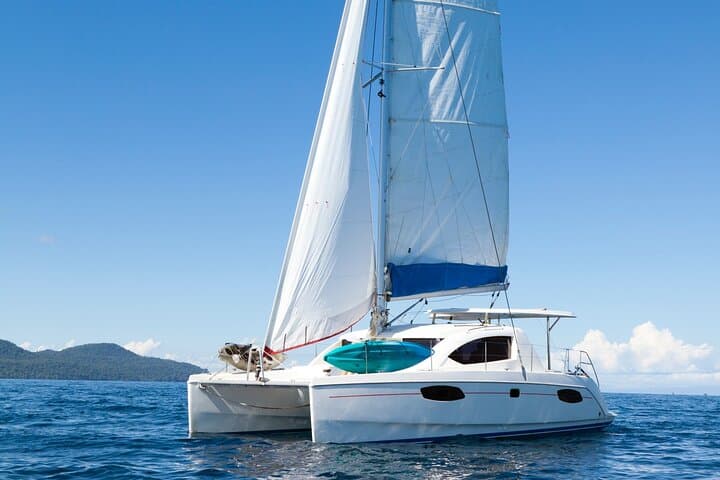
What the day feels like
The marina smells like diesel and salt and something sweeter—sea breeze warmed by sunbaked asphalt. On a clear morning the Catamaran Apaelo rocks gently against its berth, black trampolines taut between twin hulls like invitations. You step aboard, feel the give of the deck beneath your feet, and the city slips away: Torrevieja’s strip of low-rise hotels and palm trees shrinks into a row of rooftops, then dissolves behind the curve of the coast. For 120 minutes the Adriatic—no, the Mediterranean—becomes a personal playground. The captain turns the wheel, and the coastline becomes a slowly changing painting of cliffs, beaches, and fishermen’s coves.
This is a trip that knows how to be simple and exact. The Torrevieja Adventure Tour with the Catamaran Apaelo is not a long, complicated expedition; it is an engineered short pause. It’s two hours of salt, sun, and a bit of motion. The boat sails out along Costa Blanca’s softer edge—beaches that graduate from sand to stone, cliffs mottled with wild rosemary, and old saltworks flushed pink in late summer. The captain drops anchor in a quiet cove and the routine of the vessel becomes the agenda: cool off in waist-deep sea, lounge on the trampoline net with a book and the sky for a roof, or trade stories in the shaded dining area while the crew brings out ice-cold refreshments.
Torrevieja is a town with a working port, a salt industry that shaped its identity, and a coastline that rewards short, well-timed voyages. The salt lagoons—Laguna Rosa and Laguna Salada—are within sight on some runs; in certain light they glow bubble-gum pink thanks to microscopic algae and halophilic bacteria. The area’s fishing heritage lingers in the names of places, the small markets, and the easy authority with which captains handle a mooring line. On the Apaelo, the captain is both guide and host, and that local knowledge matters: he knows the coves that stay calm when a north wind picks up, the little reefs that attract small shoals of fish, and the angles where late-afternoon light makes for especially good photographs.
Geologically, Costa Blanca is a gentle collision zone—limestone folded into cliffs, then softened by millions of years of Mediterranean weather. Culturally, Torrevieja is transitional: part holiday town, part working fishing port, with a resident population that swells through the summer. Time on the catamaran is an easy way to read both: tourists come for the beaches, but the quiet coves and the salt ponds tell the deeper story.
Practicality anchors the romantic bits. The tour is two hours long, runs morning, afternoon, and evening, and costs from about $65 per person. The Apaelo provides private changing rooms, a shaded dining area, and a trampoline net for sunbathing. You’re welcome to bring your own food and drinks, but the crew supplies refreshing drinks and a relaxed, professional setup. There’s space to stow a small daypack, and the captain will help those less steady with ladders for getting in and out of the water.
What the Apaelo is not: a party barge. It’s a measured, easygoing sail suited to families, couples, and small groups who want the sea without long logistics. The swim stops are refreshingly brief and safe—waters are usually clear, with patches of Posidonia seagrass and small fish circling the hull. In summer you’ll share the water with local boats, instant communities of swimmers and snorkelers. In cooler months, the sea takes on a spare clarity and the light softens.
If you go, plan like a sailor. Timing is everything: mornings are cooler and calmer; afternoons bring the steady onshore breeze that makes the sails sing; evenings are prime for a two-hour sundown run when the water mirrors the sky. Wear reef-safe sunscreen, bring a light windbreaker for the return trip, and pack a dry bag for electronics. If you want photos, aim for the golden hour—the captain often steers a quiet channel to frame the sunset behind distant cliffs.
Sustainability is part of the picture: Torrevieja’s marine environment is delicate. Stick to reef-safe sunscreen, don’t disturb Posidonia beds, and take any trash back to shore. The tour is short but can be a model for low-impact coastal tourism—small group size, respect for local marine life, and an emphasis on enjoying rather than extracting.
Two hours on a catamaran can feel like a small indulgence or a profound reset. On the Apaelo, it’s both: a controlled, friendly taste of the Mediterranean that leaves you slightly salt-stung, more sun-wise, and with a clearer idea of why people keep returning to Costa Blanca. The boat gives you a vantage from which coastlines clarify—how the town relates to the sea, how industry and nature shrug shoulders—and it does so with the kind of ease that makes it approachable for travelers of any experience level. If you want a short, confident dose of maritime Spain without luggage or itinerary fuss, this is the ticket.
Trail wisdom
Small choices, better day.
Bring reef-safe sunscreen
Protect your skin and the marine environment—apply before boarding to avoid greasy hands on railings.
Hydrate and snack
The sun is deceptive at sea; bring water and light snacks even if the crew offers refreshments.
Use non-slip water shoes
Decks and ladders get wet; shoes with grip make boarding and swimming safer.
Time your sail
Choose morning for calm water, afternoon for steady breeze, or evening for sunset views.
Local knowledge
Read the place, not just the route.
Watch for native species including Dolphins, Mediterranean seabirds (gulls, terns).
Keep an eye out for wildlife during the transition between areas and habitats. Respect distance guidelines.
The coastal seagrass meadows (Posidonia) are vital habitat—avoid anchoring on them and use reef-safe sunscreen to reduce local impacts.
Follow the guide's instructions on size limits, ethical handling, and leave-no-trace practices.
Quiet coves east of Torrevieja marina that are accessible only by boat. The pink salt ponds (Laguna Rosa) visible from coastal viewpoints at certain times of year
Locally recommended viewpoints and quiet spots known best to local operators.
Torrevieja grew around salt production; the salt lakes and fishing economy shaped the town’s layout and culture from the 18th century onward.
Maritime roots and regional tradition shape the waterways and working coasts.
Seasonal guide
Four versions of the same landscape.
Spring
Best forCalm seas · Wildflower-scented coastal walks · Mild temperatures
ChallengesOccasional chilly mornings · Unsettled spring winds
Spring offers mild conditions and fewer crowds; mornings can be cool but the sea is generally calm—ideal for easy swimming and clear photos.
Summer
Best forWarm water swims · Long daylight · Evening sunset sails
ChallengesFull tourist season · Strong midday sun
Summer is peak season for swimming and sunbathing—bring shade and sun protection, and book in advance to secure preferred sail times.
Fall
Best forWarm sea lingering from summer · Quieter marinas · Clear light for photography
ChallengesShortening days · Autumn storms can bring windier seas
Early fall retains summer warmth with fewer crowds, making it a sweet spot for afternoon sails; watch forecasts for windy days.
Winter
Best forCalmer marinas · Lower prices · Crisper air and views
ChallengesCooler water—swims less appealing · Occasional service reductions
Winter sails are quieter and inexpensive but cooler—best for a brisk scenic cruise rather than swimming.
Operator details
What the booking data adds.
Included
- ✓Catamaran ride, Professional skipper and crew, Petrol, Toilets, Changing room
Not included
- —Getting to and from the marina, parking fees
- —Meals
Good to know
- ✓Service animals allowed
- ✓Public transportation options are available nearby
- ✓Not recommended for travelers with poor cardiovascular health
- ✓Suitable for all physical fitness levels
- ✓People with mobility impairments
Pack with intention
What to bring.
Good to know
Common questions.
The standard tour is 120 minutes (two hours), with morning, afternoon, and evening departures available.
Plan the edges
The details that make the day easier.
Torrevieja’s salt lagoons include Laguna Rosa, whose pink hue is caused by halophilic microalgae like Dunaliella salina; the town’s name comes from an old coastal watchtower (torre vieja).
After your sail, walk the Paseo Marítimo for seafood restaurants and tapas bars—try arroz a banda (local rice and fish dish) or fresh grilled catch at the marina-side restaurants; finish with a cold cerveza at a beachside bar.
- Closest airport
- Alicante–Elche Miguel Hernández (ALC) ~45 minutes by car; Departure point: Torrevieja Marina; Driving distance from town center: <5 minutes; Cell service: generally good along the coast; Permits: none required for this commercial tour
Avoid single-use plastics, use reef-safe sunscreen, and respect Posidonia seagrass by not anchoring or standing on meadows—these practices protect local marine biodiversity.
Explore by topic
Follow the threads.
Keep exploring
Make the story part of the trip.
Set out from Bass Harbor for a private, customizable day on Blue Hill Bay — lighthouses, puffins, seals, and the chance to feel Acadia from the water. Small groups, local captains, unforgettable views.
In four hours you can move from shaded canyon ferns to wind-scoured coastal ridgelines, guided by someone who knows where the light—and the hidden views—live. This private half-day hike on the Monterey Peninsula or Big Sur is compact, curated, and perfect for travelers who want depth without a multiday commitment.
 Related story
Beneath a sky of shifting light, Skaftafell’s ice reads like a map of time. This three-hour guided glacier hike mixes technical instruction with geology and culture: compact, safe, and unforgettable.