
What the day feels like
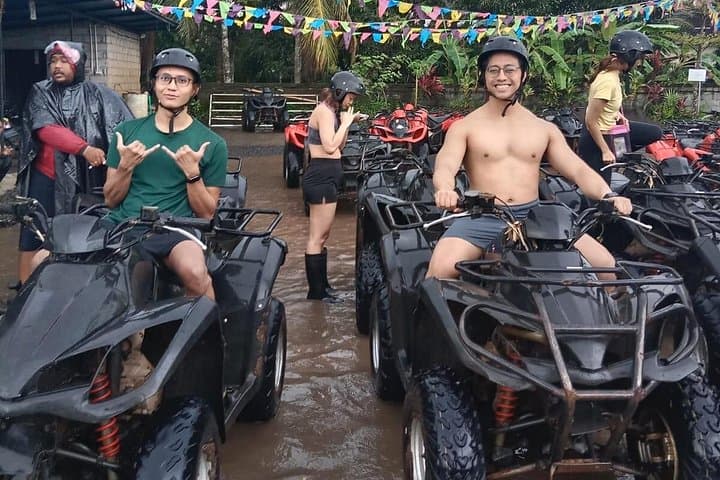
You push through a cloud of dust and the valley opens—terraced rice slopes folding like green fans, a thin ribbon of river glinting below. Your quad bounces over a rutted trail, the engine's thrum matching the pulse of the hillside. Later, the river will seize your attention in a different way: a current that insists, nudges, dares you down its class II–III drops beneath carved stone cliff faces and banyan roots. By the time you return to Ubud, clothes damp, grin persistent, the day feels like a compact lesson in Bali's contrasts—motorized adrenaline and the steady, older power of water.
This six-hour combination tour—an ATV quad-ride through Bali's countryside and a guided river raft down the Ayung—packages two different ways to move through the island. It’s a purposeful mash-up: the ATV scratches the itch for speed and messy hands-on fun across dirt tracks, coconut groves, and shallow river crossings; the raft portion slows things down, turns attention to gorge geology, traditional cliffside carvings, and the living systems that feed rice terraces and temples downstream.
The Ayung River has been the lifeline of central Bali for generations. It carved the canyons that now host rainforest pockets and limestone outcrops, and its banks carry a patchwork of water temples and carved reliefs where Balinese craftsmen once marked spiritual narratives. Geologically, the river’s channel reflects Bali’s volcanic origins—harder lava flows punctuated by softer sediment that erodes into rapids and drops. Culturally, Ubud sits as a creative hearth: artists, dancers, and woodcarvers who shaped Bali’s modern cultural reputation still draw inspiration from these river valleys.
Practically, this experience is built for convenience: door-to-door private air-conditioned transport from Ubud, English-speaking guides, and instant confirmation. The price point—starting around $95—positions it as an accessible all-in-one adventure for travelers short on time but hungry for variety. Safety briefings and life jackets are standard for the rafting; ATVs come with helmets and a local guide who shows you the lines and helps manage steep or muddy sections.
Why book this? It’s a day that delivers variety without feeling fragmented. If you’re traveling with friends or family groups with mixed interests, the combo keeps motion-seekers engaged and offers scenic, photographable moments for those who prefer to pause. The ATV ride is tactile—mud splattering over boots, a hand on the throttle as you choose each line—while the raft gives the landscape its turn to speak, with carved cliff faces, small temple shrines, and jungle-draped banks.
Timing matters. The river is best during Bali’s dry season (April–October) when flows are lively but predictable; heavy rains can spike currents and muddy visibility. Morning departures avoid midday heat and crowds in Ubud afterward. Wear closed shoes that can get wet, bring a lightweight change of clothes, and pack sunscreen and a dry bag or waterproof case for valuable electronics. Guides typically provide helmets, life jackets, and safety instruction, but double-check what’s included when you book.
For adventurers thinking beyond one day: pair this tour with a sunrise hike, an afternoon at Tegallalang rice terraces, or a spa session in Ubud’s calming post-adrenaline hours. The region’s pace softens in the evening—restaurants and warungs (local eateries) serve up Balinese staples like nasi campur and babi guling, useful comfort food after a day of exertion.
What to expect on the ground: a friendly briefing, an ATV safety run, then 45–90 minutes of off-road riding across tracks, through rural villages, and over shallow river fords; after a break to rinse off and refuel, you’ll head to the Ayung for a 1–2 hour guided rafting stretch, passing gorge carvings and small rapids. The combined itinerary squeezes a full, active day into six hours—efficient, satisfying, and well-suited to travelers who prioritize variety and logistics.
This is not an expert-only route. Both activities are approachable for those with moderate fitness and basic coordination. Still, the best days are for people who don’t mind a bit of mud, can climb in and out of a raft, and can handle a throttle. If you're traveling with young children or someone with limited mobility, check age and weight restrictions with the operator.
At its best, this tour is not just two activities stacked side-by-side; it’s a way to read the Balinese landscape by motion. The quad teaches you how the land handles human force; the river teaches patience and respect. Together they make a tidy portrait of central Bali—kinetic, verdant, and undeniably alive.
Booking tips: confirm pickup location and inclusions, bring local cash for tips and small purchases, and pick a morning slot to leave the afternoon open for Ubud’s markets and galleries. With a 4.8 rating from recent booking reviews, the experience leans toward well-run and guide-led—ideal for travelers who want high-value adventure without the guesswork.
Trail wisdom
Small choices, better day.
Morning Pickup
Choose the earliest slot to avoid midday heat and leave time to explore Ubud after your tour.
Footwear Matters
Wear sturdy closed shoes that can get wet—flip-flops are not safe for ATVs or rafts.
Waterproof Your Gear
Bring a dry bag or waterproof phone case for electronics during rafting.
Hydrate & Snack
Carry a small water bottle and a light snack—exercise and sun will tap your energy reserves.
Local knowledge
Read the place, not just the route.
Watch for native species including Kingfishers and herons along the riverbanks, Long-tailed macaques in the forest pockets near the gorge (do not feed).
Keep an eye out for wildlife during the transition between areas and habitats. Respect distance guidelines.
Operators increasingly emphasize responsible tourism—stick to designated trails, avoid single-use plastics, and follow guides’ instructions to protect riverbanks and village life.
Follow the guide's instructions on size limits, ethical handling, and leave-no-trace practices.
Small family-run warungs along the approach roads where you can sample fresh coconut water. Cliffside carvings and small temple shrines visible only from the river—ask your guide to point them out
Locally recommended viewpoints and quiet spots known best to local operators.
The Ayung River valley has long supported Balinese agriculture and spiritual life; many water temples and cliff carvings along the banks reflect centuries of ritual connection to river systems.
Maritime roots and regional tradition shape the waterways and working coasts.
Seasonal guide
Four versions of the same landscape.
Spring
Best forModerate river flows · Lush green scenery
ChallengesUnpredictable early rains · Cooler mornings
Spring (April–May) is the start of the dry season with fresh vegetation and manageable river conditions—ideal for clearer water and good visibility.
Summer
Best forConsistent dry trails · Stable rafting conditions
ChallengesMidday heat · Higher visitor numbers
Summer offers reliable weather and firm ATV tracks; pick morning departures to beat the hottest part of the day.
Fall
Best forFewer crowds · Comfortable temperatures
ChallengesOccasional showers as season shifts
Early fall keeps dry-season perks—fewer tourists and pleasant temperatures—though later months can bring sporadic rain.
Winter
Best forRobust river experience (after rains) · Dramatic river views
ChallengesHeavier rains, muddier tracks · Possible itinerary changes
Wet season (Nov–Mar) brings higher river flows and muddy ATV sections; operators may alter routes for safety.
Operator details
What the booking data adds.
Included
- ✓Lunch at River Rafting Finish Point
- ✓Hotel pick up and Drop off
- ✓Book 2 Tours get free Airport Pick up or Drop off
- ✓Brunch at ATV finish point
- ✓Insurance
- ✓English speaking friendly guide also as a driver
- ✓All entrance ticket
Good to know
- ✓Wheelchair accessible
- ✓Infants and small children can ride in a pram or stroller
- ✓Public transportation options are available nearby
- ✓Infants are required to sit on an adult’s lap
- ✓Transportation options are wheelchair accessible
- ✓All areas and surfaces are wheelchair accessible
- ✓Suitable for all physical fitness levels
- ✓Amazing Experience for Everyone
Pack with intention
What to bring.
Good to know
Common questions.
The combined ATV and rafting tour runs about six hours door-to-door, including transport, safety briefings, and both activity segments.
Plan the edges
The details that make the day easier.
The Ayung River is the longest river on the island of Bali and has been central to irrigation and temple rituals for centuries.
After the tour, head back to Ubud for a late lunch at a local warung—try nasi campur or a fresh seafood dish—then browse the Ubud Art Market or grab a cold Bintang at a café overlooking rice terraces to unwind.
- Closest airport
- Ngurah Rai (Denpasar) ~1–1.5 hours from Ubud; Typical drive to launch points: 20–45 minutes from central Ubud; Cell service: Generally available but patchy in narrow gorges; Permits: None required for the tour—operator handles local permissions.
This river corridor supports local agriculture and temple life—pack out all trash, avoid single-use plastics, and use locally owned operators to support community economies.
Explore by topic
Follow the threads.
Keep exploring
Make the story part of the trip.
Set out from Bass Harbor for a private, customizable day on Blue Hill Bay — lighthouses, puffins, seals, and the chance to feel Acadia from the water. Small groups, local captains, unforgettable views.
In four hours you can move from shaded canyon ferns to wind-scoured coastal ridgelines, guided by someone who knows where the light—and the hidden views—live. This private half-day hike on the Monterey Peninsula or Big Sur is compact, curated, and perfect for travelers who want depth without a multiday commitment.
 Related story
Beneath a sky of shifting light, Skaftafell’s ice reads like a map of time. This three-hour guided glacier hike mixes technical instruction with geology and culture: compact, safe, and unforgettable.