
What the day feels like
The wind finds you first. It rises out of the Johns River Gorge as if the valley itself has lungs, catching your breath and your hat in the same lift, then laying the view bare: blue-on-blue ridgelines of the Blue Ridge Mountains shouldering off toward Tennessee, a curtain of rhododendron clinging to granite, and the narrow spine of The Blowing Rock thrust into sky. Up here at 3,600 feet, the rock doesn’t just stand— it beckons. Today, it answers with a steady updraft, the signature quirk that made this cliff North Carolina’s first tourist attraction back in 1933.
The day begins in Asheville, where a small group loads into a comfortable coach just after sunrise. Coffee in hand, you settle in as the miles unwind: I-40 toward Black Mountain, then north into the High Country. As the road gains elevation, the air cools and the mountains thicken, each fold a darker hue. There’s an easy rhythm to this curated day: a scenic drive, time outside, a good lunch, and a lingering afternoon to wander a mountain town that still feels like a postcard. It’s all packaged neatly on the <a href="https://app.advcollective.com/local-experts/blowing-rock-state-park-and-town-tour" target="_blank" rel="nofollow">Blowing Rock State Park and town tour</a>, which pulls the greatest hits into one relaxed loop.
At the overlook, the wind does what it’s known for. Legend says a heartbroken warrior leapt from this cliff and was blown back into the arms of his love. Science points to steep relief between the plateau and the gorge, a funnel that pushes air upward in strong thermals—powerful enough, on frisky days, to send a scarf sailing back into your hands. Either way, the place has a personality. Rock ledges feel sure underfoot, their flanks freckled with lichen older than the town below. Railings hug the boardwalks, and short spur paths lead to balconies where the gorge opens like a book.
That “book” is written in ancient stone. The bedrock here is mostly gneiss and granite, hardened and heaved by tectonic drama that predates the Appalachians’ familiar soft forms. Those rounded mountains are the remains of peaks once as high as the Alps; time and weather sanded them down to these graceful domes. On clear days you can pick out Grandfather Mountain’s profile, and on late-summer afternoons you may catch peregrine falcons riding the same updrafts that lift the wind into your collar.
After time on the cliff, the tour pivots to the town of Blowing Rock itself, a tidy grid of boutiques, galleries, and restaurants that feels straight out of a storybook yet never precious. Flower baskets sway over storefronts; church bells ping noon. Lunch calls at Timberlake’s Restaurant—named for the late North Carolina artist Bob Timberlake—where the menu leans toward Southern comfort: trout, cornbread, a proper cup of chicken and dumplings. Lunch isn’t included in the tour rate, but the convenience and quality make the stop an easy choice. With a few hours of free time after, you can roam Main Street, duck into the local art co-ops, or find a bench in Memorial Park to let the day idle by.
If you have a little gas in the legs, the Glen Burney Trail hides in plain sight a few blocks from downtown—an out-and-back path that drops into a ravine to a trio of waterfalls. It’s steep and rocky in sections, so keep an eye on the clock and your footing if you go. For a gentler spin, head to Moses H. Cone Memorial Park, just off the Blue Ridge Parkway, where carriage roads roll through old apple orchards around Bass Lake. Either option pairs perfectly with the cliff-top drama of the morning, rounding out a simple equation: breeze + views + town time = a day you’ll talk about on the ride home.
History threads through this place. Blowing Rock got its start as a summer retreat in the late 19th century, when Piedmont families sought refuge from heat and malaria. When The Blowing Rock opened to visitors in 1933, it became an icon of High Country tourism—simple, scenic, memorable. The nearby Blue Ridge Parkway, begun the same year, stitched the mountains together with a 469-mile ribbon, ensuring that what was once an arduous journey would become a rite of passage for travelers. Today, the town still wears that heritage proudly: a careful balance of mountain tradition and modern comfort.
The practical side of the <a href="https://app.advcollective.com/local-experts/blowing-rock-state-park-and-town-tour" target="_blank" rel="nofollow">Blowing Rock State Park and town tour</a> is equally appealing. Pickup in Asheville at 8:30 a.m. or in Black Mountain at 9 a.m.; a direct ride to the overlook; lunch at Timberlake’s; and a tidy drop-off at the Blowing Rock Visitor Center so you can explore on your own before regrouping at 3:30 p.m. You’ll be back by early evening—enough time for dinner in Asheville or a sunset stroll along the French Broad. Bring a light jacket even in summer. The cliff can run 10–15 degrees cooler than town, and the wind, true to its name, is not shy.
It’s not a technical day, not a summit bagged. It’s something different: the kind of easy, satisfying loop that reminds you why mountains pull us in. They breathe; they tell stories; they lend you a view and nudge you gently to pay attention. Here, the wind does the talking. All you have to do is listen—and maybe hold onto your hat.
For dates, details, and current availability, see the full listing for the <a href="https://app.advcollective.com/local-experts/blowing-rock-state-park-and-town-tour" target="_blank" rel="nofollow">Blowing Rock State Park and town tour</a>.
Trail wisdom
Small choices, better day.
Dress for the wind
Even in summer, the overlook can feel 10–15°F cooler than town. A light windproof layer will keep you comfortable on the cliff.
Mind the steps and slick rock
Boardwalks and overlooks are well-maintained, but rain and mist can make stone and stairs slick. Wear shoes with real tread.
Time your town wander
You’ll regroup at the Blowing Rock Visitor Center at 3:30 p.m. Set an alarm so a long lunch or gallery stop doesn’t make you late.
Try the legend test
On breezy days, toss a light scarf or handful of grass from the overlook—updrafts sometimes blow them back toward you.
Local knowledge
Read the place, not just the route.
Watch for native species including Peregrine falcon, White-tailed deer.
Keep an eye out for wildlife during the transition between areas and habitats. Respect distance guidelines.
Stay on designated paths to protect fragile cliffside vegetation and lichen. Pack out all trash and support local conservation by respecting posted closures after storms.
Follow the guide's instructions on size limits, ethical handling, and leave-no-trace practices.
Glen Burney Trail waterfall hike begins just off downtown—steep but rewarding if you have time.. Moses H. Cone Memorial Park’s carriage roads around Bass Lake offer an easy, scenic stroll.
Locally recommended viewpoints and quiet spots known best to local operators.
The Blowing Rock has welcomed visitors since 1933 and takes its name from strong updrafts that can push light objects back upward. Blowing Rock developed as a summer retreat for lowlanders in the late 19th century, later boosted by the Blue Ridge Parkway.
Maritime roots and regional tradition shape the waterways and working coasts.
Seasonal guide
Four versions of the same landscape.
Spring
Best forWildflowers and rhododendron blooms · Cool, clear morning views
ChallengesFoggy starts · Intermittent rain showers
Spring brings fresh greens and floral color to the gorge. Expect cool, damp mornings and rapidly improving afternoon visibility.
Summer
Best forBeat-the-heat day trips · Long daylight for town exploring
ChallengesPop-up thunderstorms · Crowds on weekends
Mountain air stays cooler than the Piedmont. Arrive early, carry a rain shell, and enjoy shaded streets and lively patios downtown.
Fall
Best forLeaf peeping · Golden-hour photography
ChallengesHeavy Parkway traffic · Cool, gusty winds
October lights up the slopes with color. Pack layers and patience—views are worth navigating crowds and brisk breezes.
Winter
Best forCrystal-clear vistas · Quiet streets and trails
ChallengesIcy steps and closures after storms · Wind chill at the overlook
On calm, cold days the air is razor-clear. Check conditions and hours before you go, and wear warm, grippy footwear.
Pack with intention
What to bring.
Good to know
Common questions.
Pickups are at the Asheville Visitor Center (8:30 a.m.) and the Black Mountain Visitor Center (9:00 a.m.). You’ll return around 5:00–5:30 p.m., depending on your drop-off location.
Plan the edges
The details that make the day easier.
The Blowing Rock’s cliff sits about 3,600 feet above sea level and roughly 3,000 feet above the Johns River Gorge; strong updrafts there can blow light objects—like snowflakes—upward, inspiring its name and local legend.
Post-tour, grab a pint at Blowing Rock Brewing Company on Main Street or savor mountain trout at The Speckled Trout. Coffee and sweet tooth? Stick Boy Bread Company in nearby Boone turns out stellar pastries. If you lunched at Timberlake’s, return to stroll the Chetola Resort grounds around the lake for a calm end to the day.
- Closest major airport
- Asheville Regional (AVL), with Charlotte (CLT) as a larger hub. Drive time: Asheville to Blowing Rock is about 2 hours (90–100 miles). Cell service: Generally good in town; spotty along some Parkway stretches and within the gorge. Permits
- fees
- Admission to The Blowing Rock may be required; no special permits for town wandering.
This is sensitive cliffside habitat—stay on paths, avoid trampling lichen and rare plants, and keep a respectful distance from any nesting raptors. Pack out everything you bring and support local businesses that practice responsible sourcing.
Explore by topic
Follow the threads.
Keep exploring
Make the story part of the trip.
In four hours you can move from shaded canyon ferns to wind-scoured coastal ridgelines, guided by someone who knows where the light—and the hidden views—live. This private half-day hike on the Monterey Peninsula or Big Sur is compact, curated, and perfect for travelers who want depth without a multiday commitment.
 Related story
Beneath a sky of shifting light, Skaftafell’s ice reads like a map of time. This three-hour guided glacier hike mixes technical instruction with geology and culture: compact, safe, and unforgettable.
 Related story
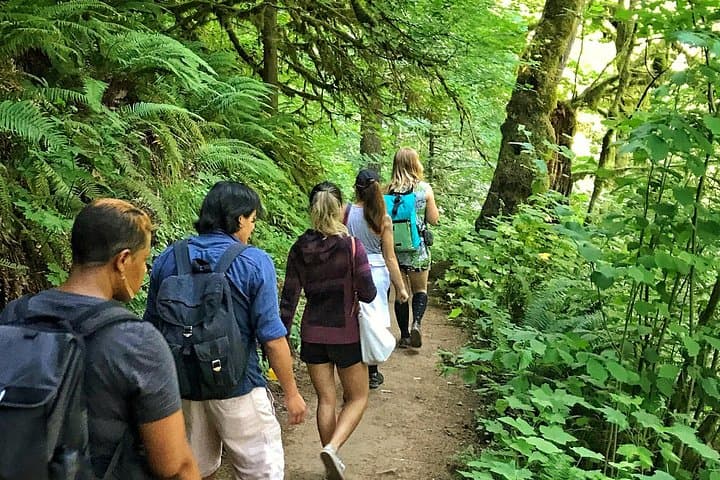
Lose the city for a few hours without leaving it: this 5-mile, 900-foot-gain Forest Park loop threads old-growth pockets, city viewpoints, and cultural landmarks for a compact taste of Portland’s wild side. Expect moss, roots, and stories.