
What the day feels like
The wind at 7,800 feet has a way of announcing itself. It pawed at our jackets, tugged our nerves, and whispered a dare from the flanks of a sleeping volcano: step off, lean in, let gravity do its work. Clipped to the first line above the treeline at Mt. Bachelor’s Pine Marten, the Cascades spread into a blue sawtooth in every direction. The mountain didn’t so much loom as invite—broad-shouldered, snow-etched even in high summer, sending you out over a country of lava and lodgepole with one decisive swing into space.
This is not the mellow, meadow-skimming zip of your last resort vacation. Mt. Bachelor’s dual-line, three-stage route drops nearly 1,400 vertical feet—the Northwest’s steepest, fastest, highest-elevation zip adventure—and it feels like it. The initial launch is a clean, unambiguous statement: step, whoosh, gone. The cable hums. Air stacks at your cheeks. Your trolley’s self-controlled brake gives you agency, but the slope has its own momentum, a mountain-sized nudge that says keep moving. Beside you, a friend sails the twin line in parallel, laughter trailing like contrails.
Part of the thrill is the setting. Bachelor is a stratovolcano born of fire and engineered by ice—its ridges plowed by ancient glaciers, its shoulders draped in the orderly brushstrokes of lodgepole pine. Descending the zip’s three spans, you fly across textures: pumice flats, hemlock pockets, late-summer ski runs yawning beneath. On clear days, the Sisters stand to the north like stern chaperones; Broken Top flares its serrated grin; the high desert flattens into a straw-colored ocean to the east. This is the Oregon High Cascades distilled: big sky, clean light, volcanic bones.
Bend, the nearest city, built its modern story on this mountain—first with logging, then by trading sawdust for snow and seasons of play. Mt. Bachelor Ski Resort is the winter heartbeat of Central Oregon. Come summer, the lifts keep spinning for mountain bikers, hikers, and—now—those looking to ride the air. The zipline starts above the Pine Marten lift, right at that crisp edge where forest loses its grip and rock takes over. Three stages, two side-by-side cables, one constant grin. The design is simple but intentional: long lines to build speed, sweeping views to widen eyes, and platforms where the volcano seems to tap you on the shoulder, asking, again, Ready?
For the curious: yes, you control your speed with a self-braking trolley. The hardware is clean, the harness snug, the instruction concise. Ages 10 and up can ride (48-inch minimum height; 50–260 pounds), and kids 10–15 need an adult present but should be able to ride independently. It’s accessible adventure with an altitude twist—an experience that respects fear of heights without being captive to it. If you’re nervous, the friendly cadence of the tour helps: gear up, demo on braking, first launch. By span two, the mountain’s cadence is in your breathing. By span three, you’re negotiating with time: a little slower for the view? A little faster for the rush?
Geology has the last word here. Bachelor is part of the Cascade Volcanic Arc, a long line of peaks forged by the grinding of tectonic plates and fed by a restless mantle. The mountain’s youth (geologically speaking) shows in its relatively smooth profile and radial lava flows, while the Deschutes National Forest wraps the slopes in a green blanket that shifts with elevation. You don’t need to recite the science to feel it. On the platform, with the cable taut, you can sense the pressure of deep time beneath your boots—the mountain standing patient, the wind asking for a little courage.
When to go? Summer and early fall are prime. Bluebird mornings dominate, though mountain weather is alive and quick to change. Layer up. Closed-toe shoes, always. Hydrate in Bend—this is high country—and remember that the altitude can turn a simple stair-climb into a workout. Book ahead; this is one of the area’s signature summer experiences. For planning, see our local expert page for the latest details and booking access at the Mt. Bachelor zipline—bookmark this resource: <a href="https://app.advcollective.com/local-experts/mt-bachelor-zipline" target="_blank" rel="noopener">Mt. Bachelor Zipline</a>. You can also cross-check weight and height requirements, the three-stage layout, and tips for timing your ride around afternoon winds.
For those building a day around it, anchor the experience with breakfast in Bend, a mid-morning ride to beat any heat, and a lake dip afterwards on the Cascade Lakes Scenic Byway. The High Desert Museum is an education-rich detour, and Bend’s post-adventure scene is tuned for recovery: patios, pours, and plates that taste better when the mountain has worked you over.
Why this zip over others? It’s the combination of scale and context. The lines aren’t hidden in forest—though you’ll slip past treetops and hear them whisper. They sweep you across big terrain, between outcrops, over ski runs, and into a vault of mountain light. The volcano has presence. It pushes and steadies in the same breath, and that balance is the ride’s secret: fear thins, wonder grows, and by the final span you’ve made peace with speed.
Practical matters matter. Dress for sun and wind. Sunglasses with a retainer strap help. Leave loose items behind. If the forecast calls for afternoon thunderstorms—a not-uncommon summer cameo in the Cascades—go early. And if you want to fold in more adrenaline, the bike park, hiking trails, and scenic lift rides share the hill. For the one link you’ll actually use when it’s time to commit, open this and keep it handy: <a href="https://app.advcollective.com/local-experts/mt-bachelor-zipline" target="_blank" rel="noopener">plan your Mt. Bachelor zipline experience</a>.
On the last platform, you’ll feel that familiar blend of relief and hunger for one more run. The ground rises to meet you, pines wave you in, and the volcano—calm, collected—seems to nod: you answered the dare. And now you know how the air feels on a mountain that made itself from fire.
Trail wisdom
Small choices, better day.
Dress for altitude swings
Temperatures can be 10–20°F cooler at 7,800 feet than in Bend. Wear breathable layers and a wind-resistant outer shell.
Closed-toe shoes only
Traction matters on platforms and approaches. Sneakers or light hikers beat sandals every time.
Hydrate early, ride early
Altitude and afternoon winds can sap energy. Drink water before you arrive and book morning slots when possible.
Secure your small items
Use straps for sunglasses and keep phones zipped away—dropped items are often unrecoverable on the slopes.
Local knowledge
Read the place, not just the route.
Watch for native species including Clark’s nutcracker, Mule deer.
Keep an eye out for wildlife during the transition between areas and habitats. Respect distance guidelines.
You’re in Deschutes National Forest—pack out all trash, respect wildlife, and stay on designated paths around platforms to protect fragile alpine soils.
Follow the guide's instructions on size limits, ethical handling, and leave-no-trace practices.
Late-day light from the final platform for warm-glow Cascade views. Pullout viewpoints along the Cascade Lakes Scenic Byway for post-ride photos of Bachelor and the Sisters
Locally recommended viewpoints and quiet spots known best to local operators.
Mt. Bachelor is a young stratovolcano in the Cascade Arc; the ski area helped pivot Bend from timber to outdoor recreation in the late 20th century.
Maritime roots and regional tradition shape the waterways and working coasts.
Seasonal guide
Four versions of the same landscape.
Spring
Best forCooler temps · Clear morning air
ChallengesLingering snow · Limited operations
Early season can bring patchy snow and chilly winds on the upper mountain. Check operating dates; spring hours may vary.
Summer
Best forConsistent operations · Big mountain views
ChallengesAfternoon winds · High UV exposure
Peak season for the zipline with long daylight and dry trails. Book morning runs to avoid wind holds and bring sun protection.
Fall
Best forCrisp visibility · Thinner crowds
ChallengesVariable weather · Shorter days
Autumn offers sharp views and quiet platforms, but storms can move fast. Layer up and monitor forecast updates.
Winter
Best forSnowy scenery (off-zip season) · Ski resort vibe
ChallengesZipline typically closed · Cold and storms
The zipline generally pauses for ski season. Visit for skiing and snowboarding, and return in summer for flights over the slopes.
Pack with intention
What to bring.
Good to know
Common questions.
Plan for about 2 hours, including gear-up, safety briefing, and three progressive zipline spans.
Plan the edges
The details that make the day easier.
Mt. Bachelor is part of the Cascade Volcanic Arc and is considered geologically young, with many of its lava flows dating to the late Pleistocene and Holocene epochs.
Refuel in Bend: grab a pint at Crux Fermentation Project at sunset, tacos and Thai-fusion at Spork, or wood-fired pies at Jackson’s Corner. For a low-key post-ride treat, Sparrow Bakery’s Ocean Rolls are a local rite of passage.
- Closest airport
- Redmond (RDM), ~30 miles from Bend. Trailhead
- lift
- Pine Marten at Mt. Bachelor, ~22 miles (35–45 minutes) from downtown Bend via Cascade Lakes Hwy. Cell service: Spotty on-mountain; stronger at the base area. Permits: No forest permit for the zipline; advance booking required; parking free in summer at West Village
You’re zipping over sensitive alpine and subalpine terrain—stay on built paths near platforms, keep noise down around wildlife, and pack out everything you bring.
Explore by topic
Follow the threads.
Keep exploring
Make the story part of the trip.
In four hours you can move from shaded canyon ferns to wind-scoured coastal ridgelines, guided by someone who knows where the light—and the hidden views—live. This private half-day hike on the Monterey Peninsula or Big Sur is compact, curated, and perfect for travelers who want depth without a multiday commitment.
 Related story
Beneath a sky of shifting light, Skaftafell’s ice reads like a map of time. This three-hour guided glacier hike mixes technical instruction with geology and culture: compact, safe, and unforgettable.
 Related story
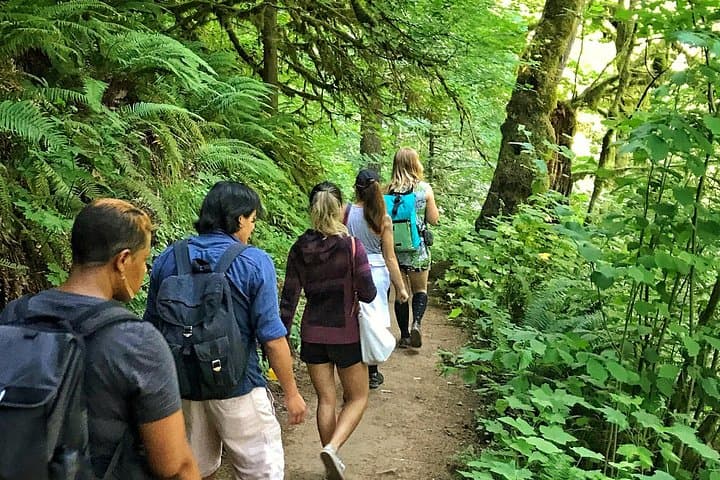
Lose the city for a few hours without leaving it: this 5-mile, 900-foot-gain Forest Park loop threads old-growth pockets, city viewpoints, and cultural landmarks for a compact taste of Portland’s wild side. Expect moss, roots, and stories.