
What the day feels like
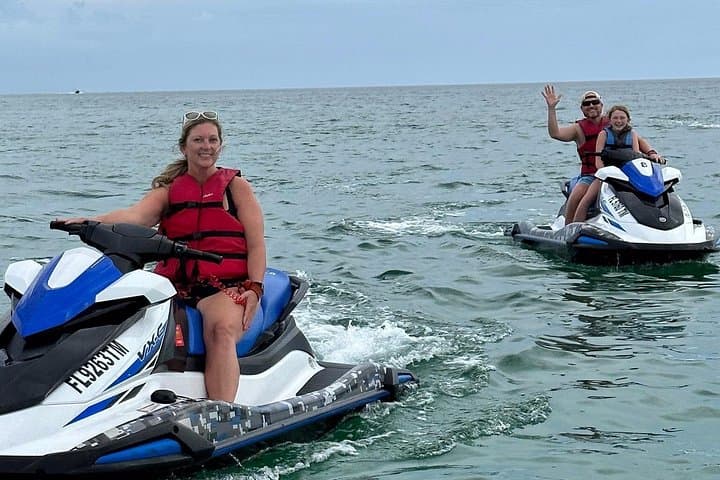
Morning light hits the Gulf like a coin you can almost pick up. The sea breathes slow and low, then, as your guide cuts the engine and points toward the backside of Shell Island, it quickens — a dare. You push the start button, the hull vibrates, and the world becomes speed and spray: the jet ski answers with a growl, the wake breaks into powder, and dolphins thread the surface like live punctuation marks. For two hours, the shoreline blurs between powder-white sand and the low, scrubby back dunes of a famously undeveloped barrier island. It’s equal parts adrenal rush and natural theater.
The Guided Jet Ski Adventure Tour out of Panama City Beach is intentionally simple: two hours, a fast-paced route that traverses the calmer tidal waters behind Shell Island and skims open Gulf stretches, and time set aside for dolphin sightings and beach exploration. Price is per jet ski (from $175), and you can ride double as long as two people don’t exceed 350 pounds. That straightforward setup keeps the focus on motion — the small, staccato beats of throttle inputs and the long, wind-stretched vistas that unfold at 30–40 mph.
Geology and history are stitched into the landscape. Shell Island is a classic Gulf barrier island, formed by shifting sands that protect the mainland from storm surge and create a mosaic of habitats: tidal flats, dune ridges, and seagrass meadows. For centuries Indigenous peoples, and later coastal settlers, used these islands seasonally for shells, fishing, and shelter. Today, Shell Island remains largely undeveloped and vehicle-free — a rare stretch where the beach still reads like a living museum of shells and bird tracks.
The human story here is also modern seaside culture. Panama City Beach is a laid-back beach town with a fishing and tourism economy that has learned to balance access and stewardship. Local guides on this tour are part marine naturalist, part captain: they read the water, know where dolphins typically feed in the morning, and understand how to thread riders through channels without damaging fragile seagrass beds.
Practical details are part of the charm. The tour lasts roughly two hours — a compact window that combines a short safety briefing, guided time on the machines, wildlife watching, and a beach stop if conditions permit. No special license is required for casual riders in most states, but operators will offer a safety orientation; listen closely. Plan for a 30–45 minute warm-up on the throttle if you’re new to personal watercraft. For experienced riders it’s an efficient, high-value way to see this slice of the Gulf that’s otherwise reachable only by boat or kayak.
Timing is everything. Morning trips usually mean glassy water and the best dolphin activity; late afternoon runs offer dramatic light as the sun softens the sand and brings cooler air. Avoid midday in high summer unless you’re prepared for strong sunlight and busier waters. Weather matters: Gulf seas can shift quickly with wind, so a calm, clear morning is ideal for an untroubled line along the island’s backside.
Safety and stewardship go hand in hand. The guides enforce sensible distance from marine mammals and beach-nesting birds and insist on sticking to marked channels to protect seagrass and submerged habitats. Respect that — it’s part of keeping this place as wild and clean as it looks.
Who should book this? People who want a short, high-energy taste of the Gulf without committing to a full-day charter. It’s approachable for adventurous beginners with a quick orientation, and it’s properly fun for experienced riders who enjoy tempo and freedom. Families with older teenagers do well here; younger children are better served on calmer, slower excursions.
Practical tips: book early in spring and early summer to lock in good morning slots; bring reef-safe sunscreen; hydrate before you go because wind and sun leach moisture fast; and stash a small dry bag for your phone and wallet. After the ride, step into town for fresh Gulf shrimp or oysters at a local shack to make the day feel complete — there’s no better way to trade sea spray for salt and butter.
Two hours is enough to feel the coast and still make plans for the rest of the day. You’ll step off the jet ski with salt in your hair, a grin you can’t quite erase, and a clearer sense of why this stretch of the Gulf keeps pulling people back: speed and solitude braided together in the same line of wake.
If you go: expect dolphins, expect to get wet, and expect to leave the island with a new respect for the fragile systems that let this shoreline look effortless. The thrill is brief, but the memory is long.
Trail wisdom
Small choices, better day.
Time it for morning light
Book early-morning departures for glassy water, calmer winds, and higher odds of dolphin sightings.
Bring a small dry bag
Protect phone, keys, and sunscreen; most guides allow a compact dry pouch stored on the ski.
Use reef-safe sunscreen
Apply broad-spectrum, reef-safe sunscreen before launching to protect skin and marine life.
Listen to your briefing
Pay attention to the operator's safety talk—navigation rules and wildlife distances keep everyone safe.
Local knowledge
Read the place, not just the route.
Watch for native species including Bottlenose dolphins, Sea turtles (seasonal).
Keep an eye out for wildlife during the transition between areas and habitats. Respect distance guidelines.
Guides encourage staying in marked channels and keeping distance from wildlife to protect seagrass beds and nesting shorebirds; pack out all trash.
Follow the guide's instructions on size limits, ethical handling, and leave-no-trace practices.
Bayside sandbars reachable during low tide for quick wading stops. Undeveloped stretches of Shell Island perfect for short beach strolls away from boat crowds
Locally recommended viewpoints and quiet spots known best to local operators.
Shell Island is a long undeveloped barrier island that has long served as a seasonal fishing and shelling ground for Indigenous peoples and coastal communities.
Maritime roots and regional tradition shape the waterways and working coasts.
Seasonal guide
Four versions of the same landscape.
Spring
Best forDolphin sightings · Calm seas · Mild temperatures
ChallengesVariable spring storms · Cooler mornings
Spring offers some of the most pleasant conditions for jet-skiing—moderate temperatures and calm water make for comfortable rides.
Summer
Best forWarm water · Long daylight · High wildlife activity
ChallengesHigh sun exposure · Increased boat traffic · Hurricane season later in season
Summer brings warm water and lots of wildlife, but plan for stronger sun and busier waterways—early starts help.
Fall
Best forFewer crowds · Stable weather · Clearer light
ChallengesCooling water late in season · Shorter days
Fall can be an excellent shoulder season with fewer tourists and crisp light, though water cools by late fall.
Winter
Best forQuiet beaches · Lower prices
ChallengesChillier air and water · Less wildlife activity
Winter trips are quieter and can be chilly—pack layers and check daily weather as conditions can be brisk.
Operator details
What the booking data adds.
Included
- ✓Safety Equipment
Not included
- —Gratuity is not included.
Good to know
- ✓Public transportation options are available nearby
- ✓Not recommended for travelers with spinal injuries
- ✓Not recommended for pregnant travelers
- ✓Not recommended for travelers with poor cardiovascular health
- ✓Travelers should have at least a moderate level of physical fitness
- ✓Must be 16 to ride and at least 8 years old to be a passenger
- ✓Boaters license REQUIRED if born AFTER Jan. 1, 1988. Temporary license available online.
- ✓$500 Damage Deposit Required - refunded once jet ski is returned with no damage.
- ✓Max of 2 people on 1 jet ski - can not be more than 350LBS.
Pack with intention
What to bring.
Good to know
Common questions.
No—operators give a safety and handling briefing; beginners can learn quickly but should expect a short adjustment period.
Plan the edges
The details that make the day easier.
Shell Island is an undeveloped barrier island off Panama City Beach and is known for being vehicle-free, preserving natural dunes and wildlife habitats.
After your ride grab a plate of fresh Gulf shrimp at a nearby beachfront shack or head to a local seafood grill for oysters. For a cold local beer and a sunset view, the boardwalk bars and restaurants along Panama City Beach offer casual seaside vibes.
- Closest airport
- Northwest Florida Beaches International Airport (ECP) — about a 20–30 minute drive to Panama City Beach. Launch point: Panama City Beach marina or designated rental dock. Cell service: generally reliable near shore but spotty offshore. Permits: none required for recreational jet-ski tours; follow operator rules.
Shell Island and surrounding seagrass beds are sensitive—stay in marked channels, keep distance from wildlife, and pack out trash. Use reef-safe sunscreen to reduce chemical impacts.
Explore by topic
Follow the threads.
Keep exploring
Make the story part of the trip.
Set out from Bass Harbor for a private, customizable day on Blue Hill Bay — lighthouses, puffins, seals, and the chance to feel Acadia from the water. Small groups, local captains, unforgettable views.
In four hours you can move from shaded canyon ferns to wind-scoured coastal ridgelines, guided by someone who knows where the light—and the hidden views—live. This private half-day hike on the Monterey Peninsula or Big Sur is compact, curated, and perfect for travelers who want depth without a multiday commitment.
 Related story
Beneath a sky of shifting light, Skaftafell’s ice reads like a map of time. This three-hour guided glacier hike mixes technical instruction with geology and culture: compact, safe, and unforgettable.