
What the day feels like
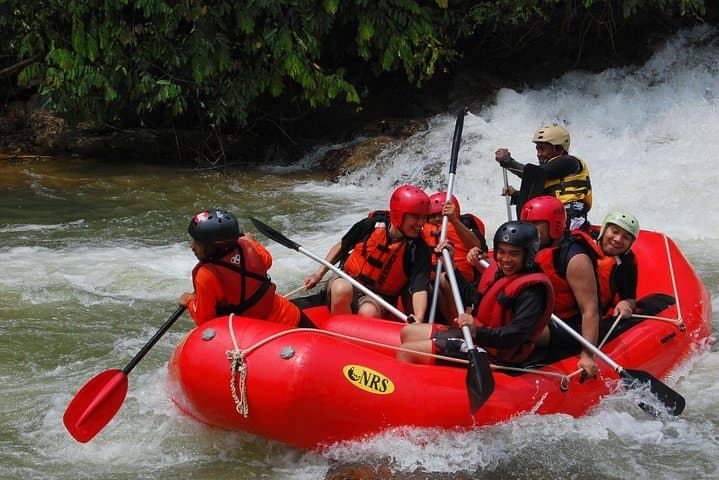
Before the bus has finished the last stretch of the highway and the city of Kuala Lumpur bleeds into paddy fields, the air changes. The hum of traffic loosens into birdcalls; palms stretch like sentinels and small kampung houses line the road. By the time the rafts are inflated, you can feel the rainforest pressing in—humid, green and stubbornly alive. The Kampar/Ulu Slim corridor is not about dramatic cliff drop-offs or alpine panoramas; it’s a close-quarters, hands-on river experience where the water is the protagonist and you, the passenger, must keep pace.
This is a full-day excursion that blends a couple of hours of whitewater with jungle swims, straightforward sections for beginners, and a handful of playful Class II–III rapids that demand teamwork more than technical prowess. Viator’s offering includes hotel pickup in Kuala Lumpur and returns you by evening—so the six-hour window is mostly driven by transfer time to and from central Perak. The actual river run is compact: expect roughly 8–10 kilometers of paddling, with about 60–90 minutes on the raft depending on water levels. Guides time the run around the best flow windows; when the river is right, it feels fast and lively without being reckless.
Geology and hydrology here are quiet teachers. The Kampar region sits on weathered granite and volcanic rocks that, over millennia, have produced rounded boulders and narrow channels. Those boulders split the river into chutes and eddies, creating the fun, surging varieties of current rafters love. The surrounding rainforest is part of Peninsular Malaysia’s lowland dipterocarp forest—a dense, biodiverse canopy that drops sunlight in strips and where butterflies and sunbirds flicker like living punctuation marks.
The cultural context matters. Kampar and nearby Slim River are towns shaped by colonial-era tin mining and Malay agricultural patterns. Local communities still cultivate small plots and run the kopitiams (coffee shops) and roadside warungs where the day’s catch or harvest becomes a simple, honest meal. Guides on the river are often locals—people who grew up with the river as a seasonal playground and who bring both know-how and a light sense of humor to safety briefings.
What the trip offers travelers is the perfect marriage of accessibility and authenticity. If you’re a first-timer, you’ll find the rapids exciting without being terrifying; if you’re a seasoned outdoor traveler, the river’s small challenges are a chance to practice stroke coordination, quick recovery, and the kind of teamwork that makes whitewater addictive. There’s also a playful edge to the day: mid-run swims from riverbanks, opportunistic cliff jumps where guides say the water’s deep, and a riverside lunch with simple Malaysian flavors to set you right again.
Practically speaking, this is a day trip that rewards sensible planning. Timing matters: routes are busier on weekends, and heavy rains can push the river into a higher, less predictable bracket. Wear secure footwear that can take a rocky shoreline and a splash; synthetic clothing dries fast and won’t weigh you down if you take an unintended dip. Guides provide helmets, PFDs, and paddles, and they lead a 10–15 minute safety briefing before you launch—pay attention. Hydrate early in the day and bring sunscreen; the jungle alternates between shady tunnels and sudden, bright breaks.
There’s a subtle conservation ethic woven through the experience. River corridors are sensitive: litter accumulates quickly, bank-side vegetation recovers slowly, and wildlife is easily disturbed by noise. Good operators make this part of the experience—explaining why you stay on the raft in certain stretches, where to step carefully on the shore, and why single-use plastics are discouraged. If you’ve come to Malaysia for its combination of nature and culture, this trip gives you both in one practical, satisfying package.
If you want the quick facts: the total door-to-door timing is about six hours; actual rafting is about 1–2 hours across 8–10 km; river difficulty is generally Class II–III (safe for motivated beginners under guide supervision); cost is marketed from approximately USD 93 per person and includes transfers, equipment, instruction, and lunch. All that makes this an ideal day trip from Kuala Lumpur—an easy, high-energy suspension between city and jungle.
Who should book it? Travelers who want an active day in the outdoors without committing to multi-day trekking, families with older kids who meet weight/age requirements, and outdoor enthusiasts who want to add a river-running day to a Malaysia itinerary. It’s less ideal for anyone with serious mobility restrictions, small children below operator age limits, or people who prefer alpine-style solitude and long-distance routes.
At the end of the day, you’ll return to KL with wet hair, a story to tell, and the small, stubborn stickiness of the rainforest still on your skin. That’s the point: moments of uncomplicated risk and cooperation, set to a rhythm of ripples and rock, that give you a better sense of how both nature and local life move here. The river dares you to keep up; you leave knowing you did.
Trail wisdom
Small choices, better day.
Secure Footwear
Wear closed-toe water shoes or sturdy sandals with straps—rocky shores and slick boat landings make flip-flops a liability.
Listen to the Safety Briefing
Guides will cover paddling commands, capsize drills, and river rescue—follow instructions to stay safe and have more fun.
Keep Valuables Dry
Use a waterproof phone pouch and leave nonessential electronics on the bus to avoid soggy surprises.
Pace Your Hydration
Drink water before and after the run—tropical humidity can mask dehydration.
Local knowledge
Read the place, not just the route.
Watch for native species including Kingfishers, Butterflies and dragonflies in bright swarms.
Keep an eye out for wildlife during the transition between areas and habitats. Respect distance guidelines.
Operators typically emphasize ‘leave no trace’ practices—avoid single-use plastics, respect riverbanks, and follow guide directions to protect riparian vegetation.
Follow the guide's instructions on size limits, ethical handling, and leave-no-trace practices.
Take a short post-raft walk to a nearby jungle pool for a quiet swim away from the main launch points. Stop at a local kopitiam in Kampar for kopi tiam (local coffee) and kaya toast after your trip
Locally recommended viewpoints and quiet spots known best to local operators.
Kampar and Slim River were shaped by tin mining during British Malaya; small towns nearby grew as mining and agricultural service centers.
Maritime roots and regional tradition shape the waterways and working coasts.
Seasonal guide
Four versions of the same landscape.
Spring
Best forFewer crowds · Warmer, stable conditions
ChallengesOccasional afternoon showers · Variable river levels
Spring (local inter-monsoon periods) often brings comfortable paddling and fewer weekend crowds—check recent weather for sudden showers.
Summer
Best forHigher flows for playful rapids · Day-trip friendly weather
ChallengesHotter sun · Possible stronger currents after storms
Summer months usually offer lively water and warm air; bring sun protection and follow guides’ notes on river speed.
Fall
Best forGood visibility · Post-monsoon clarity
ChallengesIsolated heavy rains possible · Shorter daylight
Autumn can be a sweet spot with clear water after seasonal rains—flows may be brisk so expect a slightly faster run.
Winter
Best forRiver variety after wet season · Fewer tourists
ChallengesHigher, more powerful currents during monsoon · Trip cancellations possible
The northeast monsoon (late-year) brings heavier rains—operators monitor conditions closely and may reschedule for safety.
Pack with intention
What to bring.
Good to know
Common questions.
The actual river run is typically 8–10 km and takes about 60–90 minutes depending on water levels and guide pacing.
Plan the edges
The details that make the day easier.
Kampar was once one of Perak’s important tin-mining towns during the late 19th and early 20th centuries—a heritage visible in local architecture and town layout.
After the run, head to a local kopitiam in Kampar for kopi and nasi lemak—simple, soulful Malaysian dishes—or return to KL for Jalan Alor’s hawker alley for seafood and char kway teow.
- Closest airport
- Kuala Lumpur International Airport (KUL); Typical drive from KL: 2–2.5 hours each way; Cell service: reliable in towns, patchy along remote stretches; Permits: none required for day tours; Bring cash for tips and small purchases.
The river corridor’s health depends on visitors—pack out litter, avoid single-use plastics, and follow guides’ instructions to protect shoreline vegetation and aquatic habitats.
Explore by topic
Follow the threads.
Keep exploring
Make the story part of the trip.
Set out from Bass Harbor for a private, customizable day on Blue Hill Bay — lighthouses, puffins, seals, and the chance to feel Acadia from the water. Small groups, local captains, unforgettable views.
In four hours you can move from shaded canyon ferns to wind-scoured coastal ridgelines, guided by someone who knows where the light—and the hidden views—live. This private half-day hike on the Monterey Peninsula or Big Sur is compact, curated, and perfect for travelers who want depth without a multiday commitment.
 Related story
Beneath a sky of shifting light, Skaftafell’s ice reads like a map of time. This three-hour guided glacier hike mixes technical instruction with geology and culture: compact, safe, and unforgettable.