
What the day feels like
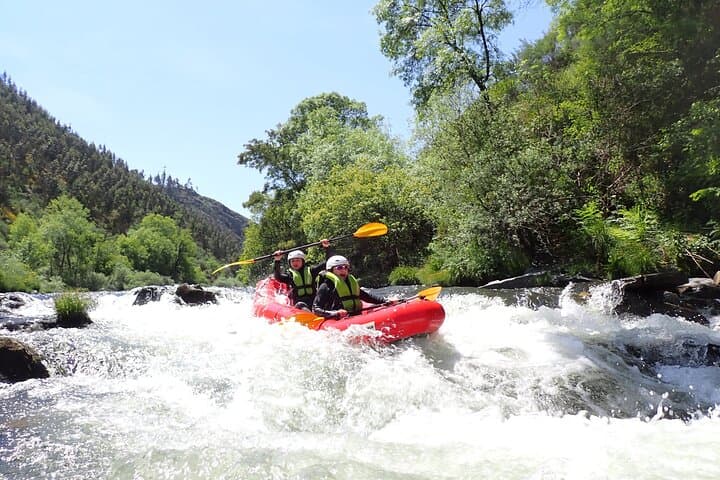
You feel the river before you see it: a low, persistent rumble that grows into a throat-clearing rush as the Paiva squeezes through granite and shale. On a cool morning the water throws up a smell of moss and stone; sunlight freckled through oak and eucalyptus lights the canyon like a slow shutter. Our guide throttles the inflatable canoe-raft into a seam of current and the first rapid bites. The boat rocks, the group laughs, someone whooped, and for a few heartbeats the outside world has been reduced to paddle, river, and the thin, precise math of moving downriver.
This is the Paiva River, a short drive east of Porto and a fold of wildness tucked into the Arouca Geopark. On this full-day outing—roughly eight hours from pickup in Porto to return—the itinerary stitches together adrenaline and ease: two- and three-seat inflatable canoes to handle Class II–III rapids, calmer stretches where the crew drifts and swims, and cliff-edge viewpoints that give the canyon context. The tour advertised by Viator (product code 106551P20) runs at a baseline price of roughly USD 100.55 and is designed for pairs, friends and families who want a day out of the city that reads like a nature film with a soundtrack.
Geology gives the Paiva its personality. Over millennia the river carved through the Variscan basement—hard schists and gneisses—leaving steep-sided valleys and boulder-strewn rapids. The result is the gorge’s sharply sculpted banks, pools deep enough to cool you to the bone, and shallow riffles that demand concentration. The Arouca Geopark, which protects much of the surrounding landscape, was established to recognize this geological heritage; hikers on the Passadiços do Paiva—wooden walkways that cling to the gorge—get an elevated lesson in rock and time.
Culturally the region is small-town Portugal: granite farmhouses, chestnut trees, and riverside eateries that serve trout and hearty stews. The Paiva trip dovetails with that rhythm. Guides on the tour will often point out traditional stone mills, terraced plots, and small chapels that mark the human history of a place where people learned to read the river for both risk and resource. It’s a local economy increasingly powered by low-impact outdoor tourism—guide services, guesthouses, family-run taverns—so your day on the water directly supports nearby communities.
Practicalities matter: this is an all-day, moderately active experience, not a half-hour scenic float. Expect roughly 12 kilometers of river running with a combination of quick, technical sections and longer, mellow stretches ideal for drifting and optional jumps into pools. The trip includes safety briefing and basic equipment—helmets, lifejackets, paddles—and is run by guides who know the current and the exits. Participants are encouraged to be comfortable in moving water and able to climb in and out of the boat without assistance.
Timing is tactical. Late spring and early summer deliver warm air but still-cool water, making for pleasant swims between rapids. Peak summer brings fuller crowds and warmer temperatures; early fall keeps the water manageable and adds saffron hues to the canyon. Winter rains can swell the river into something more serious, and operators will cancel if conditions tip into dangerous. The tour’s instant confirmation and free-cancellation policies give useful flexibility if the forecast turns sour.
Packing for the Paiva is about common sense: a change of clothes, quick-dry layers, closed-toe water shoes with grip, sunscreen, and a small waterproof bag for your phone. Hydration is crucial; guides often schedule breaks where you can top off bottles, but bring more water than you think you’ll need. If you plan to jump into pools, understand that water temperature is colder than it looks, and know your limits. Guides will coach you on safe jump points and retrieval procedures.
Safety aside, the Paiva’s charms are small, perfect things: the way the current tugs you toward a sunlit pool, a kingfisher flashing blue along the bank, the echo of laughter from a group who just nailed a tricky drop. Guides sometimes arrange short walks to overlook points where the canyon opens out; standing there you get a sense of the river’s route and how narrowly human paths cling to its edges. After the last rapid, there’s a gentle glide to the take-out and the slow transition back into conversation about how wet you got and which cliff jump was the best.
For travelers based in Porto this trip is a tidy escape—about 1–1.5 hours each way by van, which usually includes pickup and drop-off. It’s family-friendly in the sense that guides tailor the pace and jumping options, but it’s best for kids who are comfortable in water and for adults ready for a long day of outdoor exertion. If your itinerary allows, pair the ride with a night in Arouca to sample local trout dishes and sleep with the sound of the river in your head.
Why do this trip instead of a more groomed whitewater run? Because the Paiva offers a mix: enough technical water to keep paddlers sharp, enough quiet pockets for casual swimmers and families, and a landscape that feels older and more sculpted than the manicured parks outside cities. It’s adventure with a hand on the brake when you want it. If you go, come prepared, respect the guides, and leave the canyon the way you found it—no tags on rocks, no trash, just better stories and damp clothes to remember the day by.
Trail wisdom
Small choices, better day.
Waterproof your essentials
Bring a small dry bag for phone, documents, and spare glasses—guides won’t hold personal items mid-rapid.
Footwear with grip
Wear closed-toe water shoes or old trail runners for traction on wet rocks and safe boarding.
Hydrate and snack
Pack a 1–2L water bottle and high-energy snacks; the trip is long and you’ll want steady fuel between rapids.
Listen to the safety briefing
Pay attention to guide instructions for paddle technique, exits, and safe jumping zones.
Local knowledge
Read the place, not just the route.
Watch for native species including Kingfisher, European otter.
Keep an eye out for wildlife during the transition between areas and habitats. Respect distance guidelines.
The Arouca Geopark and local operators emphasize low-impact tourism: follow ‘leave no trace’ rules, stay on designated paths, and avoid disturbing riparian habitat.
Follow the guide's instructions on size limits, ethical handling, and leave-no-trace practices.
Passadiços do Paiva wooden walkways for an elevated view of the canyon. Small riverside taverns near Arouca that serve grilled trout and local cheeses
Locally recommended viewpoints and quiet spots known best to local operators.
The Paiva Gorge cuts through ancient schist and gneiss in the Arouca Geopark, an area recognized for its geologic heritage and traditional rural communities.
Maritime roots and regional tradition shape the waterways and working coasts.
Seasonal guide
Four versions of the same landscape.
Spring
Best forWildflowers and cooler air · Lower crowds · Crisp river swims
ChallengesVariable water levels after rains · Cool water temperatures
Late spring balances comfortable weather and lively river flow—ideal for full-day runs and exploring the canyon’s greenery.
Summer
Best forWarm air and long days · Swimming and cliff jumping · Family groups
ChallengesHigher temperatures and more crowds · Sun exposure on open sections
Summer offers warmer conditions and more swimming, but book early to avoid sold-out departures.
Fall
Best forEnjoyable paddling conditions · Autumn colors · Quieter trails
ChallengesShorter daylight hours · Cooler mornings
Early fall keeps river flows steady and adds a golden palette to canyon walls—great for photos and calmer runs.
Winter
Best forStorm-swollen rapids for experienced paddlers · Off-season solitude
ChallengesCold water and risky high flows · Trip cancellations due to safety
Winter can bring high water and cancellations; only experienced paddlers should consider winter runs with operators.
Operator details
What the booking data adds.
Included
- ✓Personal Accident Insurance
- ✓All the necessary equipment
- ✓Experienced and Certified Guides
- ✓Bottled water
- ✓Delight yourself with a typical meal (included on option "With Lunch") on a Riverside Terrace Bar. For desert, you'll taste some of the Conventual Pastry.
- ✓All Fees and Taxes
- ✓Photo Report
- ✓Snacks
Good to know
- ✓Not recommended for travelers with spinal injuries
- ✓Not recommended for pregnant travelers
- ✓Not recommended for travelers with poor cardiovascular health
- ✓Travelers should have at least a moderate level of physical fitness
Pack with intention
What to bring.
Good to know
Common questions.
No prior rafting experience is required; guides teach basic paddling and safety. Comfort in moving water and the ability to follow instructions is important.
Plan the edges
The details that make the day easier.
Arouca is home to the Arouca Geopark and the nearby Arouca 516 pedestrian suspension bridge, a prominent modern landmark opened in 2021 spanning the Paiva valley.
After the river, head to Arouca’s local taverns for grilled trout, smoked cheeses and a glass of Vinho Verde; back in Porto, celebrate with a francesinha and a riverside beer in Ribeira.
- Closest airport
- Francisco Sá Carneiro Airport (OPO) in Porto; Driving time: ~1–1.5 hours to the Paiva launch; Cell service: good near towns, patchy in the gorge; Permits: none for day trips, but regulated by local conservation authorities.
Operators work with Arouca Geopark guidelines—pack out trash, avoid cliff vegetation, and follow guide instructions to minimize erosion and disturbance to wildlife.
Explore by topic
Follow the threads.
Keep exploring
Make the story part of the trip.
Set out from Bass Harbor for a private, customizable day on Blue Hill Bay — lighthouses, puffins, seals, and the chance to feel Acadia from the water. Small groups, local captains, unforgettable views.
In four hours you can move from shaded canyon ferns to wind-scoured coastal ridgelines, guided by someone who knows where the light—and the hidden views—live. This private half-day hike on the Monterey Peninsula or Big Sur is compact, curated, and perfect for travelers who want depth without a multiday commitment.
 Related story
Beneath a sky of shifting light, Skaftafell’s ice reads like a map of time. This three-hour guided glacier hike mixes technical instruction with geology and culture: compact, safe, and unforgettable.