
What the day feels like
The shuttle door slides open to a wash of pine-scented air and the low rush of the Deschutes. Guides sort paddles with the easy economy that comes from a hundred river mornings; helmets clack, PFD straps tighten, and the current whispers its challenge. On the Big Eddy stretch west of Bend, the river doesn’t wait. It nudges rafts from shore, tugs at the bow, and dares you to lean in. A few quick strokes and you’re in the sway—dark, glassy water gathering itself over volcanic ledges, chatter turning to focus as the first wave train rises.
This is the Big Eddy Thriller—Central Oregon’s classic class III run—compact, punchy, and pure joy. Sun Country Tours keeps it tight: about 1.25 hours on the water, two hours dock to dock, with transportation from headquarters in Bend to the put-in and back again. You’ll warm up in mellow current, practice commands—forward, back, high side—and then the river asks for attention. The horizon line lifts, the Ponderosa fringes blur, and a clean, cold surge slaps the tube. It’s not angry water. It’s playful, insistent, a three-part chorus of drops and waves that invites you to trust your crew and grin through the spray.
Underneath the froth, the geology tells a longer story. The Deschutes cuts across ancient basalt laid down by eruptions from Newberry Volcano, a broad shield south of town whose lava poured north to sculpt this canyon. Those dark ledges under your raft are frozen flow fronts—hard, squared-off steps that stack the current into pour-overs and standing waves. Names like Lava Island and Dillon Falls hint at the river’s igneous ancestry; the whole corridor is a lava lesson in motion, where water and rock negotiate, season after season.
Bend’s relationship with this river is equally layered. Long before the town took its name from a convenient ford called Farewell Bend, the Deschutes was a travel route and fishery for Native peoples of the region. A century ago, it powered a timber boom that led to twin mills and a fast-growing community. As lumber waned, recreation rose. Today, the Big Eddy run is part of daily life here—an after-work splash, a family rite of passage, a quick fix when summer heat pushes everyone toward shade and water. Ask around town and you’ll hear about first swims, best seats, and the day someone spotted an osprey diving on a trout mid-rapid.
What makes the Big Eddy so approachable is its rhythm. Between the headliner drops are pools broad enough for high-fives, resets, and, on warm days, a sanctioned swim. Guides know the line like muscle memory. They’ll read the tongue, call for a dig, and angle the raft to kiss the tops of waves instead of shouldering into them. They’ll also deliver the practical gospel of cold water: synthetic layers, secure sandals, snug helmets. If you want more nuance—flow ranges, paddle technique, nearby side hikes—tap into local wisdom. Bend is a town of guides, coaches, and outfitters who live for this stretch; meeting the right people makes a good day great. Start by connecting with local experts in Central Oregon at https://app.advcollective.com/local-experts/undefined and you’ll find the kind of granular insight that turns a short run into a full adventure.
Plan on getting wet. Even on a bluebird afternoon, the Deschutes keeps its alpine chill. The water is clean enough to gleam green-black in the shade and flash pewter in the sun, and it likes to remind you who sets the pace. That pace, though, works for a wide range of guests. With a minimum age of six and a 45-pound requirement (for life jacket fit), this is a family-forward whitewater sampler that still satisfies seasoned paddlers craving crisp, technical hits. You’ll paddle through three main drops—often referred to collectively as Big Eddy—each a little different, each asking you to square up and commit. No long slogs, no hours in the sun, just a tight loop of adrenaline, laughter, and the satisfying thunk of raft rubber sliding back onto the trailer.
Beyond the raft, the corridor is a patchwork of trails, viewpoints, and quiet pullouts. If you have extra time, wander to the overlook at Dillon Falls to watch the river flex a different muscle, or trace the lava rim above Lava Island to see how the basalt corrals flow into narrow chutes. The Deschutes pins the seasons to its banks: spring flows push and preen, summer slows to a friendly cadence, fall cuts the crowds and adds crisp air, and winter—when trips may be limited—turns the canyon into a quiet, sun-angled reverie. For when and how to go, lean on local experts who track conditions daily at https://app.advcollective.com/local-experts/undefined.
The practical edge here is simple: reserve in advance during summer, show up 30 minutes early at Sun Country Tours’ Bend HQ, and listen closely to the pre-trip talk. The outfitter runs rain or shine, and Central Oregon storms can roll through quickly. Secure your sunglasses, leave cotton in the car, and embrace the fact that a little cold water sharpens the senses. At the takeout, as the river slides by with the steady confidence of time, you’ll feel it—the quick reset that only moving water can deliver. The Deschutes doesn’t just carry you; it invites you to paddle for the sheer pleasure of being part of its push.
When it’s over, you’re eight minutes from a beer and a snack in a town built for both. That’s the Bend advantage: world-class water paired with an easy landing. The Big Eddy Thriller is a short chapter in a longer story, but it’s the kind of page you’ll dog-ear. It’s the one you read again when summer hits, when the pine shade feels close and the river’s voice, just out of sight, tells you it’s time to go back.
Trail wisdom
Small choices, better day.
Dress to Get Soaked
Wear synthetic layers or a swimsuit under the provided PFD; cotton stays cold when wet. Secure sandals or water shoes beat flip-flops.
Listen for the Line
Your guide’s commands keep the raft square to the wave train—commit to paddling through the features rather than bracing at the last second.
Sunscreen, Then Spray
Apply reef-safe sunscreen 20 minutes before launch and reapply after the first swim stop; Central Oregon sun is deceptively strong.
Secure the Small Stuff
Strap on sunglasses and stash phones in a waterproof case or leave them behind—class III hits can bounce loose gear overboard.
Local knowledge
Read the place, not just the route.
Watch for native species including Osprey and bald eagles hunting over pools, Mule deer browsing along shaded banks.
Keep an eye out for wildlife during the transition between areas and habitats. Respect distance guidelines.
Parts of the Deschutes are protected under the National Wild and Scenic Rivers System—pack out all trash, use existing access points, and respect shoreline habitats.
Follow the guide's instructions on size limits, ethical handling, and leave-no-trace practices.
Dillon Falls viewpoint for a quick pre- or post-trip walk with powerful river views. Lava Island lava rim path for a short geology stroll above the current
Locally recommended viewpoints and quiet spots known best to local operators.
Bend grew up around two massive sawmills on the Deschutes; earlier, the river corridor served as a travel route for Native peoples and settlers crossing at 'Farewell Bend.'
Maritime roots and regional tradition shape the waterways and working coasts.
Seasonal guide
Four versions of the same landscape.
Spring
Best forHigher, pushier flows · Cool, uncrowded mornings
ChallengesCold water temps · Variable weather and wind
Spring runoff gives Big Eddy extra punch and fewer crowds. Dress warmer and expect quick-changing weather.
Summer
Best forConsistent flows · Warm air temps and swimming
ChallengesPeak season crowds · Strong midday sun
Summer is prime time—blue skies, reliable operations, and playful waves. Book ahead and aim for morning or late afternoon slots.
Fall
Best forCrisp conditions · Thinner crowds and golden light
ChallengesShorter daylight · Cooling water and air temps
Early fall brings a relaxed pace and photogenic light. Add a light layer and enjoy calmer riverbanks.
Winter
Best forSolitude on the corridor · Snow-dusted canyon views
ChallengesLimited trip availability · Very cold conditions
Some operators reduce or pause trips. If you go, bundle up and expect a quiet, austere river mood.
Pack with intention
What to bring.
Good to know
Common questions.
Class III—intermediate waves and maneuvering, ideal for adventurous first-timers and families.
Plan the edges
The details that make the day easier.
The Big Eddy rapids form where the Deschutes crosses ancient basalt flows from Newberry Volcano, whose eruptions shaped much of the river’s canyon south of Bend.
Post-paddle, head to Crux Fermentation Project for a sunset beer lawn with Cascade views, or Bend Brewing Company along the river for pub fare. For quick bites, The Lot’s food cart pod hits diverse cravings. If you want dessert, Goody’s in the Old Mill adds the sweet finish.
- Closest airport
- Redmond Municipal (RDM), ~20–25 minutes from Bend. Meet at Sun Country Tours HQ in Bend; shuttle included to
- from the river. Drive time from downtown to HQ
- ~5–10 minutes. Cell service: Limited to spotty in the canyon; solid in town. Permits: None needed for guided trips; day-use fees apply at some river sites if you explore independently.
Stick to established put-ins and takeouts, avoid trampling riparian vegetation, and use reef-safe sunscreen to minimize impacts on aquatic life. Pack out everything, even tiny bits of trash.
Explore by topic
Follow the threads.
Keep exploring
Make the story part of the trip.
In four hours you can move from shaded canyon ferns to wind-scoured coastal ridgelines, guided by someone who knows where the light—and the hidden views—live. This private half-day hike on the Monterey Peninsula or Big Sur is compact, curated, and perfect for travelers who want depth without a multiday commitment.
 Related story
Beneath a sky of shifting light, Skaftafell’s ice reads like a map of time. This three-hour guided glacier hike mixes technical instruction with geology and culture: compact, safe, and unforgettable.
 Related story
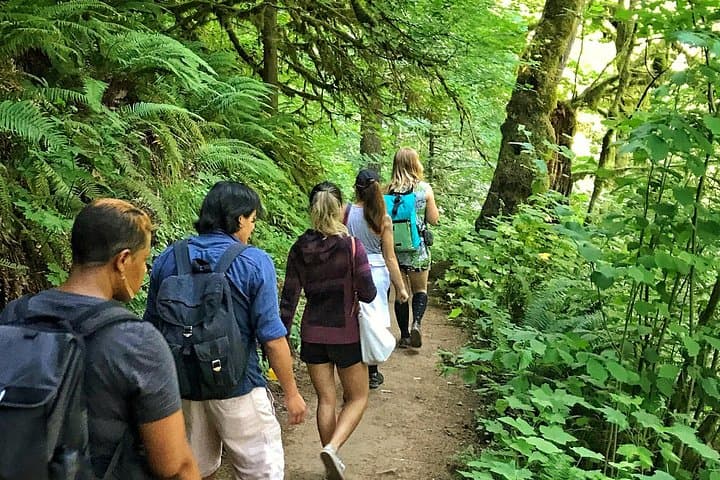
Lose the city for a few hours without leaving it: this 5-mile, 900-foot-gain Forest Park loop threads old-growth pockets, city viewpoints, and cultural landmarks for a compact taste of Portland’s wild side. Expect moss, roots, and stories.