
What the day feels like
Morning comes soft to the Blue Ridge, but the river doesn’t wait. You hear it the moment the van door slides open: a low, throaty murmur drifting up from the trees, the French Broad already shouldering its way north like it has for ages. A guide double-checks your life jacket and helmet, the click of buckles metronoming the last moments of stillness. The river smells like stone and rhododendron. The current tugs at the shoreline as if to say: let’s move.
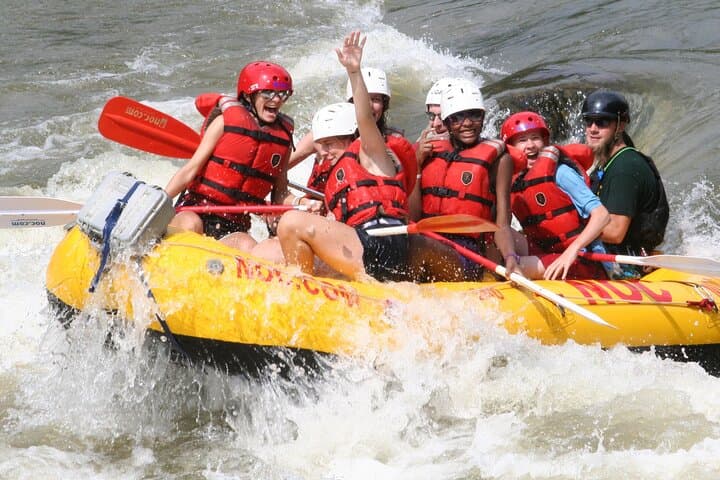
On the French Broad near Asheville, whitewater isn’t a stunt—it’s a conversation. The guide calls, you paddle; the raft turns; the river answers. Rapids stack up in a friendly procession—Class II wave trains to warm up your timing, then Class III ledges that ask for a little more punch. It’s the kind of water that seems to judge your paddle stroke, nudge you when you get it right, and shove you a bit when you don’t. Spray hits your cheeks cool and clean. The raft bounces through a standing wave and you’re laughing, looking up at green ridgelines stitched with hardwoods. Between rapids, the current relaxes and the banks widen, the river’s voice dropping to a steady hum under the calls of kingfishers.
This is one of the world’s oldest rivers—older than the Appalachians it slices through. Geologists place the French Broad’s origins hundreds of millions of years back, a rare north-flowing river that carved its path while continents shuffled and mountains heaved upward around it. That age explains the river’s patient curves and long silted benches, and the way it seems to know where it’s going without hurry. Its name predates state lines too: early European settlers called it the “French Broad” to distinguish it from Tennessee’s English Broad River, noting that this watershed lay in French-claimed territory at the time. Long before that, Cherokee communities moved along these banks, using the river corridor as a natural highway.
Today, the water pulls you through a landscape where history and present tense overlap. Bald eagles sometimes trace the ridges. River otters streak alongside in a silvery blur. Sycamores lean over the current as if gossiping with it. The guide points out a shelf of ancient bedrock and a clump of delicate mountain laurel, then sharpens the tone for the next feature—“Forward three!”—and the raft knifes into froth. There’s a rhythm to these four-hour runs. Move, breathe, laugh, listen; repeat.
The practical edge is what makes this section near Asheville so inviting. It’s lively but accessible—classic Class II–III whitewater that welcomes first-timers yet stays interesting for paddlers who already know the dance. You’ll learn the vocabulary quickly: high side, back paddle, T-grip. You’ll also learn that looking where you want to go works on water as much as on a bike. When in doubt, you follow the guide’s commands and the river gives you safe passage.
Asheville itself adds a magnetic pull to the day. Fifteen to sixty minutes from downtown, depending on the put-in, you can trade neoprene and paddle for tacos and a pale ale by late afternoon. The River Arts District—where old warehouses now house studios and cafes—hugs the same water you just rode, now slower and broader. It’s easy to map the experience onto the city’s creative streak: the French Broad is Asheville’s spine, and you’ve just traveled it.
Expect to be on the water for roughly two to three hours, with total trip time around four when you factor in check-in, shuttle, safety briefing, and takeout. Water levels shift with rain, but the French Broad is remarkably reliable through spring, summer, and fall. Spring trips bring brisker water and greener banks, summer is warm and social with sunlit swims in the eddies, and fall lays a quilt of color over every ridgeline—a painter’s palette framing every rapid. Winter runs do happen, quiet and cold and peaceful, for those who like their solitude bundled in neoprene.
What you’ll feel on this river is confidence building in real time. Early rapids tune your paddle team into a single machine. Later, when the raft squares up to a frothy tongue and you drive forward together, the boat lifts and clears the hole with a clean, satisfying skip. You glance back upstream and the river seems to grin: take the next one.
Logistically, it’s simple. Your outfitter provides the raft, paddles, helmets, and PFDs—and often splash tops or wetsuits when temperatures call for it. You bring secure footwear, quick-drying layers, a sense of humor, and a willingness to get splashed. Sunscreen and a hat are smart; so is a towel back at the car. Cameras should be leashed or left behind; most outfitters capture photos mid-rapid so you can relive the moment without losing your phone to the ancient current.
The French Broad doesn’t demand bravado. It asks for attention. It rewards teamwork. It offers that satisfying blend of mountain scenery and tactile challenge that sticks with you long after the last wave washes off the bow. By the time the raft kisses the takeout and you’re hauling it up the ramp, the day has a shape: a shared push against something older than memory, a new respect for the way water writes its own stories.
Back in Asheville, the current reappears between brewery decks and riverfront trails, an old friend moving on. You’ll spot the river again and feel it—how it dared you to lean in, how it carried you forward, how it asked you to paddle when it mattered. That’s the magic here: an adventure close enough to fit between breakfast and sunset, yet big enough to echo for weeks.
Trail wisdom
Small choices, better day.
Dress for the swim, not the air
Wear synthetic, quick-dry layers and avoid cotton; mountain water runs cooler than the forecast implies.
Footwear that won’t bail
Closed-toe water shoes or sandals with a heel strap are best; loose flip-flops become river litter.
Dial in paddle commands
Memorize forward, back, and high-side before the first rapid so the raft moves as one.
Secure your essentials
If you bring a camera, leash it; otherwise, rely on trip photos and keep valuables in the shuttle van.
Local knowledge
Read the place, not just the route.
Watch for native species including Great blue heron, River otter.
Keep an eye out for wildlife during the transition between areas and habitats. Respect distance guidelines.
Support local clean-water efforts by packing out all trash, skipping disposable bottles, and rinsing gear to prevent spreading aquatic invasives. Stay off fragile riverbanks and use established access points.
Follow the guide's instructions on size limits, ethical handling, and leave-no-trace practices.
Paint Rock near Hot Springs—ancient pictographs and a quiet bend in the river. French Broad River Greenway in Asheville for an easy post-trip stroll
Locally recommended viewpoints and quiet spots known best to local operators.
Named by early settlers to distinguish it from the English Broad River, the French Broad flows north and predates the Appalachian uplift; Cherokee communities traveled and traded along this corridor.
Maritime roots and regional tradition shape the waterways and working coasts.
Seasonal guide
Four versions of the same landscape.
Spring
Best forReliable flows · Cool temps · Lush green views
ChallengesCold water · Changeable weather
Expect lively levels from spring rains and cool water—layer synthetics or use a wetsuit or splash top.
Summer
Best forWarm water · Family trips · Swim breaks
ChallengesSun exposure · Afternoon thunderstorms
Long daylight and warmer temps make for relaxed runs; start early to beat storms and crowds.
Fall
Best forPeak foliage · Crisp air · Stable flows
ChallengesCool mornings · Shorter days
The hills blaze with color while water stays friendly—pack an extra layer for the shuttle and put-in.
Winter
Best forSolitude · Clear views
ChallengesCold water and air · Limited trip availability
Quiet and beautiful for hardy paddlers—dress in full cold-weather river gear and confirm trip schedules.
Pack with intention
What to bring.
Good to know
Common questions.
No. This section of the French Broad is designed for beginners to intermediates and includes a full safety briefing and guide instruction.
Plan the edges
The details that make the day easier.
The French Broad River is considered one of the oldest rivers in the world—older than the Appalachians themselves—and uniquely flows north through the mountains.
Refuel riverside at New Belgium Brewing’s Liquid Center or grab tacos at White Duck in the River Arts District. Craving a bigger detour? Sierra Nevada’s Mills River taproom is a short drive away with wood-fired pizzas and a sprawling beer garden. For a slower pace, head to Hot Springs afterward for a mineral soak and a burger at Iron Horse Station.
- Closest airport
- Asheville Regional (AVL). Typical launch is 35–60 minutes from downtown by shuttle. Cell service is spotty near the river; download directions ahead of time. No permits needed with a licensed outfitter—just sign waivers and follow guide instructions.
This watershed feeds the Tennessee River Basin—pack out all trash, use refillable bottles, and rinse footwear after the trip to prevent spread of aquatic invasives. Stay on established river access trails to reduce erosion.
Explore by topic
Follow the threads.
Keep exploring
Make the story part of the trip.
In four hours you can move from shaded canyon ferns to wind-scoured coastal ridgelines, guided by someone who knows where the light—and the hidden views—live. This private half-day hike on the Monterey Peninsula or Big Sur is compact, curated, and perfect for travelers who want depth without a multiday commitment.
 Related story
Beneath a sky of shifting light, Skaftafell’s ice reads like a map of time. This three-hour guided glacier hike mixes technical instruction with geology and culture: compact, safe, and unforgettable.
 Related story
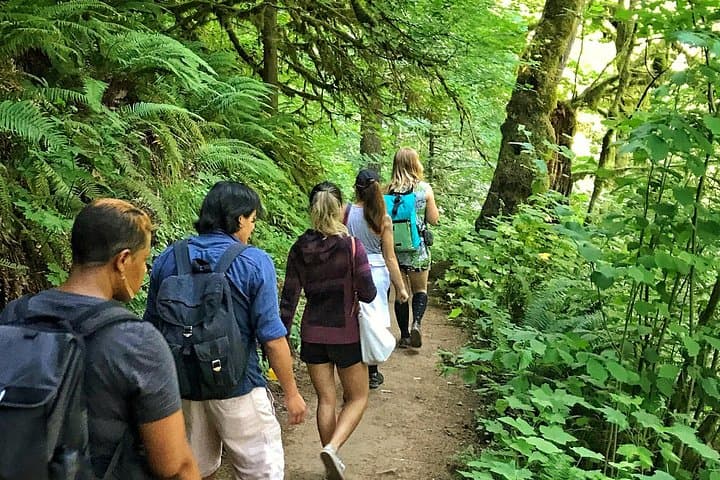
Lose the city for a few hours without leaving it: this 5-mile, 900-foot-gain Forest Park loop threads old-growth pockets, city viewpoints, and cultural landmarks for a compact taste of Portland’s wild side. Expect moss, roots, and stories.