
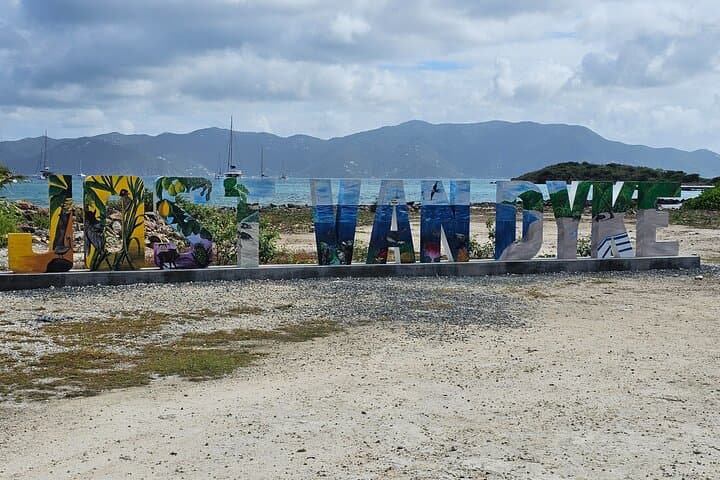
What the day feels like
The jeep rumbles like something with a grin, tires ticking over coral-rock and washboard as the island peels away beneath a bright, indifferent sky. You climb—slow, deliberate—past wind-bent bushes and the occasional goat carcass of a tree, the ocean popping into view through breaks in the scrub: an impossible turquoise to port, darker, reef-stippled water to starboard. The smell of salt and diesel mixes with sweet, fried food drifting up from a beach bar half a mile away. For three to four hours you’ll be both pilot and passenger on a guided 4x4 loop that compresses the character of Jost Van Dyke into a single, granular experience: tight tracks, sudden ridgeline panoramas, a famous beach, a nervous natural pool, and a stop at a local watering hole.
This is not a manicured tour of postcard angles. It’s rough-edges tourism—an on-island drive that asks you to lean into rumbling suspension, to let the guide’s cadence set your pace. The operator picks you up at the dock or hotel on nearby Tortola, runs through a short safety briefing and hands you the keys. You’ll climb roughly 500–700 feet (150–220 meters) from sea level onto the island’s small spine—enough to reward you with outward-facing views of the British Virgin Islands chain and inward-facing glimpses into the island’s scattering of houses and goats. Expect roughly 8–12 miles of driving in total, a compact loop that includes off-road stretches of limestone bed and dirt, short steep pitches and loose gravel where traction matters.
Jost Van Dyke feels like a preserved memory of the Caribbean—its human history stitched to the land. The island was named for Joost van Dyk, an early Dutch privateer who used the coves as hideaways in the 17th century. Those coves remain the economic lifeblood: small bars and beach shacks clustered where ferries land. The geology is limestone and coral uplifted and carved by Caribbean weather; the inland ridges aren’t mountains so much as the island’s folded skeleton. Vegetation is low and drought-tolerant—cacti, manchineel-less scrub, and wind-shaped trees that know which way storms come.
Culture here is informal and tactile. Foxy’s—reputedly the island’s most famous bar, and specifically Foxy’s Taboo on some maps—is a touchstone: live music, rum cocktails, and a convivial ambivalence toward timetables. White Bay is Jost’s siren: a broad, white-sand crescent ringed with beach bars where people come to swim, snorkel and let the afternoon dissolve into Painkillers and conch fritters. The Bubble Pool is a natural, seawater Jacuzzi—a shallow, bowl-like spot where waves force water through holes and bubble up into a frothy basin. It’s small, popular, and temperamental: a brief dip here feels like a sticky, salty exfoliation.
The tour is straightforward in its purpose: give travelers control with guidance. You drive a guide along a loop that balances views and stops—photo breaks on ridgelines, a bar stop for lunch or a drink, a dip at the Bubble Pool, a snorkel at White Bay. Guides are local and practical; listen to them. They know the traction points and the small courtesy rules: tie your lines on dinghies, tip bar staff, and don’t light fires on beaches.
Practicalities matter here. Bring a valid driver’s license—the tour requires it. Footwear should be rugged enough for climbing in and out of the jeep; slippers are fine for the beach but swap to closed-toe shoes for the driving and exploring sections. Carry reef-safe sunscreen, a wide-brim hat, and a small dry bag for your phone and wallet. If you snorkel, either bring an own mask or confirm whether the operator supplies gear. Hydration is built into the tour—most operators include bottled water and basic drinks—but exertion under the island sun can dehydrate you fast.
Timing is part of the strategy. Morning runs are cooler and quieter; late afternoon drops you at White Bay in golden light, but that’s often when the beach fills with day-trippers from Tortola and beyond. If you crave a quieter Bubble Pool or cleaner snorkel conditions, aim for the early slot and avoid full-moon weekends when the island livens up.
Safety on these tracks is about respect: of the vehicle, the guide, and the road. The jeeps are capable but small—be mindful of braking distances on loose rock and keep conversations short when you’re negotiating tricky pitches. Don’t wade into the Bubble Pool during big surf; the pool’s charm depends on gentle, rhythmic water movement, not raw wave power. For reef protection, never stand on coral, avoid fins with large blades that can kick up sand, and use a reef-safe sunscreen formula.
Who is this for? Casual adventurers who like being a part of the action, couples or small groups that value flexibility and a local touch, and people who want to mix a bit of driving skill with laid-back beach time. It isn’t a technical off-road challenge for hardcore overlanders; it’s an island-runner that gives you the rope to navigate the terrain with a pro within shouting distance.
Leave enough margin in your schedule to stay. White Bay’s beach bars are not merely stops—they’re the island’s social calendar. Bring cash in small denominations; the bars are convivial but don’t always take cards. And if you leave with sand in your hair and a rum-soaked grin, you’ll have done Jost Van Dyke the justice it asks for: a short, salty, sunbaked conversation between traveler and island.
Practical snapshot: the tour takes about three to four hours, covers a loop of roughly 8–12 miles with 150–220 meters of ascent, and includes stops at Foxy’s Taboo, the Bubble Pool, and White Bay. You need a driver’s license, sun protection, and the common sense to follow the guide’s instructions. Do that, and Jost gives back in viewlines, warm water and an oddly precise kind of calm—the kind that arrives when the engine idles, the rum cup is raised, and the horizon shrugs off another day.
Trail wisdom
Small choices, better day.
Bring a valid driver’s license
You’ll be driving the Jeep—guides require a license and may refuse unlicensed drivers.
Wear closed-toe shoes for driving
Slippers are fine on the sand, but closed-toe shoes protect your feet on rocky, uneven terrain.
Use reef-safe sunscreen
Protect coral and marine life while snorkeling at White Bay by choosing mineral-based, reef-safe sunscreen.
Carry a small dry bag
Keep your phone, wallet and camera safe from splashes and sand during beach and Bubble Pool stops.
Local knowledge
Read the place, not just the route.
Watch for native species including Brown pelican, Caribbean reef fish (seen while snorkeling).
Keep an eye out for wildlife during the transition between areas and habitats. Respect distance guidelines.
Coral reefs around White Bay are sensitive—avoid standing on coral, use mooring buoys instead of anchoring on reefs, and pack out any trash.
Follow the guide's instructions on size limits, ethical handling, and leave-no-trace practices.
Little Harbour lookout for quiet panoramas away from the main loop. A small roadside stand selling fresh conch fritters near the White Bay approach
Locally recommended viewpoints and quiet spots known best to local operators.
Jost Van Dyke was named after Dutch privateer Joost van Dyk; its coves were historically used as sheltered anchorages and smuggling points.
Maritime roots and regional tradition shape the waterways and working coasts.
Seasonal guide
Four versions of the same landscape.
Spring
Best forLower crowds · Pleasant sea temperatures
ChallengesOccasional showers · Sporadic ferry schedules during shoulder season
Spring (March–May) brings warm, settled weather and fewer crowds—ideal for early-morning tours and calm snorkeling.
Summer
Best forWarmer water · Lush vegetation
ChallengesHeat and higher humidity · Increased chance of afternoon rain and tropical activity
Summer is hot and vibrant; expect warm seas and occasional fast showers—plan for shade and hydrate often.
Fall
Best forOff-season rates · Quieter beaches
ChallengesHurricane season peaks (Aug–Nov) · Potential ferry disruptions
Fall has fewer visitors and better deals but carries the risk of tropical storms—monitor forecasts and travel insurance.
Winter
Best forDry, stable weather · Peak visibility for snorkeling
ChallengesHigher visitor numbers · Advance bookings recommended
Winter (Dec–Apr) is high season for clear skies and calm seas—book early to secure preferred departure times.
Operator details
What the booking data adds.
Included
- ✓Soda/Pop
- ✓Bottled water
- ✓Transportation fees
- ✓Air-conditioned vehicle
Good to know
- ✓Infants and small children can ride in a pram or stroller
- ✓Public transportation options are available nearby
- ✓Specialized infant seats are available
- ✓Not recommended for travelers with spinal injuries
- ✓Not recommended for pregnant travelers
- ✓Not recommended for travelers with poor cardiovascular health
- ✓Suitable for all physical fitness levels
Pack with intention
What to bring.
Good to know
Common questions.
Yes—this is a self-drive experience under guide supervision and a valid driver’s license is required.
Plan the edges
The details that make the day easier.
Jost Van Dyke is named for Joost van Dyk, a 17th-century Dutch privateer who used the island’s coves as hideouts—his name lives on in the island’s identity.
After the tour, drop into Foxy’s Taboo or one of White Bay’s beach bars for a Painkiller or rum punch and conch fritters; locals run small stands with fresh seafood—bring cash and a willingness to linger.
- Closest airport
- Terrance B. Lettsome International Airport (EIS), Beef Island
- Tortola; Typical access
- 20–35 minute ferry from Road Town, Tortola to Great Harbour; Driving distance on island: 8–12 mile loop; Cell service: intermittent—expect spotty coverage in ridgelines; Permits: none required, but respect private property and local business rules.
The tour crosses sensitive coastal and reef environments—use mooring buoys rather than anchoring on coral, pack out all trash, choose reef-safe sunscreen, and support local guides and businesses to keep revenue in the community.
Explore by topic
Follow the threads.
Keep exploring
Make the story part of the trip.
 Related story
Less than two hours from Nairobi, Kereita Forest pairs hands-on canopy adventure with quiet montane trails and a sobering colonial history—perfect for families, teams, and curious travelers seeking a full-day pulse of nature.
Set out from Bass Harbor for a private, customizable day on Blue Hill Bay — lighthouses, puffins, seals, and the chance to feel Acadia from the water. Small groups, local captains, unforgettable views.
In four hours you can move from shaded canyon ferns to wind-scoured coastal ridgelines, guided by someone who knows where the light—and the hidden views—live. This private half-day hike on the Monterey Peninsula or Big Sur is compact, curated, and perfect for travelers who want depth without a multiday commitment.