
What the day feels like
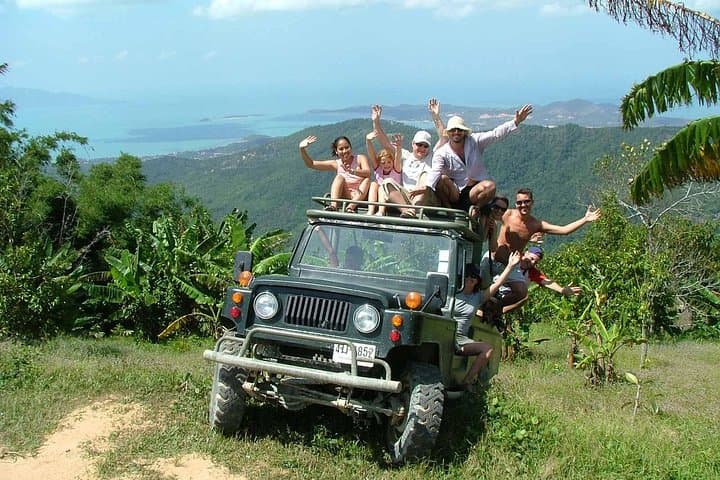
You climb into an old army 4x4 as the island yawns awake — engines grumbling like a living thing, mud flicking against the wheels. The road narrows to a single dirt ribbon, palms pressing in close until the trees part and reveal a patchwork of jungle and coastline. For seven hours on Koh Samui’s interior ridge you trade postcard beaches for something quieter: temples that keep time in incense and stone, a monk who sits eternally in meditation, granite boulders that look like they were placed by a patient giant, and the sudden cathedral hush of Namuang Waterfall.
This is no stripped-down nature walk. The Koh Samui Jungle Mountain Adventure Tour stitches together culture, geology, and a working island’s rhythms into a day that feels deliberately local. You’ll visit Wat Khunaram to see the mummified monk Luang Por Daeng enshrined in seated meditation, then drop into the green corridors of coconut and rubber plantations where villagers kiss dawn with machetes and old women sort sap into bowls. Above the treeline, you climb out of the jeep at a scenic mountaintop viewpoint: sea and jungle converge, fishing boats on the horizon like scattered punctuation marks.
The island’s story is visible in its terrain. The coastline’s smooth, wind-polished rock formations — the famous Grandmother and Grandfather rocks (Hin Yai and Hin Ta) — stand as natural sculptures carved by a long history of waves and weather. Inland, the soil and slope feed the coconut palms that made Samui a global name in copra trade; rubber trees, planted more recently, add dark orderly lines to the landscape and support a quieter, local economy.
Namuang’s twin cascades provide a counterpoint to the island’s sunlit leisure culture. The larger fall drops into a deep emerald pool that practically dares you to peel off your shoes and swim. The water is loud and honest; the air around it smells like wet stone and green things. It’s the sort of place that asks for slow conversation and fewer photos, but if you want a frame, the falls deliver drama in any light.
History and religion are woven in plain view. Wat Khunaram’s mummified monk is not a macabre curiosity but a point of communal reverence — an emblem of faith preserved and displayed with care. Meanwhile, the island’s temples and shrines nod to a blend of Thai and Chinese influences, a reminder that Samui’s culture has been shaped by commerce and migration as much as by monsoon seasons.
What makes this particular excursion useful to travelers is its balance: it’s adventurous enough to feel like an escape — a ridge ride on a rugged jeep, a walk through dense, insect-sounded trails — but also practical: lunch is included, transport between sites is handled, and you come away with a coherent sense of place rather than a scatter of Instagram shots. The pace is steady rather than relentless; expect approximately seven hours on the road and stops that let you move at human speed.
Practicalities matter. The terrain is mixed: short uphill hikes, muddy trail sections (especially after rain), and a handful of uneven stone steps at temple sites. You won’t need technical climbing gear, but stable shoes and a lightweight rain shell will make the day more comfortable. Hydration is necessary — the Gulf of Thailand’s heat is persistent — and cash helps for small purchases in roadside stalls.
Why book this? For first-time visitors who’ve done beach days and want a different vocabulary for the island; for repeat visitors seeking inland views and cultural context; and for anyone who enjoys a day that pairs natural spectacle with local life. The tour is also a practical choice for families or small groups: it’s curated to be accessible, with moments of quiet exploration interleaved with the safe unpredictability of a jeep ride.
A few local notes worth keeping in mind. The island's interior is a working landscape, not a preserved wilderness. Be respectful of plantation workers and village rhythms: ask before photographing people, and don’t climb on or disturb shrine spaces. The falls are beautiful but can be slippery; the pool is best approached with caution. Finally, remember the fragile marine ecosystems that surround the island — consider reef-safe sunscreen and limit laundry or chemical runoff from your gear.
By the end of the day you’ll be back on the coast, smelling faintly of diesel and jungle, with a half-empty camera roll and a fuller sense of how Koh Samui holds both a holiday’s bright surface and a quieter, inland heart. This tour is not the only way to see the island, but it’s one of the clearest: a compact, sensory-rich loop through the things that make Samui more than an emblematic beach destination.
Trip snapshot: 7 hours, guided transport by 4x4, entrance to waterfalls and temples, lunch provided, moderate physical demand, and a price point starting around USD 90. Expect cultural touchstones (Wat Khunaram, Hin Ta/Hin Yai), nature (Namuang Waterfall), plantation visits, and a rugged ridge ride that stitches them together into a memorable day.
Trail wisdom
Small choices, better day.
Wear grippy shoes
Trails and temple steps can be slippery and uneven—sturdy trail shoes or sandals with good tread minimize slips.
Bring swimwear
Namuang Waterfall has a swim-friendly pool—pack a swimsuit and quick-dry towel for a cooling dip.
Carry small cash
Local stalls and small vendors at sites often accept only cash for snacks or souvenirs.
Sun protection is non-negotiable
Shade is limited on viewpoints—use reef-safe sunscreen, a hat, and sunglasses to avoid heat fatigue.
Local knowledge
Read the place, not just the route.
Watch for native species including Long-tailed macaque, Asian water monitor (common around streams).
Keep an eye out for wildlife during the transition between areas and habitats. Respect distance guidelines.
Coastal reefs and forested watershed areas are fragile—stick to marked paths, use reef-safe sunscreen, and avoid disturbing plantation operations.
Follow the guide's instructions on size limits, ethical handling, and leave-no-trace practices.
Lad Koh viewpoint for uninterrupted 180° island panoramas. Small family-run rubber plantation trails offering authentic local interaction
Locally recommended viewpoints and quiet spots known best to local operators.
Koh Samui’s economy grew from coconut plantations and copra export; later rubber cultivation expanded inland, shaping the island’s landscape and villages.
Maritime roots and regional tradition shape the waterways and working coasts.
Seasonal guide
Four versions of the same landscape.
Spring
Best forClear views from mountaintops · Warm swimming at waterfalls
ChallengesGrowing heat · Occasional haze
March–May brings hot days ideal for waterfall dips but intensifying midday heat—start early to avoid the sun.
Summer
Best forLush jungle foliage · Fewer crowds
ChallengesAfternoon showers · Sticky humidity
June–August keeps the island green with regular short rains; trails may be muddy but waterfalls are full.
Fall
Best forFierce waterfall flows · Dramatic skies
ChallengesHeaviest rains in some years · Potential access issues
September–November is the wettest period; expect powerful falls and occasional wet-weather delays.
Winter
Best forDry, comfortable days · Boat and coastal trips complementing the tour
ChallengesHigher tourist numbers · Slightly cooler mornings
December–February is the most pleasant time—dryer trails and comfortable temperatures make for easy exploring.
Operator details
What the booking data adds.
Included
- ✓English speaking guide
- ✓Lunch
- ✓Round Trip Transfer
- ✓Admission fee
Not included
- —Gratuities
Good to know
- ✓Public transportation options are available nearby
- ✓Infants are required to sit on an adult’s lap
- ✓Suitable for all physical fitness levels
Pack with intention
What to bring.
Good to know
Common questions.
The tour lasts about seven hours (420 minutes), typically running a full day with transport, guided stops, and lunch included.
Plan the edges
The details that make the day easier.
Wat Khunaram houses the mummified monk Luang Por Daeng, displayed in seated meditation and revered by locals as a symbol of devotion.
After the tour, head to Fisherman’s Village in Bophut for seafood, street-side satays, and reggae bars; try mango sticky rice for dessert and a local Singha or craft beer to unwind.
- Closest airport
- Samui Airport (USM)
- Driving distance from Chaweng
- 20–40 km depending on route
- Cell service
- generally good near towns, patchy in interior
- Permits
- none required for the standard tour
This tour passes through working plantations and sensitive watershed areas—stay on paths, avoid single-use plastics, and use reef-safe sunscreen to protect marine ecosystems.
Explore by topic
Follow the threads.
Keep exploring
Make the story part of the trip.
Set out from Bass Harbor for a private, customizable day on Blue Hill Bay — lighthouses, puffins, seals, and the chance to feel Acadia from the water. Small groups, local captains, unforgettable views.
In four hours you can move from shaded canyon ferns to wind-scoured coastal ridgelines, guided by someone who knows where the light—and the hidden views—live. This private half-day hike on the Monterey Peninsula or Big Sur is compact, curated, and perfect for travelers who want depth without a multiday commitment.
 Related story
Beneath a sky of shifting light, Skaftafell’s ice reads like a map of time. This three-hour guided glacier hike mixes technical instruction with geology and culture: compact, safe, and unforgettable.