
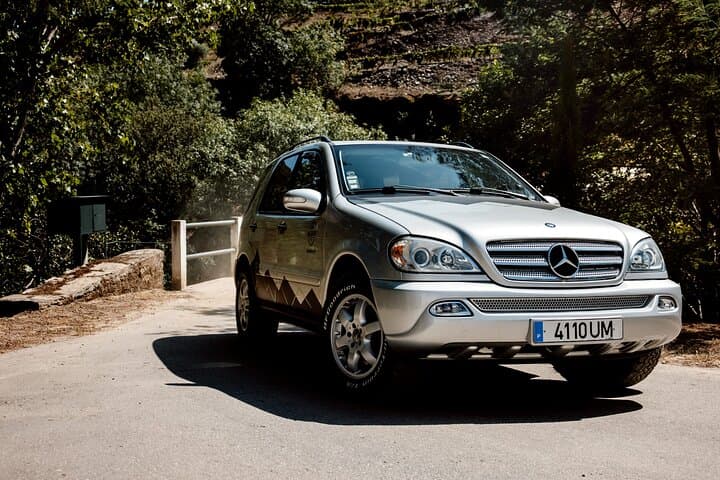
What the day feels like
When the morning light first spills into the valley it cuts across terraces like a gilded comb—sheets of schist hold the vineyards in place, and the rows look almost stitched to the hills. The 4x4 grinds up a narrow track, tires biting into packed earth that smells faintly of citrus and crushed grape skins. Around each hairpin, the valley unfolds again—steep slopes, small stone walls, and a river running low and deliberate below. The Douro dares you to slow down, to listen to the land that has been shaping Portuguese wine culture for centuries.
This full-day private experience is an efficient, sensory-rich way to digest the Douro: a mix of off-road driving, close encounters with working quintas, a long lunch paired with sparkling and fortified wines, and a short boat passage that gives the valley a new perspective. For six to eight hours you’ll move through multiple vantage points—terrace lanes that the tractors barely fit through, a family-owned quinta where vines are pruned in ways passed down for generations, and a vantage that feels like the valley’s natural amphitheater.
Geology explains a lot of the Douro’s personality. The soil here is schist—thin, flaky rock that forces vines to send roots deep. That scarcity of fertile topsoil concentrates flavor into smaller berries; the result is a set of wines with focused minerality. Historically the region’s layout and these conditions led to the formal demarcation of the Douro in 1756, making it one of the world’s oldest regulated wine regions. Human ingenuity—stone terraces, small farm tracks, and the rabelo boats that once carried port downstream—has been entangled with geology and climate for centuries.
But the Douro is more than geology and grape science. It’s a working cultural landscape. Quintas are household names here, run by families who tend the vines and host meals where stories are as important as the food. You’ll learn about traditional production methods and taste DOC wines and Moscatel directly from producers who translate terroir into something you can sip. The boat trip on the river—brief, quiet, and placid—gives you the valley’s scale: those terraces are not a backdrop; they are the town’s mainspring.
For travelers, the practical appeal is immediate. You cover lots of ground without a strenuous hike or complicated logistics: the 4x4 allows access to trails and viewpoints that conventional vehicles can’t reach. The itinerary is private and flexible—perfect for families, photographers chasing light, or anyone who wants to pair mobility with tasting. Cost is clear up-front (bookings start at approximately $295.72 per person) and the tour is designed as an all-included day: guided drives, winery visits, lunch with paired wines, and the boat segment are wrapped together so you can focus on the experience rather than the details.
Planning-wise: expect a day of varied footing. You’ll get out of the vehicle to walk terraces and into wineries; comfortable, supportive shoes matter. Weather shifts quickly in the valley—mornings can be cool and the mid-day sun strong—so dressing in layers is practical. Photographer’s note: the best light is early and late; the boat passage gives low-angle water reflections at golden hour that are worth timing around if you can.
This is not a wilderness slog. It’s a cultural immersion with a clear tasting arc and a solid dose of scenic off-roading. Travelers who enjoy food and drink narratives, plus moderate outdoor movement—stretching legs on vineyard paths and stepping aboard a small river craft—will find it an efficient, meaningfully curated day. For people who love to pair place and palate, a Douro 4x4 outing supplies both: cliff-hugging views and a taste of why the world still reads port labels with the same reverence.
Practical tips: bring a reusable water bottle, sun protection, and a camera with a wide-angle for the valley and a longer lens for compressing the river and terraces. If you want a seat with a view, request morning departures to catch the valley unfolding with low light. Be ready to support small producers—these quintas depend on tourism—and to follow the guide’s instructions on private land. Finally, allow the boat ride to slow your rhythm; the Douro’s river has a different pace, and that’s the point.
Why go now? The Douro’s harvest and shoulder seasons are the richest times to be there—vineyards have character in every month, but fall adds color and bustle. You’ll leave with a clearer sense of how a landscape becomes a label, and why a bottle of Douro wine holds not just grapes, but an entire valley’s architecture and labor.
If you want a single-day offering that blends access, stories, and tasting with a little automotive grit, this 4x4 tour delivers: it’s an intentionally paced translation of vineyard, river, and people into a day you’ll remember long after the last sip.
Trail wisdom
Small choices, better day.
Layer for variable weather
Mornings can be cool and afternoons hot—pack a lightweight jacket you can stow in the vehicle.
Footwear matters
Wear sturdy, closed-toe shoes for terrace walks—slippery schist and loose gravel are common.
Hydrate and pace tastings
Carry a reusable water bottle and pace wine sampling to stay comfortable across the day.
Protect your gear
Bring a lens cloth and a small bag—dust from tracks and wind off the river can coat cameras.
Local knowledge
Read the place, not just the route.
Watch for native species including European otter along the river, Kingfisher sighted near calm river bends.
Keep an eye out for wildlife during the transition between areas and habitats. Respect distance guidelines.
Terraced viticulture requires constant maintenance; support quintas using sustainable practices and avoid trampling stone walls or fragile banks.
Follow the guide's instructions on size limits, ethical handling, and leave-no-trace practices.
Miradouro de São Leonardo de Galafura — a dramatic viewpoint above Peso da Régua. Quinta do Seixo terraces near Pinhão for close-up winery architecture
Locally recommended viewpoints and quiet spots known best to local operators.
The Douro was formally demarcated in 1756 by the Portuguese state to regulate wine production and protect quality—one of the world’s earliest wine appellations.
Maritime roots and regional tradition shape the waterways and working coasts.
Seasonal guide
Four versions of the same landscape.
Spring
Best forWildflowers and green terraces · Milder temperatures
ChallengesUnpredictable rain · Some quintas still pruning
Spring delivers green terraces and pleasant temperatures—expect occasional showers and busy agricultural work.
Summer
Best forClear skies and long daylight · Boat rides at warm temperatures
ChallengesHigh sun and heat · Dust on trails
Summer brings long days and warm river cruises; prioritize sun protection and morning departures to avoid peak heat.
Fall
Best forHarvest activity and color · Wine pairing meals
ChallengesBusier with harvest tourism · Some dirt roads may be muddy if rains begin
Autumn is peak atmosphere: colorful vines and harvest energy—expect more visitors and celebratory winery events.
Winter
Best forCrisp light and quiet landscapes · Lower tourist prices
ChallengesCooler temperatures and shorter days · Some rural services may be closed
Winter is quiet and dramatic, with crisp air and fewer visitors—pack warm layers and check winery openings.
Operator details
What the booking data adds.
Included
- ✓Courtesy Bottled Water
- ✓Visit and wine tasting at winery
- ✓Exclusive guide
- ✓Off road trails
- ✓Lunch with drinks
- ✓Private Boat ride
- ✓Private 4x4 tour
- ✓Insurance
- ✓Hotel pick-up and drop-off
Good to know
- ✓Wheelchair accessible
- ✓Infants and small children can ride in a pram or stroller
- ✓Service animals allowed
- ✓Public transportation options are available nearby
- ✓Infants are required to sit on an adult’s lap
- ✓Specialized infant seats are available
- ✓Not recommended for travelers with spinal injuries
- ✓Not recommended for pregnant travelers
- ✓Travelers should have at least a moderate level of physical fitness
Pack with intention
What to bring.
Good to know
Common questions.
Most departures are from Porto with pickup available at central hotels; exact meeting point will be confirmed at booking.
Plan the edges
The details that make the day easier.
The Douro Valley became one of the world’s first demarcated wine regions in 1756 under the Marquis of Pombal to control quality and pricing.
After the day, head to Peso da Régua or Pinhão for hearty regional dishes—try bacalhau (cod), local cheeses like queijo da Serra, and pair them with a tawny or vintage Port at a riverside quinta; in Porto, sample petiscos and a cold Super Bock to round out the meal.
- Closest airport
- Francisco Sá Carneiro Airport (OPO) in Porto; Driving distance from Porto to Douro heart (~Peso da Régua): ~1.5–2 hours (100–120 km); Cell service: generally available in towns, intermittent on rural tracks; Permits: none required for standard tastings and boat ride; Meeting point: typically Porto hotel pickup or central meeting point.
The Douro’s terraced landscape is fragile—pack out all trash, stay on tracks, and prioritize visits to quintas that practice sustainable viticulture or low-intervention winemaking.
Explore by topic
Follow the threads.
Keep exploring
Make the story part of the trip.
 Related story
Less than two hours from Nairobi, Kereita Forest pairs hands-on canopy adventure with quiet montane trails and a sobering colonial history—perfect for families, teams, and curious travelers seeking a full-day pulse of nature.
Set out from Bass Harbor for a private, customizable day on Blue Hill Bay — lighthouses, puffins, seals, and the chance to feel Acadia from the water. Small groups, local captains, unforgettable views.
In four hours you can move from shaded canyon ferns to wind-scoured coastal ridgelines, guided by someone who knows where the light—and the hidden views—live. This private half-day hike on the Monterey Peninsula or Big Sur is compact, curated, and perfect for travelers who want depth without a multiday commitment.