
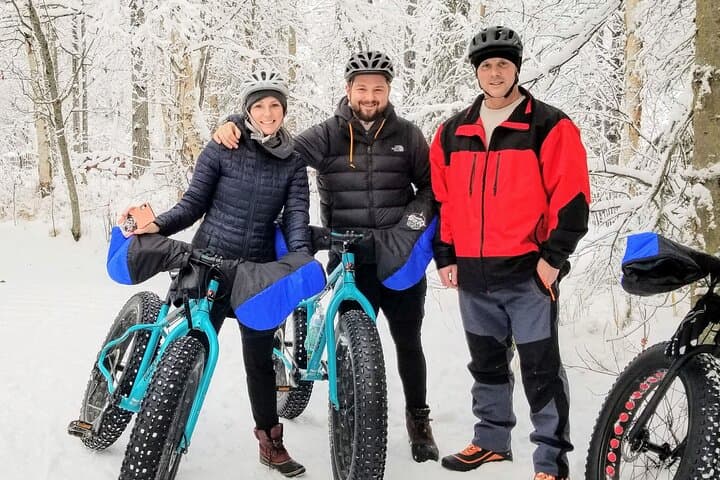
What the day feels like
The snow has its own voice here. It hums under wide tires as the trail threads a white ribbon along the edge of Cook Inlet, the Chugach Mountains standing guard across the water. The air is clean and bracing, the kind that wakes you up from the inside out. A gull calls; a raven answers. The tide pushes at the frozen shoreline, daring the city to meet the wild. You ease onto the packed corduroy, the bike steady beneath you, and realize something simple but electric: winter in Anchorage doesn’t just endure—it plays.
A guided fat-biking tour is the city’s invitation to see its winter personality up close. With oversized tires running at low pressure, fat bikes float over groomed trails and packed snow that would have stopped a standard bike cold. Anchorage feels built for it. Trail networks slide from neighborhoods to coastal overlooks in minutes, mixing urban convenience with frontier mood. On a clear morning, Denali sometimes peers over the horizon, distant and aloof. Closer at hand, moose browse the willows like slow-moving snowdrifts with legs. The forest watches, spruce boughs shrugging off last night’s flurries.
This ride typically runs two to three hours—enough to cover a satisfying loop, not so long that toes stage a mutiny. Your guide meets you with bikes tuned for the day’s conditions, a helmet, and the kind of local knowledge that makes each bend in the trail feel like a well-kept secret. The first few minutes are about finding rhythm: steady cadence, light hands, eyes forward. The snow is firm, almost musical under the tires, and the bike replies to calm inputs—push too hard and it talks back. Settle into its tempo, and the city reveals itself.
Anchorage’s identity is threaded through these paths. The iconic Tony Knowles Coastal Trail follows a shoreline dramatically reshaped by the 1964 Good Friday earthquake; riding past Earthquake Park, you skim the top of landslides that turned forest into bluff in a matter of minutes. In winter, the scars hide under a clean sheet, but the story remains. Kincaid Park, another favorite winter ride zone, sits on a former Cold War Nike missile site, its rolling glacial topography now crisscrossed by groomed winter singletrack and multi-use corridors. The land remembers, even while the snow invites you to make new tracks.
Fat biking’s modern form was refined in Alaska. In the 1980s and ’90s, tinkerers in Anchorage and Fairbanks widened rims and tires to take on snowbound trails, evolving from a curiosity into a movement. The Iditarod Trail Invitational, a human-powered epic that sends cyclists across hundreds of miles of winter backcountry, grew out of that restless energy. Today, a guided city ride is the approachable heir to that spirit—adventure scaled to a morning, with hot coffee waiting back in town.
On trail, winter has agency. The inlet breathes; the breeze can nip or bless. You keep moving, generating your own heat, while the landscape nudges you to look up: a bald eagle posted above an estuary, a fox ghosting the treeline, the ghost-blue of twilight stretching long. The guide sets a comfortable pace with frequent stops for photos and views. Anchorage is a city that acts like a gateway; in the span of a few miles you move from downtown skyline to a vista where only water, mountain, and sky negotiate the horizon.
Practicality matters in this climate, and a guided tour takes care of the big pieces. Bikes and helmets are provided, often with pogies—insulated handlebar mitts that turn Arctic wind into a suggestion. You bring the layers: a breathable base, warm mid-layer, and a windproof shell. Insulated boots are worth their weight in smiles. Sunglasses handle glare; a neck gaiter keeps frost and chatter at bay. Hydration still counts in cold weather, and snacks don’t judge—the trail applauds a chocolate break.
Riding technique is straightforward. Lower tire pressure broadens the contact patch to grip the snow. Stay relaxed. Braking is gentle, especially in corners. If you drift, the bike is just reminding you to respect the surface. Most tours keep to groomed, multi-use routes; good etiquette means yielding to pedestrians, giving skiers and dog teams space, and maintaining distance from wildlife. Moose deserve a wide berth—always.
Winter light is a feature, not a bug. In December and January, the sun arcs low, turning hours into golden hour; by February and March, daylight stretches and conditions often settle into their sweet spot—firm trails, longer rides, easier logistics. Even the city’s coffee tastes better after a spin in the cold.
Back at the trailhead, the bike rolls to a stop and the quiet whispers again—the satisfying hush of a morning well spent. Anchorage in winter isn’t an obstacle course; it’s an open invitation. Fat biking makes the most of it: accessible, exhilarating, and very much alive.
Trail wisdom
Small choices, better day.
Master Snow Traction
Lower tire pressure and keep a steady cadence. Relax your grip and brake early—snow rewards smooth inputs.
Dress in Breathable Layers
Use a wicking base layer, warm mid-layer, and windproof shell. Overheating leads to sweat, which leads to cold.
Protect Hands and Face
Pogies or insulated gloves plus a neck gaiter or balaclava make subfreezing rides comfortable and focused.
Respect Wildlife and Etiquette
Give moose at least 50 yards, yield to skiers and pedestrians, and stay on groomed multi-use routes.
Local knowledge
Read the place, not just the route.
Watch for native species including Moose, Bald eagle.
Keep an eye out for wildlife during the transition between areas and habitats. Respect distance guidelines.
Stay on groomed multi-use trails, avoid ski-only tracks, and support local trail groups that maintain winter grooming.
Follow the guide's instructions on size limits, ethical handling, and leave-no-trace practices.
Earthquake Park overlooks with Cook Inlet views. Point Woronzof bluff for sunset over the Alaska Range
Locally recommended viewpoints and quiet spots known best to local operators.
Anchorage’s coastal bluffs were reshaped by the 1964 Good Friday earthquake, and Alaska pioneers helped refine fat-bike technology for winter travel and racing.
Maritime roots and regional tradition shape the waterways and working coasts.
Seasonal guide
Four versions of the same landscape.
Spring
Best forLonger daylight · Bird migrations along the inlet
ChallengesFreeze-thaw ‘punchy’ snow · Icy morning surfaces
Expect variable conditions—firm mornings, softer afternoons. Studded tires and adaptable layers help.
Summer
Best forDry singletrack at Kincaid · Marathon daylight for city rides
ChallengesBugs in wooded sections · Busy multi-use trails
While this tour focuses on winter, Anchorage trail networks shine in summer for standard mountain biking and scenic cruising.
Fall
Best forCrisp air and early alpenglow · Chance of aurora on late rides
ChallengesMoose rut—give extra space · Early snow and mud
Shoulder-season prep is key: waterproof layers and lights for shorter days.
Winter
Best forFirm groomed snow · Golden-hour light nearly all day
ChallengesCold temps and wind chill · Limited daylight in mid-winter
Prime fat-biking season. Dress smart, keep moving, and enjoy the quiet rhythm of snow under tires.
Operator details
What the booking data adds.
Included
- ✓Pogies (bar mitts) and hand warmers
- ✓Helmet
- ✓Use of bicycle
- ✓Insulated Overboots
Good to know
- ✓Service animals allowed
- ✓Public transportation options are available nearby
- ✓Travelers should have at least a moderate level of physical fitness
Pack with intention
What to bring.
Good to know
Common questions.
Yes. The guided tour provides a fat bike and helmet; many tours also include pogies. Dress in your own warm layers.
Plan the edges
The details that make the day easier.
Anchorage’s Tony Knowles Coastal Trail runs about 11 miles from downtown to Kincaid Park and is one of the most popular winter multi-use corridors in Alaska.
Warm up with a latte at Black Cup, then celebrate the ride with pizza and craft beer at Moose’s Tooth or sunset views at 49th State Brewing. For a quick local bite downtown, try a reindeer sausage from a street cart when in season.
- Closest airport
- Ted Stevens Anchorage International (ANC). Common trailheads like Westchester Lagoon or Kincaid Park are 10–20 minutes from downtown by car. Cell service is generally strong. No permits required for guided rides; follow local trail etiquette and grooming updates.
Ride only on designated, groomed routes to prevent trail damage and respect ski-only tracks. Pack out all trash and consider donating to local groups that maintain Anchorage’s winter trail system.
Explore by topic
Follow the threads.
Keep exploring
Make the story part of the trip.
 Related story
Less than two hours from Nairobi, Kereita Forest pairs hands-on canopy adventure with quiet montane trails and a sobering colonial history—perfect for families, teams, and curious travelers seeking a full-day pulse of nature.
Set out from Bass Harbor for a private, customizable day on Blue Hill Bay — lighthouses, puffins, seals, and the chance to feel Acadia from the water. Small groups, local captains, unforgettable views.
In four hours you can move from shaded canyon ferns to wind-scoured coastal ridgelines, guided by someone who knows where the light—and the hidden views—live. This private half-day hike on the Monterey Peninsula or Big Sur is compact, curated, and perfect for travelers who want depth without a multiday commitment.