
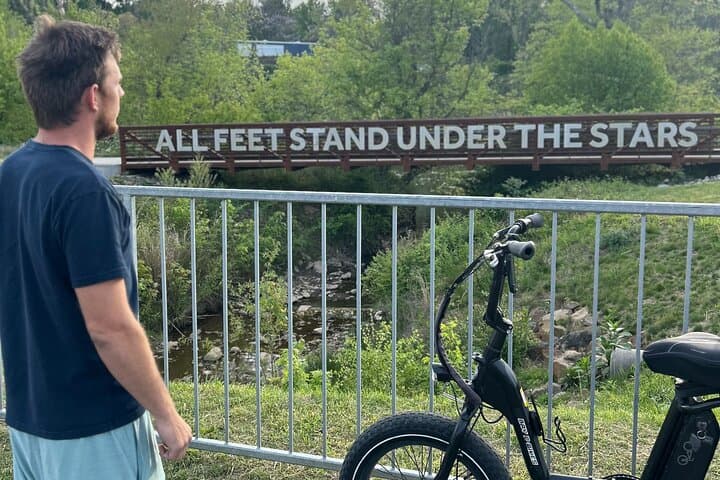
What the day feels like
Morning in Asheville arrives like a suggestion—soft light through sycamores, the smell of coffee from a corner café, and the restlessness of a town that’s part mountain village, part craft-beer laboratory. You answer that restlessness by opening the door to a package on two wheels: an electric bike, delivered to your hotel as part of a straightforward rental that promises up to 40 miles and a top speed of 20 mph. It’s a small convenience that changes everything about how you read this place on two wheels.
There’s a tactile satisfaction to easing onto an e-bike with fat tires and a step-through frame: the throttle is a diplomatic partner, offering help when the road pitches up and encouraging you to keep exploring. In Asheville, that means traversing neighborhoods that climb into oak and pine, rolling past murals in the River Arts District, then pushing out toward the Blue Ridge Parkway, where the horizon finally broadens into the deep, blue sweep that names the mountains themselves.
Geology and history are stitched into the ride. The Blue Ridge Mountains are among the oldest on earth—rocks here are mostly ancient metamorphic and igneous formations from the Precambrian—so every ridge feels like a weathered spine of the continent. You’ll ride on tarmac, gravel shoulders, and bike-friendly backroads that thread through former Cherokee hunting grounds and later homesteads. Asheville’s growth owes much to the Gilded Age: the nearby Biltmore Estate, built by George Vanderbilt in the 1890s, dominates regional history and tourism, but it’s the town’s modern craft culture—breweries, coffee roasters, and a stubborn small-business ethos—that will frame your afternoon stop.
Practical benefits of an e-bike rental here are tangible. Fat tires smooth out cracked pavement and light gravel, and the motor makes long ridge climbs manageable for riders with varying fitness. The battery range—advertised at roughly 40 miles—turns the intimidating into the possible: a 20–35 mile loop that includes Parkway viewpoints, a riverfront pedal, and a few neighborhood detours is within reach for most riders in a day. Expect to climb and descend repeatedly; a typical Asheville loop will include 1,000–3,000 feet of cumulative elevation gain depending on route choices.
Culture and place present themselves as you ride. Pull into a roadside overlook just as clouds slide over the valley and you’ll see how the landscape shaped human settlement; small towns cling to river corridors and ridgelines, and farmsteads pepper the fields. Stop in the River Arts District and watch a potter at a wheel, then cross the French Broad River on a pedestrian bridge and find a brewery or café to recharge. Locals treat e-bikes as legitimate transport—respect that with predictable, courteous cycling: signal, pass on the left, and yield to hikers on mixed-use trails.
The rental’s logistics are straightforward: free delivery within Asheville, step-through frames for easy mounting, fat tires for mixed surfaces, a throttle feature for steep stretches, and pickup when you’re done. For many travelers this turns an otherwise complicated day of planning—transport to a trailhead, shuttle logistics, or ferrying bikes—into a single, relaxed decision: set a route, keep an eye on battery level, and enjoy the ride.
If you’re plotting a route, consider a few practical loops: a short city-and-river route (10–15 miles) that stitches together downtown Asheville, the River Arts District, and the French Broad River Greenway; a full Parkway loop (20–35 miles) that includes a stretch of the Blue Ridge Parkway for expansive vistas and controlled gradients; or a mixed-surface route to the North Carolina Arboretum with a stop at the Biltmore Village for lunch. Tailor distance and climbing to your comfort and battery range, and pick a loop with escape points—town centers or bridges—where you can end early if the battery wanes.
Safety and preparation are simple but essential. Bring a helmet (often included), basic tools or a pump if you plan to head onto rougher surfaces, and a small battery charger or power bank if you expect to use your phone for navigation all day. Hydration and sun protection matter: mountain sun and exertion add up fast, even when the motor does some of the work.
As you roll back into town, the cultural reward is immediate: Asheville’s post-ride scene is a study in reparative pleasures—hearty Southern food, a lineup of small breweries, and late-afternoon music in local bars. An e-bike day in Asheville doesn’t just let you see the place; it lets you move through its layers—geological, historical, and cultural—without the friction of logistics. That’s the point: an electric bike is a way to expand what you can comfortably access in a day, while still feeling like you earned each view.
For travelers—couples, friends with mixed fitness levels, and solo riders wanting a flexible day—the delivery-and-pickup model is one of those small service inventions that makes a trip feel less like work and more like an invitation. You leave the planning to the road, the throttle to the moment, and the rest to a town proud of its mountains, its makers, and the easy luxury of a bike that carries you farther than your legs might on their own.
Trail wisdom
Small choices, better day.
Plan Battery-Forward Routes
Map a route with towns or trailheads where you can cut the ride short if battery drops below 20%.
Helmet and Visibility
Wear a helmet and bright layers—parkway speeds and mixed traffic make being seen as important as being safe.
Respect Shared Trails
Yield to hikers, announce passes, and avoid singletrack or restricted trails unless bikes are explicitly allowed.
Carry a Phone Mount
A handlebar phone mount keeps navigation visible without awkward stops and helps preserve battery via portable chargers.
Local knowledge
Read the place, not just the route.
Watch for native species including white-tailed deer, red-tailed hawk.
Keep an eye out for wildlife during the transition between areas and habitats. Respect distance guidelines.
Stick to paved and permitted mixed-use routes to protect fragile mountain soils; pack out trash and avoid riding on closed or singletrack trails to minimize erosion.
Follow the guide's instructions on size limits, ethical handling, and leave-no-trace practices.
North Carolina Arboretum gardens and quiet forest loops. Tunnel Road overlooks and short side roads with local bakery stops
Locally recommended viewpoints and quiet spots known best to local operators.
The Asheville region sits on ancestral Cherokee lands; the city later grew as a Gilded Age retreat—Biltmore Estate remains the largest privately owned house in the U.S.
Maritime roots and regional tradition shape the waterways and working coasts.
Seasonal guide
Four versions of the same landscape.
Spring
Best forwildflowers · cool climbs · quieter roads
Challengesmuddy backroads · variable temperatures · sporadic rain
Spring offers cool temps and blooming mountain flora—expect damp patches on less-maintained roads after rainstorms.
Summer
Best forlong daylight hours · full-service cafes · river swims
Challengesheat and humidity · busy tourist traffic · high afternoon storm risk
Summer is ideal for long days but plan early starts to avoid heat and afternoon thunderstorms common in the mountains.
Fall
Best forleaf-peeping · crisp rides · local festivals
Challengeshigher traffic on scenic drives · cold mornings · limited daylight later in season
Autumn is peak for color and crisp air—expect more cars on scenic overlooks and bring layers for temperature swings.
Winter
Best forquiet roads · clear winterlight
Challengesice on parkway sections · short daylight · reduced battery performance in cold
Winter rides can be beautiful and quiet but watch for icy patches and know batteries drain faster in cold conditions.
Operator details
What the booking data adds.
Included
- ✓Helmet, Bike Lock and Charger
- ✓Use of bicycle
Not included
- —Bottled water
- —Sunscreen, Hats
- —Gratuities for delivery driver
Good to know
- ✓Public transportation options are available nearby
- ✓Not recommended for pregnant travelers
- ✓Not recommended for travelers with poor cardiovascular health
- ✓Suitable for all physical fitness levels
Pack with intention
What to bring.
Good to know
Common questions.
Batteries are rated for roughly 40 miles under mixed conditions; actual range depends on rider weight, terrain, and how much you rely on throttle versus pedal assist.
Plan the edges
The details that make the day easier.
Asheville is adjacent to the Blue Ridge Parkway, a scenic roadway built in the 1930s that showcases mountains formed over a billion years ago during the Precambrian.
After a ride, head to Lexington Avenue or the River Arts District for local breweries (try Burial or Wicked Weed), then grab Southern-influenced fare at Tupelo Honey for a celebratory meal—both are within easy downtown access.
- Closest airport
- Asheville Regional Airport (AVL)
- Typical pickup
- hotel or Airbnb in Asheville (free delivery)
- Driving distance from downtown to nearby Parkway access
- 10–25 minutes
- Cell service
- good in town, spotty on some Parkway stretches
- Permits
- none required for road
E-bikes reduce car trips and emissions—carry out trash, ride only on permitted routes, and avoid fragile side trails to prevent erosion.
Explore by topic
Follow the threads.
Keep exploring
Make the story part of the trip.
Set out from Bass Harbor for a private, customizable day on Blue Hill Bay — lighthouses, puffins, seals, and the chance to feel Acadia from the water. Small groups, local captains, unforgettable views.
In four hours you can move from shaded canyon ferns to wind-scoured coastal ridgelines, guided by someone who knows where the light—and the hidden views—live. This private half-day hike on the Monterey Peninsula or Big Sur is compact, curated, and perfect for travelers who want depth without a multiday commitment.
 Related story
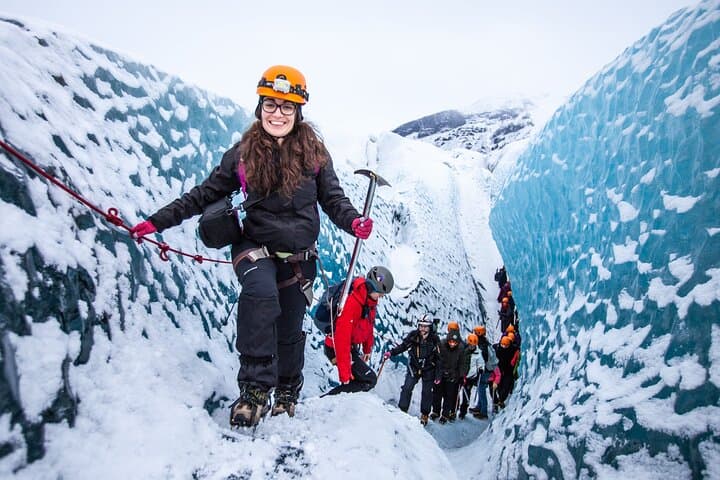
Beneath a sky of shifting light, Skaftafell’s ice reads like a map of time. This three-hour guided glacier hike mixes technical instruction with geology and culture: compact, safe, and unforgettable.