
What the day feels like
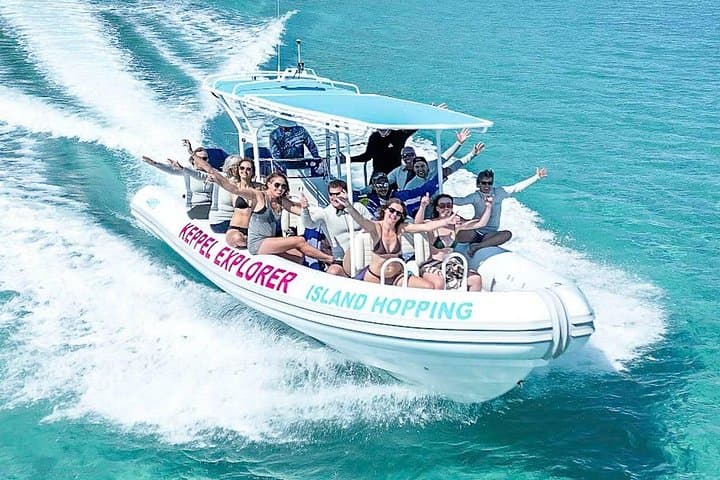
The RIB noses out of Rosslyn Bay before most of the town has finished its first coffee; salt air slams into you like a welcome, and the island appears as a low, green promise on the horizon. For five hours you’re moving faster than the island’s lazy tide, skimming past rocky headlands, dropping into coves the crowds don’t know, and sliding into pockets of coral bright as foreign currency. This is a day carved around motion—the roar of the engine, the slap of spray, the sudden hush when you pull up at a pristine beach and the island seems to hold its breath.
The Great Keppel Island Hopping (5-IN-1) Adventure is designed to show you as much of this Keppel gem as possible in one compact burst: circumnavigation by a fast 12-seat RIB, guided snorkel sessions on reef patches, quick hikes to panoramic points, and stretches of private beach time. The itinerary is efficient without feeling rushed; the intent is to balance motion and pause so you can both see and digest how this place ticks—the geology, the coral gardens, and the slow human history of the Capricorn Coast.
Geology here reads like a ledger of time. The island’s basalt and granite headlands give way to sandy bays, all sculpted by tides that still feel like the island’s long memory. Around the southern flanks, coral bommies sit in shallow water, and the seabed changes texture from shell-sand to compact reef in a few strokes of the boat’s wake. The Keppel group sits on the edge of the Great Barrier Reef Marine Park, and that protection gives the underwater world a sense of loose, patient abundance—parrotfish scraping, schools twisting like living coins, and the occasional turtle that seems to regard snorkelers as brief, curious currents.
The human story is simpler but no less rooted. The Keppel Islands are part of the traditional lands and waters of the Darumbal people, whose connection to this coastline and reef long predates modern tourism. European contact and later recreational development reshaped access, but the island’s low development—no large resorts, mostly day visitors—still keeps things intimate.
Why go? Because it’s a compact, high-return day that gives you a taste of the Great Barrier Reef without the full-day logistics of bigger reef voyages. It’s ideal for people who want to combine motion, variety, and good snorkeling in a single outing. The RIB platform makes access nimble—pilots can thread into shallower bays and anchor where larger boats can’t—so you’re often in quieter spots that feel private even on a popular route.
Practical realities matter: this is a 5-hour tour (300 minutes) priced from about USD 118.96, capped in a small group that turns strangers into a temporary crew. Expect mostly shallow-water snorkel loops suitable for confident beginners to intermediate snorkelers; guides handle the orientation and safety. Timing is the unsung hero—mornings and early winters generally have flatter seas and clearer water. Take advantage of that window if you want cleaner visibility for underwater photography or to spot turtles.
Movement on land is minimal but worthwhile. Quick, well-marked trails lead up to lookouts where the island’s beaches arrange themselves like a spectrum of blues. The beaches are numerous—Great Keppel is known for its many coves—and each has a different personality: some are powder and hush, others a flurry of color and activity. Bring footwear for rocky headlands if you plan a short hike, and reef shoes for shore entries when the bottom is shell-strewn.
Safety and conservation are part of the program. The boat operator emphasizes briefings, reef etiquette, and the basics of interacting with marine wildlife—no chasing turtles, no touching corals. Wear reef-safe sunscreen and avoid single-use plastics to keep your footprint minimal. The Marine Park is monitored for a reason; small behaviors make a big difference here.
If you want to squeeze the most out of the day: come hydrated and rested, wear a long-sleeve rash guard for sun protection, and keep an underwater camera or a phone in a waterproof case at hand. The boat’s layout facilitates gear storage and quick entries, so you can leave bulky things behind in favor of what you’ll use in the water.
For travelers who want more than a day trip, the island rewards slower exploration: tidepooling at low tide, walking to quieter northern bays, and watching the sky harden into a tropical sunset. But if your time is short, this circumnavigation is a tidy, high-energy way to meet the Keppels—the roar of the RIB, the patience of the reef, and the soft pull of shoreline to rest on when the engine goes quiet.
By late afternoon, you’re back at the mainland with salt drying on your skin and a list of small victories: a turtle sighting, a vivid coral garden, a secret beach. It’s the sort of day that leaves you wanting more and feeling satisfied—a travel paradox that’s easy to live with.
Trail wisdom
Small choices, better day.
Book Morning Departures
Mornings usually have calmer seas and better underwater visibility for snorkeling.
Use Reef-Safe Sunscreen
Choose biodegradable sunscreen to protect coral and marine life during snorkel stops.
Wear a Rash Guard
A lightweight long-sleeve shirt protects from sun and jellyfish while snorkeling.
Secure Loose Gear
Use dry bags and straps—RIBs are fast and spray can pull unsecured items overboard.
Local knowledge
Read the place, not just the route.
Watch for native species including Green and Hawksbill Turtles, Colorful reef fish such as Parrotfish and Sergeant Major.
Keep an eye out for wildlife during the transition between areas and habitats. Respect distance guidelines.
The island sits within the Great Barrier Reef Marine Park—follow reef etiquette, use reef-safe sunscreen, and take all waste back to the mainland.
Follow the guide's instructions on size limits, ethical handling, and leave-no-trace practices.
A quiet north-facing bay favored by locals for tidepooling at low tide. A rocky headland lookout with panoramic views that’s a short walk from the main beach
Locally recommended viewpoints and quiet spots known best to local operators.
Great Keppel Island lies within the traditional lands and sea country of the Darumbal people; European settlement later transformed the area into a recreational destination.
Maritime roots and regional tradition shape the waterways and working coasts.
Seasonal guide
Four versions of the same landscape.
Spring
Best forCalmer seas · Warmer air temperatures · Wildflower blooms onshore
ChallengesOccasional spring swells · More midges near shore
Spring (Sept–Nov) brings warmer days and good snorkel conditions, though early spring swells can stir visibility.
Summer
Best forWarmer water · Longer daylight · Tropical marine life
ChallengesHigher humidity · Cyclone season risk (Dec–Mar)
Summer offers balmy water but comes with heat and a higher chance of tropical storms—book with flexible cancellation.
Fall
Best forTransitional weather · Less crowding · Comfortable air temps
ChallengesVariable sea states · Inconsistent visibility
Autumn is a comfortable shoulder season; occasional wind can affect water clarity on some days.
Winter
Best forBest water clarity · Calm seas · Turtle sightings
ChallengesCooler air that can feel brisk out of the sun · Shorter daylight
Australian winter (June–Aug) is prime for snorkeling—calm seas and excellent visibility make for clearer reef encounters.
Pack with intention
What to bring.
Good to know
Common questions.
The tour lasts approximately 5 hours (300 minutes), typically leaving mid-morning and returning in the afternoon.
Plan the edges
The details that make the day easier.
Great Keppel Island is part of the Keppel Islands group and lies within the Great Barrier Reef Marine Park—it's commonly noted for its roughly 17 beaches.
After the tour, head into Yeppoon’s waterfront precinct for fresh seafood, casual fish-and-chip shops and a few reef-focused cafes and pubs—perfect for drying off with a cold beer and swapping turtle stories.
- Closest airport
- Rockhampton (RKP) — approx 45 km to Rosslyn Bay; Launch point: Rosslyn Bay
- Yeppoon area; Driving from Yeppoon
- ~20 minutes; Cell service: patchy on-island; Permits: No day-trip permit required but Great Barrier Reef Marine Park regulations apply.
This tour operates within protected reef waters—use reef-safe sunscreen, avoid touching or standing on coral, and pack out all waste to protect marine habitats.
Explore by topic
Follow the threads.
Keep exploring
Make the story part of the trip.
 Related story
Less than two hours from Nairobi, Kereita Forest pairs hands-on canopy adventure with quiet montane trails and a sobering colonial history—perfect for families, teams, and curious travelers seeking a full-day pulse of nature.
Set out from Bass Harbor for a private, customizable day on Blue Hill Bay — lighthouses, puffins, seals, and the chance to feel Acadia from the water. Small groups, local captains, unforgettable views.
In four hours you can move from shaded canyon ferns to wind-scoured coastal ridgelines, guided by someone who knows where the light—and the hidden views—live. This private half-day hike on the Monterey Peninsula or Big Sur is compact, curated, and perfect for travelers who want depth without a multiday commitment.