
What the day feels like
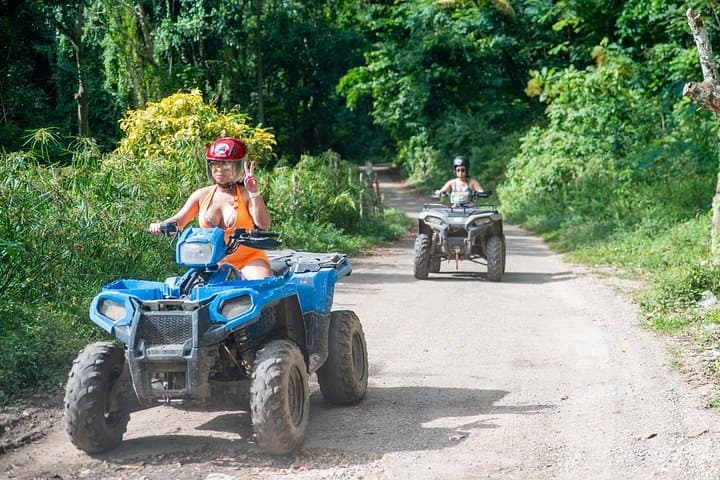
You can feel the island before you see it—the warm humidity rising off the leaf litter, the scent of crushed green and salt, the deep, diesel thrum of ATVs lining up like impatient beasts. A guide nods, and the convoy peels away from the roadside, tires throwing up ribbons of red soil as the jungle closes in. The trail narrows into a tunnel of banyan and bamboo; sunlight breaks into the canopy in spears. Ahead, the river calls, impatient and crystalline, daring you to trade the machine’s roar for the hush of water. The Blue Hole is not merely a dip in the landscape; it’s a punctuation—an exclamation point of blue and cold in the middle of Jamaica’s heat.
This half-day tour is built around that contrast: off-road adrenaline and the slow, cool reward of a mineral-blue pool. The route threads secondary roads and wadis—rocky, rooted stretches where the ATV puts paid to any notion that an island getaway is all leisure. The terrain demands attention: shale ledges, occasional mud, short climbs that let you feel the vehicle and the land negotiating each other. When the trail opens onto the gorge, there’s an old stone span—known locally as the Old Spanish Bridge—moss-streaked and photogenic, a quiet counterpoint to the buzz of engines. It’s an easy place to imagine earlier centuries and different uses of the same crossing, though the bridge you see today is best appreciated for its quiet, filmic quality and as a vantage point over the cascades.
Geology and water shape this place. The falls and pools of the Blue Hole are fed by freshwater springs and stream flow cut through limestone and volcanic bedrock. Over time, water has carved narrow channels and the plunging pools that give the site its signature hues—deep turquoise where the water pools, pale green in the shallows. When you jump from the cliffs or step onto a slick rock to climb upstream, you’re touching a process that has been running for millennia.
Culturally the route is stitched into modern Jamaican life. Ocho Rios was a small fishing town that remade itself into a tourism hub; even so, the countryside remembers an older economy—small farmers, river-driven mills, and coastal traders. Guides on the tour are often local, and their commentary is part natural history, part patois-colorful storytelling, part practical instruction. They’ll show you how to shimmy up a limestone chute and point out fruit trees and medicinal plants along the way. Tip well: it helps keep the machine humming and the local economy moving.
Why this tour matters for travelers who like both motion and stillness is simple. The itinerary satisfies a wide appetite: adventure seekers get rough-track steering and the satisfaction of skillfully downshifting on a narrow ledge; relaxation seekers get the slow ceremony of cliff-jumping, swimming in cool water, and sitting on a sun-warmed rock while the forest hums. It’s also a compact, well-shaped day—roughly four hours from pickup to drop-off—so it fits into cruise itineraries or island-hopping plans without devouring a full day.
Practical details matter here: the ride is physically untechnical but sometimes demanding—a short scramble at the falls, steady balance on the ATV, and the usual tropical risks: intense sun, sudden showers, and slippery rocks. Go early to avoid midday crowds and to catch the water at its clearest. The best photos happen in morning light; the best jumps happen whenever you feel bold and balanced.
Keep it sustainable. Blue Hole sits on managed, sometimes privately accessed land; respect rope lines, follow guide directions, and carry out what you carry in. Take the local perspective seriously—this place provides jobs and daily livelihoods, and your courtesy matters.
For the traveler who wants both a credible dose of adrenaline and an accessible, memorable nature stop, the combination of off-road riding and cliff-fed swimming is hard to beat. It’s a short, intense chapter of Jamaica that combines geology, culture, and simple physical joy. You leave with grit in your socks, a line in your photo roll you’ll re-show constantly, and the quiet gratified feeling of having traded a bit of bus comfort for something real: river, jungle, and a bridge that seems to remember the path you came by.
Trail wisdom
Small choices, better day.
Wear closed-toe shoes
Sturdy sneakers or light hiking shoes protect your feet on the ATV and on slick rocks at the falls.
Bring a compact dry bag
Protect camera, phone, and spare clothes from spray and unexpected rain showers.
Hydrate before and after
Four hours in heat and dust will dehydrate you—carry water and sip frequently.
Listen to your guide
Local guides manage safety on the cliff jumps and the trickiest off-road sections—follow their instructions.
Local knowledge
Read the place, not just the route.
Watch for native species including Green heron, Tree frog species.
Keep an eye out for wildlife during the transition between areas and habitats. Respect distance guidelines.
Respect marked trails and swim areas; the falls are on managed land—stick to guide routes and avoid bringing single-use plastics to reduce litter.
Follow the guide's instructions on size limits, ethical handling, and leave-no-trace practices.
Old Spanish Bridge viewpoint upstream—quiet photo spot. Small riverside fruit stalls near the trailhead for fresh mango and coconut
Locally recommended viewpoints and quiet spots known best to local operators.
Ocho Rios transitioned from a fishing village to a tourist hub in the 20th century; many rural routes trace older plantation roads and river crossings.
Maritime roots and regional tradition shape the waterways and working coasts.
Seasonal guide
Four versions of the same landscape.
Spring
Best forFewer crowds · Pleasant water temperatures
ChallengesOccasional showers · Trail muddiness after rain
Spring often brings warm days and manageable water temperatures; expect some wet trails after early rains.
Summer
Best forLush jungle colors · Long daylight hours
ChallengesStronger afternoon storms · Hotter daytime temperatures
Summer’s vivid greenery and strong light are great for photos, but afternoon showers are common—plan morning departures.
Fall
Best forQuieter trails · Good visibility in water
ChallengesVariable weather · Heat lingering into evenings
Fall is a solid shoulder season with fewer tourists and reliable pool clarity between storms.
Winter
Best forDrier trails · Cooler mornings
ChallengesHigher demand from visitors · Reservations required
Jamaica’s drier winter months offer the most consistent trail conditions—book early for holiday windows.
Pack with intention
What to bring.
Good to know
Common questions.
No prior ATV experience is required; guides give a short safety briefing and will pair you with an appropriate vehicle based on comfort level.
Plan the edges
The details that make the day easier.
The Blue Hole is often marketed locally as 'Island Gully Falls' or 'Irie Blue Hole' and is a privately managed series of pools and cascades near Ocho Rios.
After the ride, sample local jerk at Scotchies or smaller roadside spots for authentic flavors; grab a cold Red Stripe at a beach bar and visit the Ocho Rios Craft Market for wood carvings and local art to support artisans.
- Closest major airport
- Sangster International (Montego Bay, ~1.5-hour drive) or Ian Fleming International (near Ocho Rios, limited flights); Driving distance from Ocho Rios town center: 10–25 minutes depending on route; Cell service: intermittent in the gorge; Permits: site access typically included with tour—confirm operator covers any entrance fees.
This site is on managed private property—stay on designated paths, avoid disturbing vegetation, and pack out waste; support local guides and vendors to ensure tourism benefits the community.
Explore by topic
Follow the threads.
Keep exploring
Make the story part of the trip.
 Related story
Less than two hours from Nairobi, Kereita Forest pairs hands-on canopy adventure with quiet montane trails and a sobering colonial history—perfect for families, teams, and curious travelers seeking a full-day pulse of nature.
Set out from Bass Harbor for a private, customizable day on Blue Hill Bay — lighthouses, puffins, seals, and the chance to feel Acadia from the water. Small groups, local captains, unforgettable views.
In four hours you can move from shaded canyon ferns to wind-scoured coastal ridgelines, guided by someone who knows where the light—and the hidden views—live. This private half-day hike on the Monterey Peninsula or Big Sur is compact, curated, and perfect for travelers who want depth without a multiday commitment.