
What the day feels like
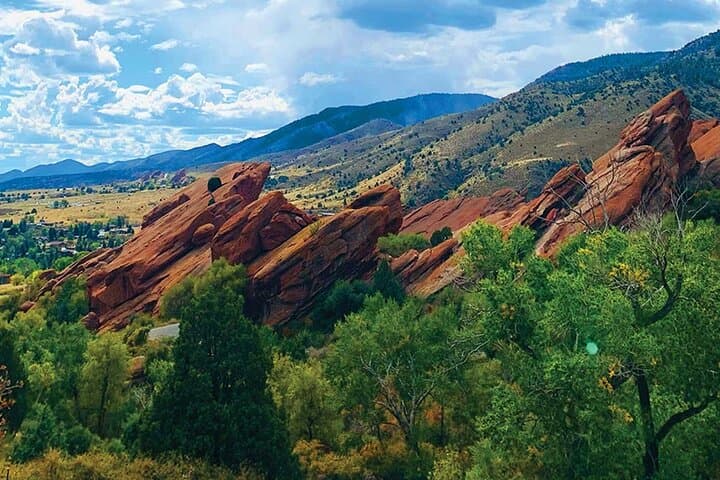
You turn west and the city loosens its grip. Within 30 minutes Denvers grid gives way to cottonwoods, scrub oak, and the sudden, volcanic punctuation of red sandstone cutting into the sky. The car eases onto a shoulder and the driver points: there, folded into the ridge, is Red Rocks Amphitheatre—an amphora of stone with bench rows hewn to fit the natural bowl, a place where sound lands like a hand. For four hours on a private tour that threads Denver, Golden, and the Front Range foothills, this is the kind of sequence that keeps reappearing: intimate, brief, unmistakable.
What this tour offers is less a single summit and more a collage of place. You glide past the geometric sweep of downtown, through neighborhoods that hum with breweries and galleries, then out into the older geology of the Front Range. The red fins here are not just scenic props; they are the visible edge of a long, complex story. Those sandstone slabs tilted upright during the Laramide uplift—tens of millions of years of compression and erosion—and now make a concert stage and a cliff-lined network of short walks and overlooks. The amphitheatre itself dates to the early 20th century and was completed in 1941; its concrete and stonework sit quietly in the wave of rock, offering one of the most photographed performance backdrops in the country.
But geology is only part of the script. These foothills are ancestral lands of the Ute, Arapaho, and Cheyenne peoples; later, the area drew miners, ranchers, and railroads, each leaving a different footprint on the landscape. Golden, Brightons neighbor to the west, still carries a small-town rhythm—main street pubs, museums that nod to the West, and trails that give you immediate access to greener slope lines and wide views. The private tour format compresses all of this; a local driver-guide strings together stories about the amphitheatre, a quick stop at a ridge for a postcard panorama, and the quieter corners where dinosaurs once left tracks—Dinosaur Ridge sits nearby and is an optional add-on for anyone who wants to see fossil beds in the open air.
The experience is designed to be both accessible and active. Most stops involve short, well-signed walks—think 10 to 40 minutes of exploring at a steady pace. If you want to push farther there are nearby trails for longer hikes, but the tour excels as an introduction: a rapid orientation to Denver metro, the foothills, and the best photo angles at Red Rocks without the logistics of driving yourself. Practical details matter: the trip runs about four hours, is private, and starts from Denver with a price point in the premium tier reflecting exclusivity and local knowledge. It is ideal for first-time visitors who want to see the signature landscape efficiently, photographers chasing light, or anyone who prefers guided context to wandering solo.
Plan around what you want from a short window of time. Sunrise and sunset light is magnetic at Red Rocks, accentuating the warm tones and deepening shadows that sculpt the benches and fins. Winter can be brisk and windy; summer heats up but brings long daylight and clear mountain air. A good guide will time stops to avoid crowds and point out lesser-known features—Trading Post Trail, a relatively short loop that winds among the fins, and the overlooks toward Denver and the Plains beyond. Along the way you might spot mule deer slipping between trees or a red-tailed hawk quartering the thermals: small reminders that the place is both cultural stage and living ecosystem.
For travelers thinking practically: pack layers, a sun hat, and a refillable water bottle. Footwear should be sturdy enough for uneven sandstone and short inclines. Altitude is mild but real; Denver sits at 5,280 feet and the foothills are higher—if youre coming from sea level, move slowly and hydrate. Check the amphitheatre schedule before you go: concerts and events can close access to familiar viewpoints. Finally, this is private touring—expect good storytelling, the ability to customize the route a bit, and a pace set to your group rather than a bus timetable.
Why book this tour now? Red Rocks remains one of the most immediate ways to understand Colorado's intersection of natural history, culture, and performance. It is visually striking without requiring technical skill, historically layered without feeling museumized, and pragmatically suited to travelers who want a meaningful sample of the Front Range in a single morning or afternoon. The park asks for respect—stay on trails, pack out waste, and let the cliffs keep their quiet—and rewards curiosity with views and context that linger long after you return to the city lights.
Trail wisdom
Small choices, better day.
Layer for fluctuating temps
Mornings and evenings can be markedly cooler than mid-day; bring a light insulated layer and a wind shell.
Hydrate at altitude
Start hydrating before the tour and carry a refillable bottle—altitude can sap you faster than expected.
Timing matters for photos
Plan stops at golden hour for the richest color on the sandstone and less contrasty light.
Check event schedules
Red Rocks hosts frequent concerts that can limit access; verify closures before booking or driving there independently.
Local knowledge
Read the place, not just the route.
Watch for native species including Mule deer, Red-tailed hawk.
Keep an eye out for wildlife during the transition between areas and habitats. Respect distance guidelines.
Stay on designated trails, pack out all waste, and avoid disturbing habitat—Red Rocks and nearby foothills have sensitive soils and vegetation that recover slowly from trampling.
Follow the guide's instructions on size limits, ethical handling, and leave-no-trace practices.
Trading Post Trail at Red Rocks for close-up sandstone formations. Dinosaur Ridge for visible fossil outcrops and guided interpretive stops (nearby)
Locally recommended viewpoints and quiet spots known best to local operators.
Red Rocks Amphitheatre was completed in 1941 and sits atop tilted sandstone formed during the uplift of the Front Range; the broader area is ancestral land of the Ute, Arapaho, and Cheyenne peoples.
Maritime roots and regional tradition shape the waterways and working coasts.
Seasonal guide
Four versions of the same landscape.
Spring
Best forWildflower viewing · Cooler hikes · Fewer crowds
ChallengesMud on trails · Unpredictable late snow
Spring brings fresh green and wildflowers; expect variable weather and carry traction-friendly shoes for muddy sections.
Summer
Best forLong daylight · Evening concerts · Warm clear views
ChallengesHeat on exposed rock · Higher visitor numbers
Summer offers reliable blue skies and a busy events schedule; start early to avoid the hottest hours.
Fall
Best forCrisp air and light · Autumn color at lower elevations · Excellent photography
ChallengesShortening days · Occasional early snow
Fall is an ideal time for light and color, with cooler temperatures and dramatic sunsets over the red fins.
Winter
Best forQuiet landscapes · Snow-dusted sandstone · Short, clear hikes
ChallengesIcy trails · Cold winds and shorter daylight
Wintry visits are serene and photogenic but require traction and warm layers; some roads or viewpoints may be limited.
Operator details
What the booking data adds.
Included
- ✓Authentic Colorado: Carefully selected stops showcasing iconic scenery.
- ✓Private Hotel Pickup: Premium SUV or upscale vehicle for your group.
- ✓Snacks & Water Included
- ✓Gratuities
- ✓Private Experience: Flexible itinerary designed exclusively for your group.
- ✓Expert Local Guide: Local stories, history, geology, wildlife & insider tips.
Not included
- —Food and drinks
Good to know
- ✓Infants and small children can ride in a pram or stroller
- ✓Service animals allowed
- ✓Public transportation options are available nearby
- ✓Specialized infant seats are available
- ✓Suitable for all physical fitness levels
- ✓Your guide will reach out to you the day before your scheduled tour via text to check in with you.
Pack with intention
What to bring.
Good to know
Common questions.
The private tour lasts about four hours and includes stops at Red Rocks Amphitheatre, scenic overlooks in the Front Range foothills, and a drive through parts of Denver and Golden with local narration.
Plan the edges
The details that make the day easier.
Red Rocks Park and Amphitheatre is listed on the National Register of Historic Places and was completed in 1941.
After the tour, head to Golden for a local meal and craft beer on its historic main street or return to Denver's RiNo or LoDo neighborhoods for a lively culinary scene—both areas offer approachable, regional flavor that pairs well with a day in the foothills.
- Closest airport
- Denver International (DEN). Drive time: ~35–45 minutes from DEN to Red Rocks, ~20–30 minutes from downtown Denver. Cell service: generally good in town, can be intermittent in canyon sections. Permits: none for sightseeing, but check event schedules and possible parking fees.
This route travels through sensitive foothill ecosystems and a historically significant park; pack out all trash, stay on established paths, and support local guides who follow Leave No Trace practices.
Explore by topic
Follow the threads.
Keep exploring
Make the story part of the trip.
Set out from Bass Harbor for a private, customizable day on Blue Hill Bay — lighthouses, puffins, seals, and the chance to feel Acadia from the water. Small groups, local captains, unforgettable views.
In four hours you can move from shaded canyon ferns to wind-scoured coastal ridgelines, guided by someone who knows where the light—and the hidden views—live. This private half-day hike on the Monterey Peninsula or Big Sur is compact, curated, and perfect for travelers who want depth without a multiday commitment.
 Related story
Beneath a sky of shifting light, Skaftafell’s ice reads like a map of time. This three-hour guided glacier hike mixes technical instruction with geology and culture: compact, safe, and unforgettable.