
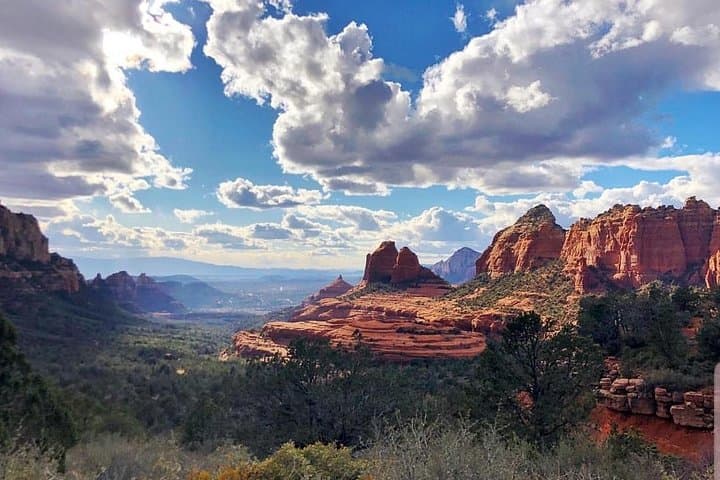
What the day feels like
The jeep lurches forward, tires complaining against braided sandstone as the world unfurls into bands of rust and gold. You feel the vehicle tilt, then find its footing, and the valley yawns wider: a checkerboard of juniper crowns, the thin ribbon of Oak Creek, and distant mesas that look painted on. The driver shuts off the engine for a moment and the silence presses in—a dry, wind-carried hush that makes each scrub oak murmur sound like conversation. That pause is the point of a private Sedona jeep tour: not merely to conquer a bumpy stagecoach route but to slow so the landscape can speak.
The PRIVATE Sedona Jeep Tour 4X4 Climb—two hours, private, and built for photographers and curious travelers—climbs roughly 1,000 feet along historic pathways carved into the Colorado Plateau. It’s true off-road: a 4x4 negotiating gullies, slickrock, and rutted switchbacks that once carried stagecoaches and cattlemen. The terrain gives the ride its personality—at times playful and jarring, at others solemn and expansive—so the experience is equal parts motion and meditation.
Geology is written large here. Sedona’s red arrives from iron-rich hematite staining the Permian and Triassic sandstones—a slow, patient oxidation that paints cliffs and monoliths in saturated tones. The rocks tell a story of uplift and erosion; each ledge and hoodoo is a page in the Colorado Plateau’s long book. Your guide will point out cross-bedding and fossilized dunes, the fingerprints of an ancient desert that became a high, broken plateau beneath a modern sky.
Human history runs under those rocks, too. The Sinagua people left pueblos, rock art, and agricultural terraces upstream along Oak Creek; Anglo settlers carved roads and ran cattle in the late 19th century. Many of the jeep roads follow older travel corridors—routes that moved people and goods through the maze of redstone ridges. Today’s rides are less utilitarian and more interpretive: your guide is a translator between eras, reading the land’s language and delivering stories about geology, settlement, and the fragile ecology that persists here.
Culturally, Sedona is a collage. Artists, spiritual seekers, and outdoor folk mingle with families drawn to the red-rock postcard views. The town feels intentionally small—tlaquepaque’s shaded courtyards, galleries with locally made pottery, and a handful of excellent restaurants provide a balanced after-ride ritual: sit, eat, compare photos, and let the landscape settle into memory.
Why book a private jeep climb rather than drive yourself? First: access. The 4x4 climbs take you where rental cars cannot safely go—steep ledges, slickrock traverses, and narrow two-tracks that reward bravery with panoramic overlooks. Second: context. A good local guide will time stops for light, point out geologic markers, and position the jeep for photos while explaining flora, fauna, and the area’s conservation challenges. Finally: the private format lets you set the pace. Want extended photo time at an overlook or an unhurried discussion of the rock layers? The itinerary is yours within the two-hour window.
Practicalities are straightforward. The experience is offered year-round, runs about 120 minutes, and is private—ideal for couples, small groups, or families. Expect bumps; motion-sensitive travelers should prepare. Pickup from Sedona accommodations is commonly included—confirm with the operator. The tour’s price starts at $159 per vehicle, with instant confirmation and a generous cancellation policy noted by the provider.
Make time to arrive with sun protection, a half-liter to a liter of water per person, and sturdy shoes even though you’ll remain mostly vehicle-bound. Aim for early morning or late afternoon to dodge the desert’s heat and to find the rocks at their most photogenic. If you’re photographing, bring a polarizing filter to deepen skies and control reflections; a wide-angle lens captures cliffs and canyons, while a 70–200mm is perfect for compressing distant spires.
Conservation matters here. The red-rock soils are fragile, cryptobiotic crusts that bind the desert—stay on designated routes, heed your guide, and pack out what you bring. Many of Sedona’s trailheads require Red Rock Pass for parking; while the operator typically handles route permits and access, if you plan additional hikes before or after the tour, check parking requirements.
This jeep climb offers a concentrated dose of Sedona: geology, history, culture, and those cinematic vistas that make people linger. It’s not a remote wilderness expedition, but it’s the most efficient way to reach high, viewpoint-grade terrain without technical climbing or long hikes. For travelers who want the dramatic red-rock moments with context and ease, a private 4x4 climb delivers.
If you go: book the earlier slot for cooler temperatures and clearer air; bring a hat and sunscreen; and have your camera ready for that instant when the light slices across the plateau and everything briefly catches fire. The jeep will keep moving, but the view—now and then—will remain, and that’s the point: a short, rough ascent into a landscape that refuses to be ignored.
Trail wisdom
Small choices, better day.
Time it for the light
Book early morning or late afternoon to avoid heat and capture the most dramatic colors on the sandstone.
Hydrate and protect
Bring at least 1 liter of water per person and high-SPF sunscreen—the plateau’s altitude and dry air dehydrate quickly.
Stabilize your shots
Use a small travel tripod or a beanbag to steady your camera on the jeep’s hood for sharp photos.
Prepare for bumps
Motion-sensitive travelers should take precautions—consider motion-sickness meds and wear comfortable, secure footwear.
Local knowledge
Read the place, not just the route.
Watch for native species including Red-tailed hawk, Coyote.
Keep an eye out for wildlife during the transition between areas and habitats. Respect distance guidelines.
Red Rock Country is ecologically fragile—stay on designated routes, minimize noise, and pack out all trash to protect cryptobiotic soils and riparian areas.
Follow the guide's instructions on size limits, ethical handling, and leave-no-trace practices.
Doe Mountain overlook for a compact but high-reward short hike. Fay Canyon’s quieter slot and natural arch—less crowded than nearby Bell Rock
Locally recommended viewpoints and quiet spots known best to local operators.
The jeep routes trace corridors used by settlers and earlier indigenous peoples; Sedona was also a ranching and stagecoach region in the late 1800s.
Maritime roots and regional tradition shape the waterways and working coasts.
Seasonal guide
Four versions of the same landscape.
Spring
Best forWildflower blooms · Pleasant temperatures · Photographic clarity
ChallengesOccasional wind · Higher visitor numbers · Cool mornings
Spring brings mild weather and scattered wildflowers on the plateau—ideal for photography but expect breezy afternoons and busier trails.
Summer
Best forLonger daylight · Lush riparian areas near Oak Creek · Off-peak morning slots
ChallengesHigh daytime heat · Monsoon storms · Afternoon lightning risk
Summer mornings are best to avoid heat; monsoon storms can roll in quickly—operators may alter routes for safety.
Fall
Best forCrisp air and vivid color · Stable weather · Peak hiking conditions
ChallengesHigher visitor demand · Cooler nights · Limited late-season bookings
Fall is the sweet spot—stable, clear weather and excellent light make this the optimal time for a 4x4 climb.
Winter
Best forSnow-dusted views · Fewer crowds · Golden low-angle light
ChallengesCold temperatures · Possible icy spots on slickrock · Shorter daylight
Winter can deliver dramatic snow on redstone and peaceful trails; dress warmly and confirm pickup logistics in advance.
Operator details
What the booking data adds.
Included
- ✓2-hour guided jeep tour
- ✓Local taxes
Not included
- —Gratuity not included
- —Average gratuity is 15% - 20% if you enjoyed your tour
Good to know
- ✓Service animals allowed
- ✓Public transportation options are available nearby
- ✓Not recommended for travelers with spinal injuries
- ✓Not recommended for pregnant travelers
- ✓Not recommended for travelers with poor cardiovascular health
- ✓Travelers should have at least a moderate level of physical fitness
- ✓A minimum of 2 people per booking required
- ✓Minimum age is 3 years
- ✓No pregnant guests on this tour
Pack with intention
What to bring.
Good to know
Common questions.
The private jeep climb runs approximately two hours and typically includes hotel pickup within Sedona, a guided 4x4 route with multiple viewpoints, and time for photos; confirm pickup details with the operator.
Plan the edges
The details that make the day easier.
Sedona’s red color comes from iron oxide (hematite) staining the sandstone; the area sits on the uplifted Colorado Plateau that exposes layers of ancient desert and marine deposits.
After the climb, head to Tlaquepaque Arts & Shopping Village for galleries and a late lunch; Mariposa or The Hudson offer scenic dining with views, and Oak Creek Brewery is good for casual post-ride beers.
- Closest airport
- Phoenix Sky Harbor (PHX) ~115 miles
- ~2 hours drive; Meeting point
- Sedona pickup (confirm with operator); Cell service: reliable in town, intermittent on remote sections; Permits: Red Rock Pass may be required for some trailhead parking—operator usually handles route access.
This area’s soils and riparian zones are sensitive—stay on designated roads and overlooks, pack out waste, and avoid creating new social tracks.
Explore by topic
Follow the threads.
Keep exploring
Make the story part of the trip.
In four hours you can move from shaded canyon ferns to wind-scoured coastal ridgelines, guided by someone who knows where the light—and the hidden views—live. This private half-day hike on the Monterey Peninsula or Big Sur is compact, curated, and perfect for travelers who want depth without a multiday commitment.
 Related story
Beneath a sky of shifting light, Skaftafell’s ice reads like a map of time. This three-hour guided glacier hike mixes technical instruction with geology and culture: compact, safe, and unforgettable.
 Related story
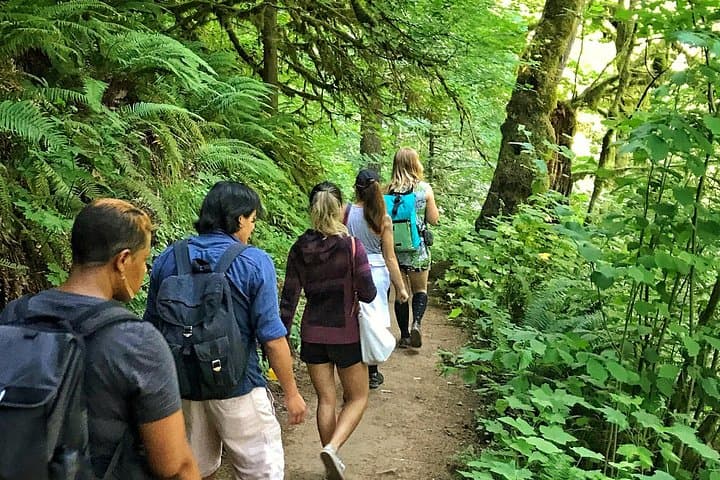
Lose the city for a few hours without leaving it: this 5-mile, 900-foot-gain Forest Park loop threads old-growth pockets, city viewpoints, and cultural landmarks for a compact taste of Portland’s wild side. Expect moss, roots, and stories.