
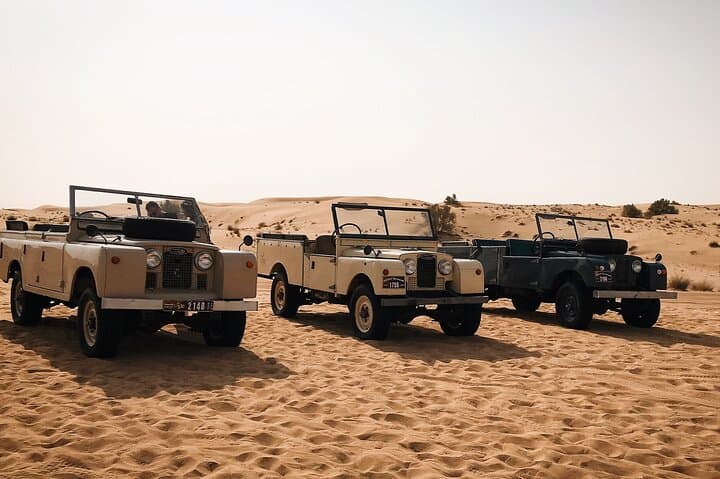
What the day feels like
You roll out of a vintage Land Rover and the desert rearranges your expectations. Wind curls across a low, ochre skyline; sandstone cliffs rise like slow-built libraries. Close up, the rock is busy—scratches and carved letters crowd the faces of boulders, relics of conversations held here two millennia ago. The Land Rover’s engine clicks down to silence and for a moment history is louder than anything mechanical.
This two-hour loop from AlUla drops you into the ancient kingdom of Dadan and up against the open-air archive of Jabal Ikmah, where thousands of inscriptions—Dadanitic, Thamudic, early Arabic—crowd cliff faces and boulders. It’s a short trip by time but dense in texture: the geology of layered sandstone, the long human timeline of trade and empire, and the modern push to understand and protect these fragments of Arabia’s pre-Islamic past.
Dadan was once the capital of a kingdom that controlled caravan routes across the northwestern Arabian plateau. Between the first millennium BCE and the early centuries CE, control of incense, spices, and trade in this corridor created a string of settlements. The elders of stone here—tomb facades, rock-cut niches, and piercings of script—speak to Lihyanite rule and the slow bloom of Arabian scripts. Jabal Ikmah, 20 to 30 minutes’ drive from Dadan, reads like a communal bulletin board: graffiti, dedications, even brief legal notes left by merchants and travelers.
Geology does the long framing. Wind, rain, and thermal stress carved the cliffs into tiers and tafoni; desert varnish darkened the faces where inscriptions were later scratched. The sandstone is soft enough to engrave but tough enough to hold a story for centuries. The relief and color shifts—rose, coffee, and pale cream—are the landscape’s punctuation. At certain angles the stone seems to lean in, as if eager to be read.
The modern context matters. AlUla’s archaeological resurgence—led by the Royal Commission for AlUla—has turned a remote string of sites into a carefully managed cultural corridor. Excavations are active, so route details and site access can change; select tombs or trenches may be closed during conservation work. Booked as an instant confirmation private tour in a vintage Land Rover, this experience packages proximity with expert commentary and the convenience of short walks instead of long treks.
Why go? The appeal is twofold. First, there is the tactile intimacy of scratched script: these are not reduced to museum vitrines but are still part of the land that bore them. Second, the ride itself—an open, low-slung Land Rover negotiating washboard tracks—keeps the trip atmospheric and distinctly local, an accessible nod to expedition travel without fatigue.
Practical notes for planning: the tour lasts approximately 120 minutes and typically departs from AlUla. There is minimal elevation change; most walking is short, over uneven, rocky ground. Expect loose sand, low ledges, and small stone steps at tomb entrances. The tour’s price, currently from 240 USD per person, often includes a guide and vehicle; confirm what’s covered at booking. Because this is archaeological terrain, the experience favors curiosity over athleticism—the physical demand is light but requires nimble footing for short site approaches.
Timing is everything. Midday heat in the desert is blunt; book morning or late-afternoon drives for softer light and cooler air. Sunrise and golden-hour light are especially photogenic, throwing relief into the carved letters and making the sandstone glow. If you have just a few hours in AlUla, this tour is a concentrated primer on the region—combined with nearby Old Town or a visit to Hegra it forms a full day of layered contrasts.
Accessibility and cautions: the routed tracks can be bumpy, so car-sickness prone travelers should prepare. Wear sturdy closed shoes; soft-soled sandals make rock scrambling awkward. Bring sun protection and at least one full liter of water for a two-hour outing. Check for temporary site closures—ongoing excavations sometimes restrict access to preserve fragile contexts.
The payoff is immediate and human. You stand before a panel and read the work of hands long gone: names, dates, short prayers, snippets of legal text. The inscriptions make the desert more interior, less an empty sweep than an archive of lived days. Back in AlUla, the modern cafes and small museums make a sensible follow-up—this tour primes you for more, or tucks a real, tactile chapter into a larger itinerary.
If you go, respect the rock. Do not touch, trace, or lean on inscriptions, and follow your guide’s instructions—these stones are fragile archives, and conservation is ongoing. With a modest amount of planning—sun-smart clothing, a steady pair of shoes, and an appetite for close-looking—you’ll come away with one of those travel memories that feels private: a conversation between you and a place that has been speaking for millennia.
Trail wisdom
Small choices, better day.
Go early or late
Book morning or late-afternoon departures to avoid midday heat and get the best light for viewing inscriptions.
Wear stable shoes
Expect short walks on uneven, rocky ground—closed-toe hiking shoes with good grip are recommended.
Hydrate frequently
Carry at least 1 liter of water for the two-hour tour and sip regularly in dry desert air.
Respect the rock
Do not touch or lean on inscriptions—follow guide directions to help conservation efforts.
Local knowledge
Read the place, not just the route.
Watch for native species including Desert fox, Various desert larks and wheatears.
Keep an eye out for wildlife during the transition between areas and habitats. Respect distance guidelines.
Active excavations and conservation work mean some areas are restricted; visitors should follow designated paths and avoid touching archaeological surfaces to minimize impact.
Follow the guide's instructions on size limits, ethical handling, and leave-no-trace practices.
Small rock shelters near Dadan with less-visited inscriptions. Wadi viewpoints just outside the main sites for quiet sunset vistas
Locally recommended viewpoints and quiet spots known best to local operators.
Dadan and Jabal Ikmah were central to trade routes and the Lihyanite kingdom; inscriptions here document legal and commercial life in northwest Arabia before Islam.
Maritime roots and regional tradition shape the waterways and working coasts.
Seasonal guide
Four versions of the same landscape.
Spring
Best formild temperatures · clear skies · wildflower sightings in some wadis
Challengesoccasionally windy days · cool nights
Spring brings comfortable daytime temperatures and stable weather, making walks to inscription panels pleasant and photography forgiving.
Summer
Best forminimal crowds in shoulder hours · long daylight
Challengesextreme heat · limited midday access
Summer is hot; plan early morning or late afternoon visits and avoid midday when temperatures peak.
Fall
Best forideal temperatures · dramatic light for photography
Challengesshorter daylight hours late in season
Fall is arguably the best season for comfort and vivid sunsets that highlight sandstone textures.
Winter
Best forcool days for walking · clear crisp photography
Challengescold mornings and nights · occasional wind
Winter days are cool and pleasant for exploring, though mornings can be chilly—layer up for comfort.
Pack with intention
What to bring.
Good to know
Common questions.
The experience is approximately 120 minutes (2 hours) from pickup to drop-off, including short guided walks at each site.
Plan the edges
The details that make the day easier.
Jabal Ikmah contains thousands of inscriptions in scripts including Dadanitic and Thamudic, and is often described as an open-air library of pre-Islamic Arabia.
After the tour head to AlUla Old Town or a local cafe for Saudi coffee and date-based sweets; small guesthouses and cultural centers nearby offer traditional fare and insight into the region’s living community.
- Closest airport
- Prince Abdul Majeed bin Abdulaziz Domestic Airport (AlUla)
- Trailhead
- short transfer from central AlUla
- Driving distance
- 10–30 minutes from AlUla depending on site order
- Cell service
- intermittent; download maps and confirmations
- Permits
- usually handled by tour operator
These archaeological sites are fragile—follow guide directions, stay on designated paths, and avoid touching inscriptions to support ongoing conservation efforts.
Explore by topic
Follow the threads.
Keep exploring
Make the story part of the trip.
In four hours you can move from shaded canyon ferns to wind-scoured coastal ridgelines, guided by someone who knows where the light—and the hidden views—live. This private half-day hike on the Monterey Peninsula or Big Sur is compact, curated, and perfect for travelers who want depth without a multiday commitment.
 Related story
Beneath a sky of shifting light, Skaftafell’s ice reads like a map of time. This three-hour guided glacier hike mixes technical instruction with geology and culture: compact, safe, and unforgettable.
 Related story
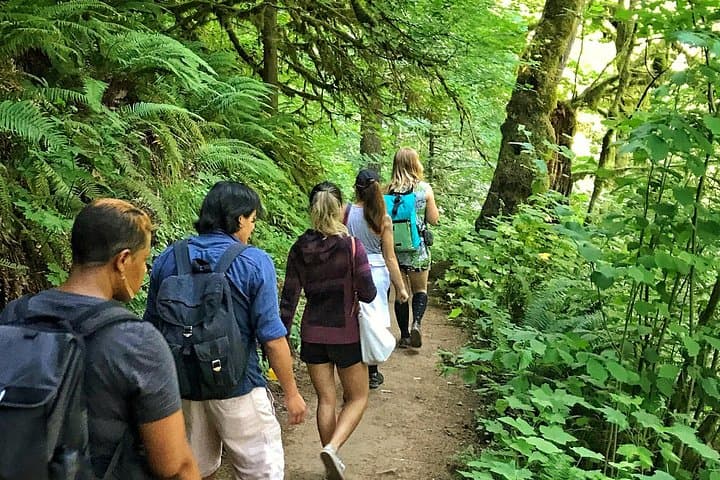
Lose the city for a few hours without leaving it: this 5-mile, 900-foot-gain Forest Park loop threads old-growth pockets, city viewpoints, and cultural landmarks for a compact taste of Portland’s wild side. Expect moss, roots, and stories.