
What the day feels like
The day begins before the bus lets you off: a ribbon of rail tracks disappears into a gorge of banana palms and towering ceiba trees, and the air smells like wet earth and citrus. You step onto a makeshift platform, and there—more curious than engineered—comes la brujita, a low-slung wooden trolley powered by a motorcycle, humming across abandoned rails. It moves with the casual insistence of something that belongs to the place: part transport, part folk invention, wholly Colombian. Ten minutes later you are in San Cipriano, where the river dares you to strip down, climb into a tube, and let the current sketch a lazy, bright path through the rainforest.
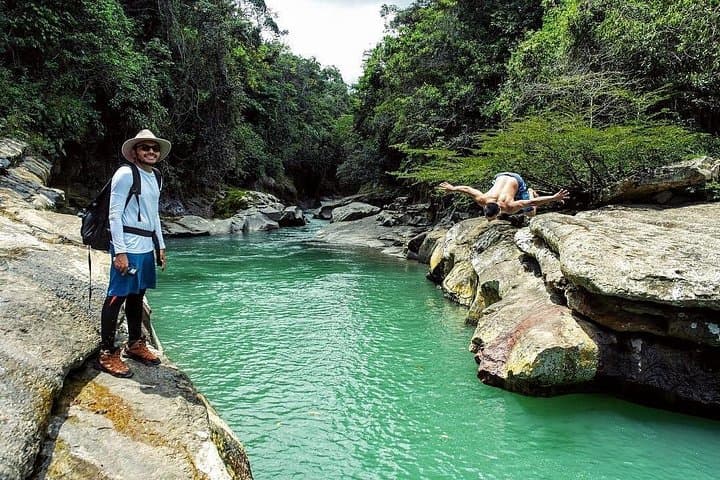
San Cipriano is less a single attraction than a way of traveling—through a landscape shaped by the Cauca Valley’s geology and the Pacific slope’s humidity, and by communities that adapted railway infrastructure into local lifelines. The brujita is the emblem here, born of practicality after the railways fell into partial disuse: skeleton rails threaded through jungle, and locals who repurposed a motorcycle and wooden platform to move people and goods. The river itself is companion and provocateur, its pools and riffles alternately cushioning and nudging you downstream as the forest hems you in with orchids, ferns, and towering trees.
Geology and ecology meet in small ways: the San Cipriano river corridor drains parts of the Cauca Valley and feeds humid rainforest patches on the western slope. You float through soft limestone shelves in places, hop into cool pools, and ride current sections that narrow into playful chutes. Birds—kingfishers and toucans—watch from the canopy; freshwater crabs scuttle at the edges. A local lunch of fresh fish, rice, plantains, and coconut rice tastes like the surrounding landscape—simple, bright, filling.
Why go? For the unpretentiousness of it. This is not a polished national park with boardwalks and interpretive centers; it’s a working landscape where children dive off rocks, elders chat under mangos, and the logistics of travel are woven into village life. For a traveler based in Cali, it’s an accessible way to step into Colombia’s green axis without an overnight expedition: expect roughly 8 hours total for pick-up, brujita transfer, river tubing, and a relaxed lunch.
Practicalities that matter: the tour runs about 8 hours; the activity is low-elevation and largely flat, but you should be confident in basic swimming and comfortable getting in and out of a tube. Terrain is riverine and jungle trails—mud after rain, sun between the trees. The local guides bring the rhythm: safety briefings before the float, help with getting on and off the brujita, and a clear sense of when to walk versus tube.
Safety and etiquette: rivers can be deceptively strong in the rainy season. Wear a life jacket for the float, and keep valuables in waterproof pouches or leave them behind. The community relies on tourism: respect private spaces, eat locally, and tip your guide. Cell service is spotty in the reserve—use your camera and be present.
Photography and timing: arrive soon after morning pick-up for softer light under the canopy and calmer water. The river’s reflective surfaces make for excellent portraits and motion shots; a mid-range zoom and a waterproof point-and-shoot or smartphone in a dry bag will capture most moments. For wildlife, steady patience along shaded pools yields kingfishers and agoutis.
Costs and value: the tour lists at about $147 USD with instant confirmation and free cancellation options; small-group or private arrangements are typically available. The price covers transport from Cali, the brujita ride, guided river tubing, and a traditional lunch, though it’s wise to confirm specifics with your operator.
History, briefly: San Cipriano is a demonstration of adaptive culture—where railway infrastructure declined, locals invented a new mobility. The brujita’s continued use ties visitors to a living piece of transportation history and to a community that has long shaped its environment.
When to go: the dry windows around December–February and mid-year months see calmer water and easier paths; the shoulder seasons can be lush but wetter. If you go in the rainy season, expect stronger currents and muddier approaches, but also a wilder, emerald landscape.
Who this is for: casual adventurers who want a low-stress, high-joy day in nature; photographers who prefer candid, human-scale scenes; families with older kids who can swim; and any traveler in Cali looking for a dense taste of Colombia’s Pacific-edge rainforest without camping gear.
Leave with a sense of a place that resists being packaged and rewards curiosity. You’ll remember the brujita’s idling, the river nudging your tube, and the communal lunch that grounds the afternoon in the human rhythms of San Cipriano. It’s a simple, richly textured day—one that asks only that you bring water, a sense of play, and respect for the river and the people who live beside it.
Trail wisdom
Small choices, better day.
Bring a waterproof bag
Keep your phone, documents, and extra clothes dry during the brujita ride and while tubing.
Wear sturdy sandals or river shoes
Trails and riverbeds can be slippery—closed-toe water shoes protect your feet while allowing you to swim comfortably.
Reserve morning departures
Earlier starts usually mean calmer water and softer light for photos.
Tip locally and eat on-site
Support the community by buying lunch from local vendors and tipping guides who manage the brujita and river sections.
Local knowledge
Read the place, not just the route.
Watch for native species including Kingfisher, Howler monkey (occasionally heard in canopy).
Keep an eye out for wildlife during the transition between areas and habitats. Respect distance guidelines.
Visitors should minimize plastic waste, follow guide instructions along fragile riverbanks, and support local businesses to ensure tourism benefits the community.
Follow the guide's instructions on size limits, ethical handling, and leave-no-trace practices.
Short jungle walk to a secluded pool upstream of the main float. Local vendors who sell fresh coconut water and handmade snacks near the brujita access
Locally recommended viewpoints and quiet spots known best to local operators.
The brujita originated as a local adaptation to keep rail transport functioning after official services declined—motorcycles were mounted to wooden platforms to move along the rails.
Maritime roots and regional tradition shape the waterways and working coasts.
Seasonal guide
Four versions of the same landscape.
Spring
Best forLush foliage · Birdwatching
ChallengesIntermittent rain · Stronger current after storms
Spring is green and alive—expect wet-weather spurts and heightened river flow; bring quick-dry layers.
Summer
Best forStable river floats · Warm swimming
ChallengesHigher visitor numbers in holiday weeks · Hotter midday sun
Summer offers warm water and reliable floats, though weekends can be busy—book ahead.
Fall
Best forPhotography · Fewer crowds
ChallengesPossible rain events · Muddy approaches
Fall balances greenery with thinner crowds; be ready for showers and slippery trails.
Winter
Best forCalmer water windows (dry periods) · Clearer skies
ChallengesRainy stretches depending on the year · Cooler mornings
Winter’s dry spells are ideal for tubing, but local weather patterns vary—check forecasts.
Operator details
What the booking data adds.
Included
- ✓All Risk Insurance
- ✓Tour Guide
- ✓Hotel pick-up and drop-off (private tour)
Good to know
- ✓Infants are required to sit on an adult’s lap
- ✓Public transportation options are available nearby
- ✓Suitable for all physical fitness levels
- ✓The Tour Guide will contact you the day before in case you have any questions or assist you with any requirements
- ✓This tour has a private and a shared option. Make sure you understand both and choose the one that best suits you.
Pack with intention
What to bring.
Good to know
Common questions.
Most tours include round-trip transport from Cali—expect roughly a 2-hour drive and short transfers to the brujita access points. Confirm pick-up points with your operator.
Plan the edges
The details that make the day easier.
La brujita is a locally invented, motorcycle-powered rail trolley adapted by communities when official train services declined—a uniquely practical tradition still in use at San Cipriano.
After your float, sit down at a local comedor for fried fish, patacones, and coconut rice; vendors often sell fresh coconut water and local fruit—support these small businesses to keep tourism benefits local.
- Closest airport
- Santiago de Cali (CLO); Typical driving time: ~2 hours from Cali; Cell service: intermittent in the reserve; Permits: none typically required—book a guided tour for transport and brujita access
This river corridor relies on community stewardship—pack out trash, avoid single-use plastics, and eat locally to help ensure long-term benefits for residents.
Explore by topic
Follow the threads.
Keep exploring
Make the story part of the trip.
Set out from Bass Harbor for a private, customizable day on Blue Hill Bay — lighthouses, puffins, seals, and the chance to feel Acadia from the water. Small groups, local captains, unforgettable views.
In four hours you can move from shaded canyon ferns to wind-scoured coastal ridgelines, guided by someone who knows where the light—and the hidden views—live. This private half-day hike on the Monterey Peninsula or Big Sur is compact, curated, and perfect for travelers who want depth without a multiday commitment.
 Related story
Beneath a sky of shifting light, Skaftafell’s ice reads like a map of time. This three-hour guided glacier hike mixes technical instruction with geology and culture: compact, safe, and unforgettable.