
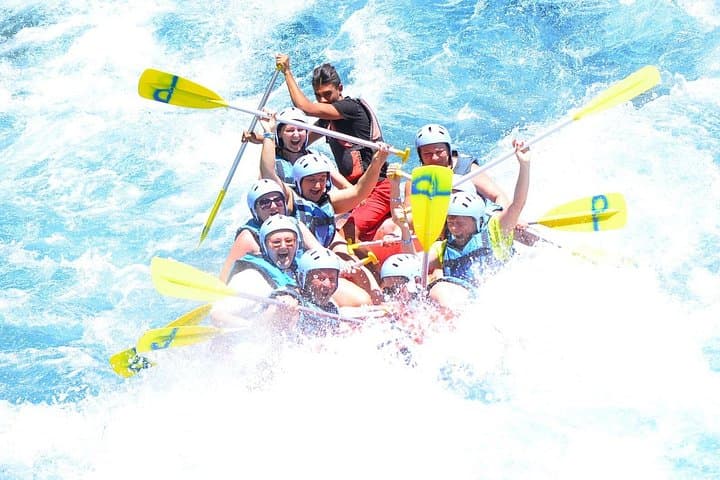
What the day feels like
You push off before the river gets loud. The raft rocks like a small animal testing its legs, sunlight through pines stippling the water, and the Köprüçay—cold, clear, impatient—tastes the air as if daring you to come closer. For a few minutes the world narrows to the scrape of paddle on plastic, the steady instruction of the guide, and the sensation of current finding the raft’s belly and pulling. Then the river finds a seam in the limestone, the water funnels, and the day becomes a line of rapids threaded with flatwater pools where you can breathe and look up at the canyon’s layered cliffs.
This is what a day rafting out of Side feels like: a tidy, local adventure that reads like a nature edit—sharp, Mediterranean, and practical. The trip that most operators sell from Side and nearby Antalya runs about nine hours door-to-door, with around 2–3 hours on the water covering roughly 12–14 kilometers of Köprüçay river. It’s a mixture of class II–III rapids—punchy enough to make you hold on, but not so gnarly you need specialized creek skills. Elevation falls by roughly 100–150 meters over the rafted section, which keeps things lively without the all-day exhaustion of technical whitewater.
Geology and context are part of the ride. The Köprüçay slices out of the Taurus foothills in Antalya Province, chiseling channels through Miocene limestone and dolomite. That same stone hosts the archaeological ghosts that make Side compelling: just downriver and down the coast, Greek and Roman ruins—temples, a theatre—speak to a coastline that’s been a maritime crossroads for millennia. Locals still make a living from the land and water here; rafting companies often set up lunch by the river under olive trees and stone outcrops, serving grilled fish, fresh salads, and the kind of Turkish tea that tastes like a small, necessary ritual after cold river swims.
There’s a cultural rhythm to the day: hotel pickup in the morning from Side or nearby towns, a short transfer inland through eucalyptus and citrus groves, a safety briefing, and then that first push into the current. Lunch usually lands riverside—charcoal-grilled meat or fish, seasonal vegetables, and the ubiquitous meze—followed by a chance to swim in the pools and dry off in sunlight. The entire operation is professional and set up for a broad audience: families, couples, fit walkers, and travelers who want a single-day active escape from the coast.
Why go? The math is simple: minimal technical training, maximum payoff in scenery and adrenaline. The water is a legitimate refresh—clear and cold—and the canyon frames views that feel more remote than the short drive suggests. It’s an approachable way to get off the beach, learn a little about river running, and enjoy a local lunch where the kebabs come with a view.
Practicalities you’ll use to plan the day: expect a nine-hour block from hotel pickup to drop-off. On-water time is 2–3 hours; wear a wetsuit if you’re going in shoulder seasons—spring and autumn—when river temperatures hover on the brisk side. Guides provide helmets, life jackets, and paddles; listen carefully during the safety briefing, practice the brace and the flip routine, and follow the guide’s commands on eddies and ledges. Weight distribution matters in the raft—heavier riders closer to the centerline—and if you capsize, stay calm, point toward the rafts, and follow the crew.
On gear: closed-toe water shoes with a secure strap beat flip-flops every time. A small dry bag for phone and wallet is useful; if you want photos, rent or bring a waterproof housing or use a wrist lanyard so you don’t lose a camera. Hydration is simple—bring a reusable water bottle—but also bring electrolyte tablets if you’re sensitive to heat. Sun protection matters: a lightweight long-sleeve shirt, reef-safe sunscreen, and a hat that can clip on are practical, especially on the return beaches.
Timing: late spring (May) and early autumn (September–October) balance warm air with robust water flow and fewer crowds. Peak summer can reduce water levels and raise temperatures on land; winter is off-season for rafting but cheaper if operators run trips after weather checks. Book in advance during high season for guaranteed pickup from Side hotels and to ensure a spot on quieter runs.
Safety and sustainability are baked into reputable operators’ routines here: guides check river conditions daily, keep group sizes manageable, and lead short safety refreshers before every put-in. For conservation-minded travelers, use biodegradable sunscreen, avoid single-use plastics during the lunch stop, and respect vegetation on informal riverside beaches. These small steps keep the river swimmable and the olive groves healthy.
At day’s end you get the comfort of a good, clean fatigue—the kind where you shower at your hotel, eat a plate of local meze, and feel the river still humming in your calves. Rafting the Köprüçay out of Side is not a wilderness epiphany; it’s a well-designed, scenic day that lets you feel alive, learn a new outdoor skill, and slide back into coastal life with a story and a sunburn to prove it.
Trail wisdom
Small choices, better day.
Wear secure water shoes
Closed-toe shoes with a strap protect toes on rocky portages and provide grip in the raft.
Bring a small dry bag
Keep phone, ID, and medication safe and accessible; many operators offer rentals but bring your own for hygiene.
Listen to the guide
Guides control line choice and have rescue protocols—follow commands during rapids and flip drills.
Swim only when instructed
River pools look inviting but currents can hide undercuts—only enter the water under guide direction.
Local knowledge
Read the place, not just the route.
Watch for native species including Kingfishers, Tortoises and occasional otters.
Keep an eye out for wildlife during the transition between areas and habitats. Respect distance guidelines.
Operators encourage ‘leave no trace’ lunches and avoid motorized launches in sensitive riparian zones—use reef-safe sunscreen and pack out plastics.
Follow the guide's instructions on size limits, ethical handling, and leave-no-trace practices.
A short riverside walk to small pebble beaches for secluded swims. Riverside tea stalls where locals gather after work for strong black tea
Locally recommended viewpoints and quiet spots known best to local operators.
The Köprüçay/Köprüçay watershed sits beneath Taurus foothills and feeds a coastline dotted with ancient Greek and Roman sites, including the nearby archaeological town of Side.
Maritime roots and regional tradition shape the waterways and working coasts.
Seasonal guide
Four versions of the same landscape.
Spring
Best forHigher river flows · Wildflower-lined banks · Cool weather paddling
ChallengesCold water temperatures · Possibility of rain · Variable transfer roads
Spring offers lively rapids and green canyon walls; pack a wetsuit for comfort and expect crisp river water.
Summer
Best forWarm air temperatures · Long daylight · Great after-raft swims
ChallengesLower water levels mid-summer · Hot transfers inland · Crowded beaches on return
Summer brings warm land temps and excellent swimming, though some runs may have gentler rapids when water is low.
Fall
Best forStable flows after summer rains · Fewer crowds · Comfortable temperatures
ChallengesCooling nights · Shorter daylight hours · Occasional storms
Autumn provides balanced conditions—still warm enough for swims and with good river flow for fun rapids.
Winter
Best forLow-season price deals · Quiet roads · Lesser-known operator availability
ChallengesCold water and air · Not all operators run trips · Possible road closures
Winter trips can run if conditions allow, but expect cold swims and reduced service from operators.
Operator details
What the booking data adds.
Included
- ✓Lunch
- ✓Hotel transfers (if option is selected)
- ✓Insurance
- ✓Helmet, Lifewest, Paddle
- ✓Instructor
Not included
- —Neopran, Shoes (optional)
- —Photos and DVD Movie
- —Drinks
Good to know
- ✓Infants are required to sit on an adult’s lap
- ✓Not recommended for pregnant travelers
- ✓Not recommended for travelers with poor cardiovascular health
- ✓Suitable for all physical fitness levels
Pack with intention
What to bring.
Good to know
Common questions.
No—this run is guided for beginners through experienced paddlers; guides teach basic strokes and safety before launch.
Plan the edges
The details that make the day easier.
The Köprüçay (Koprucay) river carves limestone canyons that feed into the Mediterranean near Side; nearby Side itself was a thriving Greek and Roman port city with a still-visible Roman theater.
After the ride, head back to Side’s harbor for freshly grilled sea bream, a spread of meze, and a cold Efes beer; for dessert, try a small baklava with Turkish tea at a waterfront café.
- Closest airport
- Antalya Airport (AYT) ~60–75 km; Driving from Side: 30–60 minutes depending on meeting point; Cell service: good to intermittent once in the canyon; Permits: none for commercial rafting but operators monitor river levels and safety.
Use reef-safe sunscreen, avoid single-use plastics at the riverside lunch, and follow guides’ instructions to minimize disturbance to fragile shoreline vegetation and wildlife.
Explore by topic
Follow the threads.
Keep exploring
Make the story part of the trip.
Set out from Bass Harbor for a private, customizable day on Blue Hill Bay — lighthouses, puffins, seals, and the chance to feel Acadia from the water. Small groups, local captains, unforgettable views.
In four hours you can move from shaded canyon ferns to wind-scoured coastal ridgelines, guided by someone who knows where the light—and the hidden views—live. This private half-day hike on the Monterey Peninsula or Big Sur is compact, curated, and perfect for travelers who want depth without a multiday commitment.
 Related story
Beneath a sky of shifting light, Skaftafell’s ice reads like a map of time. This three-hour guided glacier hike mixes technical instruction with geology and culture: compact, safe, and unforgettable.