
What the day feels like
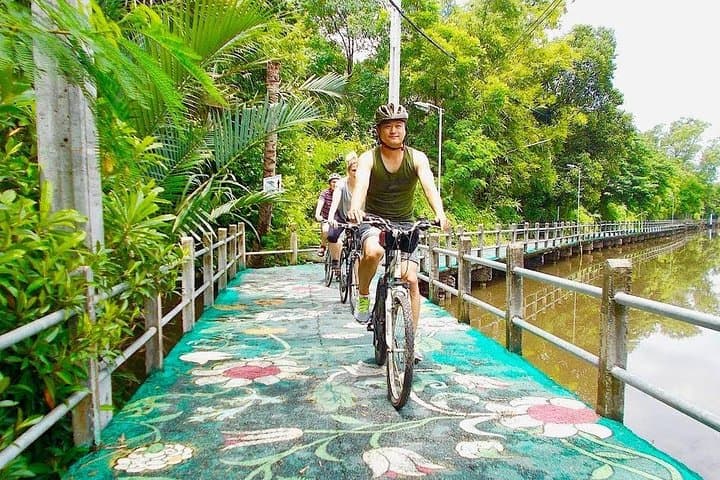
You step off the boat and the city exhales. The engines of Bangkok — the traffic, the neon, the steady hum of commerce — fade to a memory as the Chao Phraya nudges your longtail toward Bang Krachao. A ribbon of water parts the metropolis from this unexpected island: palm fronds, car-free lanes, raised wooden boardwalks that disappear into a slow tangle of mangrove and fig trees. For the next three to four hours you'll be moving at the speed of curiosity: the soft squeak of bicycle tires on packed earth, the occasional call of a bird, the warm, humid scent of wet soil and leaves.
Bang Krachao is the green lung of Bangkok for a reason. Locals in Phra Pradaeng have resisted high-rise developers for decades, and what remains is a stitched-together world of vegetable plots, small orchid farms, and the city’s largest expanse of urban mangrove. The Sri Nakhon Khuean Khan Park sits like a green jewel on the island, its paths and observation towers offering surprise panoramas of the river and, if you’re lucky, the lazy passage of monitor lizards along a canal bank.
This tour starts as most of them do: a short boat trip across the Chao Phraya. That crossing is more than transit — it’s a slow transition, a liquid gateway that prepares you for a different Bangkok. On the island, the pace changes. The terrain is mercifully flat; traffic is largely non-existent. The tour route threads through shaded lanes, over wooden bridges, past community gardens where residents grow morning glories and chilies for the market. You’ll stop at a park or two, peer into the murky edges of canals where small fish dart like silver punctuation, and pass temples and stilted homes that remind you this is a lived-in landscape, not a museum.
Geologically, Bang Krachao is alluvium: river deposits shaped over centuries by the Chao Phraya’s moods. Culturally, it’s a pocket of semi-rural Thailand clinging to a different timetable. The people who live here are the reason Bang Krachao survived the bulldozers; the island’s agriculture and small-scale commerce provided both purpose and resistance. Visiting is part environmental appreciation, part cultural exchange: you’re invited to inhabit a neighborhood for a morning, to learn how Thais garden, commute, and sell snacks by the canal.
Practicalities shape the pleasure. The tour runs about three to four hours, the right length to move deep enough into the green without overextending into Bangkok’s evening rush. The roads are mostly firm dirt and compacted sand; a hybrid or mountain bike with puncture-resistant tires will feel best. There’s very little elevation — expect an easy to moderate effort dependent on how fast you pedal and how many stops you make. Weather matters: the island breathes humidity and heat in the hot season and flushes green during the rainy months. Bring water, sunscreen, and insect repellent; the trees try to keep you honest.
Why would a traveler choose this over more obvious Bangkok experiences? Because it compresses a different kind of Thailand into a single outing: accessible nature, neighborhood life, and the strangely satisfying contrast of leaving a megacity and arriving in a place where you can hear only birds. For families and casual riders, it’s a manageable, low-stress introduction to Thai landscapes; for photographers and nature-lovers, the light in the mangroves and the patterns of canals and farms make for quiet, rewarding images. And there’s a usable ethical angle: many tours buy snacks from local vendors and contribute to a small, sustainable tourism economy on the island.
Practical tips: aim for a morning slot to beat the heat and to catch birds at their most active; wear closed-toe shoes for the occasional roots and puddles; and be ready to dismount for short stretches where the trail narrows. The tour price typically includes the boat transfer and bike rental, and operators often offer helmets and a guide who doubles as a translator and local storyteller. Keep cash handy for iced coconut, grilled fish, or sticky rice at a neighborhood stall — these are the island’s post-ride rewards.
Bang Krachao’s appeal is simple: it’s an intimate counterpoint to Bangkok’s scale. The trees have a quiet, teasing personality here — the roots tuck themselves into canals as if daring you to look closer, the currents push fallen leaves toward a confluence of light — and moving through the island on two wheels gives you the kind of steady, human-scale momentum that makes landscapes feel like company instead of background. When you return to the pier, Bangkok’s skyline will swell back into view. You’ll carry with you a faint smell of wet earth and the memory of a different Bangkok, patient and green, waiting quietly on the other side of the river.
Trail wisdom
Small choices, better day.
Hydrate Before and During
Bring a filled reusable water bottle — the humid air and light exertion make frequent sips essential.
Choose Sturdy Footwear
Closed-toe shoes with good grip protect you from roots, mud, and the occasional slippery boardwalk.
Protect Against Sun & Bugs
Sunscreen and insect repellent are small items that make the ride far more comfortable, especially near canals.
Respect Local Life
Slow down when passing homes and markets; the island is a working community—keep noise low and support local vendors.
Local knowledge
Read the place, not just the route.
Watch for native species including Asian water monitor (Varanus salvator), Common kingfisher.
Keep an eye out for wildlife during the transition between areas and habitats. Respect distance guidelines.
Local groups and residents protect the island’s mangroves and parks — visitors should stay on paths, take all trash back to Bangkok, and support local vendors.
Follow the guide's instructions on size limits, ethical handling, and leave-no-trace practices.
Sri Nakhon Khuean Khan Park observation towers for quiet river views. Bang Nam Phueng Floating Market for local snacks and sweets (weekends best)
Locally recommended viewpoints and quiet spots known best to local operators.
Bang Krachao in Phra Pradaeng has long resisted urban development and is known for its community-driven agriculture and preserved green spaces.
Maritime roots and regional tradition shape the waterways and working coasts.
Seasonal guide
Four versions of the same landscape.
Spring
Best forFlowering gardens · Quieter trails · Morning bird activity
ChallengesRising temperatures · Possible early showers
Late spring warms quickly; early mornings are comfortable and the island’s gardens begin to bloom, but afternoons can feel hot.
Summer
Best forLush green landscapes · Fewer crowds on weekdays
ChallengesHigh humidity · Frequent afternoon rain
Summer makes the island luxuriantly green; plan for morning departures and pack rain protection for sudden storms.
Fall
Best forCooling temperatures · Clear skies · Good light for photography
ChallengesVariable weather transitioning from rainy to dry
Fall brings more stable weather and excellent light for photos; expect comfortable rides especially in late autumn.
Winter
Best forCool, dry riding · Birdwatching · Comfortable afternoons
ChallengesCool mornings may need light layers
Thailand’s cool season (roughly November–February) offers the most pleasant cycling conditions — ideal for longer exploration.
Operator details
What the booking data adds.
Included
- ✓Return Boat ride to cross Chao Phraya River
- ✓Bicycle rental and helmet
- ✓Thai meal (Pad Thai – Thai noodles or Khao Pad – fried rice)
- ✓Guided bike tour of Bang Kra Jao
Not included
- —Gratuities
Good to know
- ✓Public transportation options are available nearby
- ✓Infants are required to sit on an adult’s lap
- ✓Suitable for all physical fitness levels
Pack with intention
What to bring.
Good to know
Common questions.
The experience runs approximately 3–4 hours including the boat transfer across the Chao Phraya.
Plan the edges
The details that make the day easier.
Bang Krachao—part of Phra Pradaeng district—is commonly called Bangkok’s 'green lung' and includes Sri Nakhon Khuean Khan Park, a large urban green space preserved by local residents.
After the ride, grab a coconut or grilled fish at Bang Nam Phueng Floating Market (weekends) or sit at a riverside stall for boat noodle soup and a cold Thai beer — these small vendors are integral to the island’s economy.
- Closest airport
- Suvarnabhumi (BKK) or Don Mueang (DMK); Typical meeting point: Chao Phraya pier in central Bangkok; Driving from central Bangkok: ~20–40 minutes to pier (traffic dependent); Cell service: generally good on the island; Permits: none required for casual visitors.
This island’s green spaces are community-protected—pack out all trash, avoid single-use plastics, and buy food from local vendors to support sustainable livelihoods.
Explore by topic
Follow the threads.
Keep exploring
Make the story part of the trip.
Set out from Bass Harbor for a private, customizable day on Blue Hill Bay — lighthouses, puffins, seals, and the chance to feel Acadia from the water. Small groups, local captains, unforgettable views.
In four hours you can move from shaded canyon ferns to wind-scoured coastal ridgelines, guided by someone who knows where the light—and the hidden views—live. This private half-day hike on the Monterey Peninsula or Big Sur is compact, curated, and perfect for travelers who want depth without a multiday commitment.
 Related story
Beneath a sky of shifting light, Skaftafell’s ice reads like a map of time. This three-hour guided glacier hike mixes technical instruction with geology and culture: compact, safe, and unforgettable.