
What the day feels like
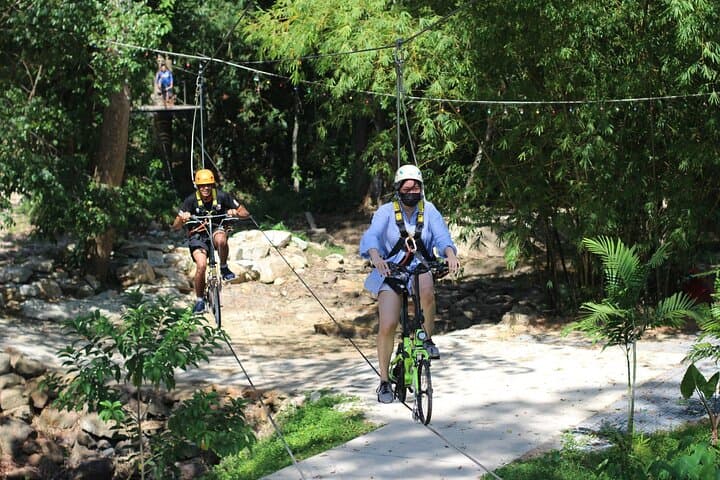
The jungle waits like a secret—green and patient—its trunks stacked shoulder to shoulder beneath a lattice of sunlight. You arrive at a low-slung camp cut into the island’s interior, where staff fit a harness with a professional calm and hand you a bottle of water. For a few minutes you are still on solid ground, the air warm and smelling of wet earth and coconut; then you climb a wooden platform and push off. The ground drops away and the island rearranges itself. The trees breathe below you; vines drape like old ropes. The Sky Bicycle ride—a suspended, pedalable cycle that ferries you from cliff to cliff—turns the rainforest into a moving theater. Pedaling becomes part bicycle, part flight. The wind does the rest, tugging your shirt and daring you to look down.
The advertised ride itself is brief—about five minutes of suspended traverse—but it’s the contrast that lingers: the hush under the canopy, the sudden openness above cliffs, and the small, unexpected things you’ll notice when elevation changes your angle of attention—an iridescent bird, a waterfall revealed like a private curtain, the flash of a gecko. It’s an experience that reads like a postcard of Koh Samui’s lesser-known temperament: not just beaches and bars, but a dense, tropical spine that still holds secretos of geology and growth.
Koh Samui’s interior is a patchwork of early-20th-century coconut plantations and older granite and metamorphic outcrops. The island only shifted into the global tourism map in the late 20th century, growing around sandy coves into the lively coastal towns most visitors know. Yet inland, the rainforests that cling to hills remember a wilder chart—streams carving small waterfalls and gullies, a geology that frames dramatic viewpoints and makes short aerial rides feel like new ways to read an old map.
Culturally, the tour is emblematic of Koh Samui’s pragmatic pivot toward experiences that can scale: short, safe, and photogenic. Operators promote low-impact access to the canopy—no heavy infrastructure, short runs, and guided briefings. That’s part of the appeal for families and small groups who want a taste of risk without a full day of commitment. But while the ride is engineered for safety and accessibility, it still asks you to participate: to pedal, to keep balance, to trust the harness and the team tightening it.
Why do it? Because it compresses a particular kind of island magic into an hour: canopy intimacy, a hint of vertigo, and a payoff that reads well in photos without costing an entire day. For first-timers it’s a neat way to sample Koh Samui beyond the beach umbrella; for repeat visitors, it’s a reminder that the island isn’t only coastal—there’s altitude and depth here too.
Practicalities matter. The supplier provides helmets, harnesses, and a safety briefing; expect a single short flight of about five minutes in the harnessed Sky Bicycle. Add time for transfers to and from your hotel, the safety walkthrough, and a modest window to take photos and drink water. Operators commonly accommodate families and mixed-ability groups, but check specifics—weight and height limits, age minimums, and health requirements vary. The best time to try it is in the morning or late afternoon when heat and humidity are lower and the light makes the canopy glow.
Shoes and clothing are simple but important: closed-toe shoes for stability on platforms, lightweight layers to manage sudden breezes higher in the trees, and a rain jacket in the wet months. Because you’re moving through a living canopy, keep movements deliberate—slow down when passing waterfalls or narrow bridges so you don’t startle wildlife and you get better photos.
Sustainability is baked into the appeal. Short-run canopy experiences can reduce the footprint of mass foot traffic on fragile trails, but they can also attract excess waste if operators or guests aren’t careful. Choose operators that emphasize minimal infrastructure, provide water refills rather than single-use bottles, and brief guests on wildlife respect.
If you go: plan for a compact experience that delivers a memorable sensory change. Bring a small camera, listen to the team, and leave the drone at home unless explicitly allowed. Reserve morning slots to avoid mid-day heat and to catch birds at their most active. Above all, treat the ride as a conversation with the island—trees that hold stories, wind that nudges you along, and a staff that translates safety into the freedom to look down and smile.
This isn’t a deep wilderness expedition; it’s a concentrated, well-managed way to reframe Koh Samui. And in five airborne minutes you may find the island feels simultaneously smaller and bigger: smaller because you cross it with tiny effort; bigger because seeing the canopy changes what you notice next time you step onto the sand.
Trail wisdom
Small choices, better day.
Book a morning slot
Heat and humidity are lower in the morning and wildlife is more active—shoot for early departures to enjoy clearer views.
Wear closed-toe shoes
Platforms and wooden steps can be slippery; sneakers or light hiking shoes give traction and protection.
Bring a small camera or phone strap
Secure your device with a wrist strap or small lanyard—windy moments and harness movement make dropping easy.
Check weight/age limits in advance
Operators set safety limits—confirm them before booking to avoid disappointment at check-in.
Local knowledge
Read the place, not just the route.
Watch for native species including Long-tailed macaque, Tropical birds such as hornbills and kingfishers.
Keep an eye out for wildlife during the transition between areas and habitats. Respect distance guidelines.
Choose operators that limit permanent infrastructure and provide water refill stations; avoid single-use plastics and give wildlife space—do not feed animals.
Follow the guide's instructions on size limits, ethical handling, and leave-no-trace practices.
A tucked-away waterfall glimpsed from the canopy platforms. Bophut Fisherman’s Village for an evening meal after the tour
Locally recommended viewpoints and quiet spots known best to local operators.
Koh Samui transitioned from coconut plantations and local fishing villages into a global tourist destination in the late 20th century, changing land use patterns while pockets of native forest remain inland.
Maritime roots and regional tradition shape the waterways and working coasts.
Seasonal guide
Four versions of the same landscape.
Spring
Best forFewer tourists · Lush foliage · Comfortable mornings
ChallengesIntermittent showers · High humidity later in the day
Late spring brings vibrant growth after the wetter months—expect green, dense canopy and occasional short showers.
Summer
Best forLong daylight hours · Peak bird activity · Warm evenings
ChallengesHigher humidity · Possible afternoon storms
Summer is warm and lively; pick morning runs to avoid heat and the usual mid-day downpours.
Fall
Best forClear air · Good visibility · Photogenic sunsets
ChallengesTourist season ramps back up · Variable rainfall
Early fall offers clear views and comfortable conditions, though popular weeks fill fast.
Winter
Best forDry weather · Cooler temperatures · Calm sea breezes
ChallengesHigher visitor numbers · Slightly higher prices
Koh Samui’s dry season is the most reliable time for canopy trips—cooler, bright, and less rainy.
Operator details
What the booking data adds.
Included
- ✓Highly trained staff
- ✓All safety equipment
- ✓Insurance
- ✓Fresh bottled water
Not included
- —Hotel pickup and drop-off
- —Tip & personal expenses
Good to know
- ✓Public transportation options are available nearby
- ✓Not recommended for travelers with spinal injuries
- ✓Not recommended for pregnant travelers
- ✓Not recommended for travelers with poor cardiovascular health
- ✓Suitable for all physical fitness levels
- ✓In order to use the zipline, the participants should be in good physical health and free of any limitations that could affect their safe use of the equipment.
- ✓Participants are required to weigh no more than 105 kilograms.
- ✓The activity is not recommended for pregnant women, a child under 6-year-old and people with surgical history less than 6 months or with hypertension, asthma, infectious diseases, diabetes, epilepsy, and any mental health condition.
- ✓Available for adults and children between 6 – 60 years old and the age of 6-12 years old under parents or adults’ close supervision.
- ✓Please wear comfortable shoes. Flip-flops are not allowed. Sandals with straps are acceptable. Wear clothing that is comfortable and suitable for physical activities.
- ✓Please leave your valuable belongings at your hotel, we will not take responsibility for any loss or damage.
- ✓On the rare occasion that we should be required to cancel a tour, we will inform you in advance and offer a different tour date, an alternative tour or provide a full refund.
Pack with intention
What to bring.
Good to know
Common questions.
The actual suspended ride is listed at about five minutes; including briefing, gearing up, and transfers, plan on 45–90 minutes total.
Plan the edges
The details that make the day easier.
Koh Samui is Thailand’s second-largest island and is part of Surat Thani Province—its rapid tourism growth began in the late 20th century.
After the ride head to Bophut Fisherman’s Village for beachfront seafood and casual bars; try freshly grilled fish or a Massaman curry and finish with a cold local beer—small family-run eateries showcase Koh Samui’s coastal flavor.
- Closest airport
- Samui International Airport (USM); Typical drive from Chaweng: 20–40 minutes depending on location; Cell service: generally good near roads, patchy in deep jungle; Permits: none typically required—book through licensed operator.
Support operators that minimize permanent canopy infrastructure, provide water refill options, and brief guests on not disturbing wildlife—pack out trash and avoid single-use plastics.
Explore by topic
Follow the threads.
Keep exploring
Make the story part of the trip.
In four hours you can move from shaded canyon ferns to wind-scoured coastal ridgelines, guided by someone who knows where the light—and the hidden views—live. This private half-day hike on the Monterey Peninsula or Big Sur is compact, curated, and perfect for travelers who want depth without a multiday commitment.
 Related story
Beneath a sky of shifting light, Skaftafell’s ice reads like a map of time. This three-hour guided glacier hike mixes technical instruction with geology and culture: compact, safe, and unforgettable.
 Related story
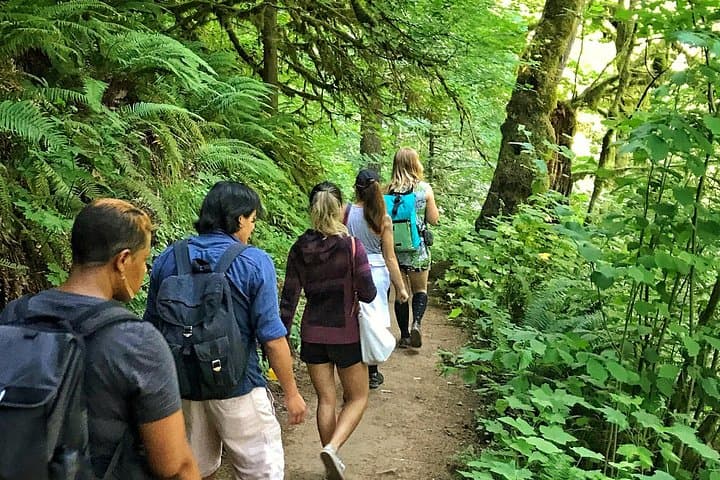
Lose the city for a few hours without leaving it: this 5-mile, 900-foot-gain Forest Park loop threads old-growth pockets, city viewpoints, and cultural landmarks for a compact taste of Portland’s wild side. Expect moss, roots, and stories.