
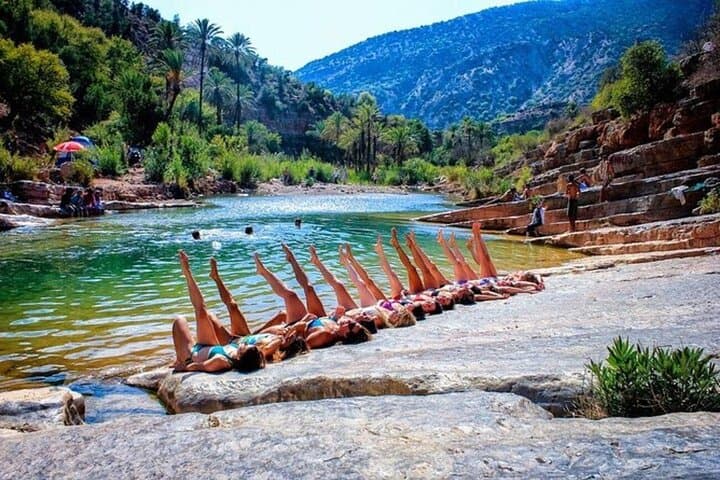
What the day feels like
By the time the 4x4 slides off the coastal asphalt and into the undulating wash of the Tamraght River valley, the city’s roar has already thinned to a memory. The air tastes different here—cleaner, faintly sweet with crushed thyme and the nutty warmth of argan. In sunlight that sifts through date palms, the river plays coy: little cataracts inch around weathered boulders, then plunge into unexpected jade pools carved like cupped hands. You find a place to sit and the valley begins to speak in a language of wind, water and stone.
Paradise Valley—Vallée du Paradis to the locals—is exactly the sort of landscape that earns a nickname and keeps it. Geologically, it’s a pocket of shallow gorges and terraces incised into Miocene sandstone and limestone, where seasonal streams have burrowed micro-canyons and left behind a necklace of natural pools. The geology makes for neat, natural basins—sudden, swim-ready holes where water collects after winter rains and trickles into green riffles the rest of the year.
But this is not a pristine wilderness untouched by people. Paradise Valley slips neatly into a cultural landscape shaped by generations of Berber farmers and shepherds. The tour begins with a stop at a Berber Women’s Cooperative where argan oil is cold-pressed by hand and stories are pressed into the rhythm of the work. The argan tree is a character in the valley’s story—gnarled, slow-growing, tenacious—providing both income and a flavor unique to southwestern Morocco. Nearby, a Pepiniere nursery offers a quieter counterpoint: rows of saplings, citrus and succulents—an exercise in patient regeneration.
A typical outing runs five hours, and the rhythm is deliberate: a morning departure at 08:30 or an afternoon run at 14:00, a handful of stops, a short hike along shaded riverbanks and plenty of time to swim or lounge beside the pools. The vans are 4x4s—useful once the road narrows into rocky track—and the driver is usually English-speaking and well-versed in local lore. The logged price on many booking sites hovers around an accessible range (from roughly US$13–20), making this a perfect half-day for travelers who want a nature escape without committing to multi-day trekking.
On the trail, the valley’s personality is easy to read: the palms keep watch like gentle sentinels, the river dares you closer with glossy reflections, and the pools are discreet—fine places to cool off without the tourist trappings you might expect. The terrain is mostly dirt tracks, sandy river crossings and short, rocky scrambles: effortless for most people with a decent pair of shoes, and intermittently shaded where the palms cluster.
There’s history layered into the landscape. The argan groves around Agadir are part of the larger Arganeraie Biosphere Reserve—recognized by UNESCO for the unique human-nature relationship that sustains both livelihoods and biodiversity. The cooperative you visit is small but significant; it’s not just a tourist stop but an ongoing economic engine for local women who process and sell their oil at market.
Practical notes: if you’re going to Paradise Valley, timing matters. Spring (March–May) and fall (September–November) offer the most comfortable temperatures; summer heats up and the midday sun can be relentless. Pack a swimsuit and a towel if you want to swim, but do so with respect—some pools are culturally significant, and water levels fluctuate by season. Footwear that grips for short scrambles and sandals for switching into water are a pragmatic combo. Bring water; even a shaded pool can’t replace proper hydration on a dry valley day.
Why take this tour rather than go it alone? For many visitors the appeal is logistical: a driver who knows the tracks, a planned stop at a cooperative you might otherwise miss, and the ease of a half-day escape that pairs well with surf mornings in Taghazout or a lazy afternoon in Agadir. It’s the sort of trip that fits into a larger itinerary: surf, lunch, valley; or city tour, cooperative, pool.
For travelers who want something slightly more immersive, linger at the cooperative to sample argan on warm bread, or take a short, unhurried walk upstream where the valley narrows and fewer people follow. For photographers the light is forgiving early and late: the palms and rock faces pick up golden edges, and reflections in the pools give you symmetry without the need for a tripod.
This is an accessible adventure—small scale but richly textured. It’s not a strenuous alpine quest or a whitewater test of mettle. Instead, Paradise Valley rewards curiosity: sit with the palms, talk with cooperative workers, test the pools and leave space for the landscape to be itself. You’ll come home with a bottle of argan, a few photographs, and the quiet memory of a valley that does most of its talking through water and stone rather than through noise. For a half-day outside Agadir, it’s a calming way to remember why travel is often about the small, green pockets of the world that make the ordinary extraordinary.
Trail wisdom
Small choices, better day.
Start early or late
Morning and late-afternoon departures keep you out of the strongest sun and provide better light for photos.
Footwear swap
Bring trail shoes for the short scrambles and river sandals for swims—wet rocks can be slippery.
Hydrate and snack
Carry 1–2 liters of water per person and a salty snack—there are no reliable stores at the pools.
Support locals
Buy a small bottle of argan oil or tea at the cooperative; it directly supports local women’s incomes.
Local knowledge
Read the place, not just the route.
Watch for native species including Barbary partridges, Mediterranean geckos and lizards.
Keep an eye out for wildlife during the transition between areas and habitats. Respect distance guidelines.
Support sustainable tourism by buying directly from cooperatives, staying on paths to protect vegetation, and packing out all trash.
Follow the guide's instructions on size limits, ethical handling, and leave-no-trace practices.
Walk upstream past the main pools for quieter pools favored by locals. Stop at a roadside olive or fig seller for fresh local snacks
Locally recommended viewpoints and quiet spots known best to local operators.
Argan oil production in this region is a centuries-old practice; the surrounding Arganeraie was designated a UNESCO Biosphere Reserve in 1998.
Maritime roots and regional tradition shape the waterways and working coasts.
Seasonal guide
Four versions of the same landscape.
Spring
Best forWildflowers and mild weather · Fuller pools · Comfortable hiking
ChallengesOccasional post-winter runoff · More visitors on weekends
Spring offers ideal temperatures, fuller pools and green terraces; trails can be a touch muddier after rains.
Summer
Best forSwimming and long daylight · Pairing with surf trips · Early morning visits
ChallengesHigh heat midday · Lower water levels late season
Summer is great for swimming but plan to avoid midday heat—take shade and ample water.
Fall
Best forWarm water after summer · Fewer crowds · Comfortable hikes
ChallengesVariable weather as rains return · Some pools may be cooler
Autumn balances warm days and cooling evenings, with fewer visitors and pleasant conditions.
Winter
Best forDramatic skies and quieter valley · Lush vegetation after rains
ChallengesCooler water temperatures · Occasional heavy rains make tracks rough
Winter is quieter and greener but expect chilly swims and potentially muddy access roads.
Operator details
What the booking data adds.
Included
- ✓Hiking/exploration in Paradise Valley, including waterfalls, rock pools, and scenic viewpoints.
- ✓Hotel pick-up and drop-off in Agadir or taghazout or anza
- ✓Breakfast usually served at a scenic spot or local café before the hike/excursion.
- ✓Professional guide throughout the tour, providing insights about the region, flora, and history.
- ✓locale déjeuner : Amlou Hany argan oil
- ✓Entrance and guided visit to Alma Garden, exploring its plants, layout, and natural beauty.
Not included
- —Lunch
Good to know
- ✓Wheelchair accessible
- ✓Infants and small children can ride in a pram or stroller
- ✓Service animals allowed
- ✓Public transportation options are available nearby
- ✓Infants are required to sit on an adult’s lap
- ✓Specialized infant seats are available
- ✓Transportation options are wheelchair accessible
- ✓All areas and surfaces are wheelchair accessible
- ✓Suitable for all physical fitness levels
Pack with intention
What to bring.
Good to know
Common questions.
Yes—there are several natural pools suitable for swimming; water levels and temperatures vary by season, so check with your guide.
Plan the edges
The details that make the day easier.
The argan forests around Agadir are part of Morocco’s Arganeraie Biosphere Reserve, designated by UNESCO in 1998 to protect a unique human–environment landscape.
After the valley, head to Taghazout for fresh grilled fish, or stop in an ocean-side cafe for mint tea and to sample a local almond-and-argan treat; the Berber women’s cooperative sometimes sells small jars of infused argan for dipping.
- Closest airport
- Agadir–Al Massira (AGA) | Typical drive time: ~45 minutes from Agadir, 20–30 minutes from Taghazout | Cell: intermittent in the valley, good near towns | Permits: none required; guided tour recommended.
Pack out all trash, support local cooperatives with purchases rather than buying mass-produced souvenirs, and avoid disturbing riparian vegetation or wildlife.
Explore by topic
Follow the threads.
Keep exploring
Make the story part of the trip.
Set out from Bass Harbor for a private, customizable day on Blue Hill Bay — lighthouses, puffins, seals, and the chance to feel Acadia from the water. Small groups, local captains, unforgettable views.
In four hours you can move from shaded canyon ferns to wind-scoured coastal ridgelines, guided by someone who knows where the light—and the hidden views—live. This private half-day hike on the Monterey Peninsula or Big Sur is compact, curated, and perfect for travelers who want depth without a multiday commitment.
 Related story
Beneath a sky of shifting light, Skaftafell’s ice reads like a map of time. This three-hour guided glacier hike mixes technical instruction with geology and culture: compact, safe, and unforgettable.