
What the day feels like
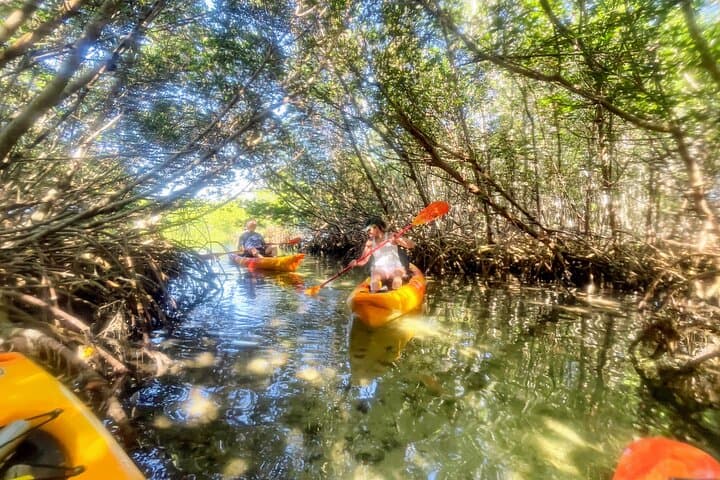
The morning opens quiet and low on the horizon—salt-scented air, a slow curl of sun over a flat expanse of glassy Gulf water. Your guide eases a tandem kayak off the skiff and into a narrow throat of green: black mangrove trunks braided with roots and filigreed leaves. Light sifts through like coins; the tunnel breathes. Out here, the noise of the mainland—traffic, commerce, schedules—thins to a distant hum. All that remains is current, birdsong, and the steady stroke of paddles.
This is the rhythm of the Exclusive Kayak Expedition to Shell Key: an intimate, private outing that threads mangrove tunnels and opens onto one of Pinellas County’s largest undeveloped barrier islands. In roughly 2½ hours you move from a sheltered estuary to sugar-white sand dotted with shells, the route designed to show off the ecology and quiet drama of Florida’s gulf coast. It’s an adventure tailored for people who want to be outside without crowds—families, photographers, or anyone who wants a slow, knowledgeable introduction to the region’s coastal systems.
Geology and biology are obvious companions here. The mangroves—red, black, and white—are architects of the shoreline, their roots trapping sediment and building tomorrow’s beach in slow motion. Barrier islands like Shell Key are transient by nature, shaped by storm swells, tides, and the relentless movement of sand. You’ll see this in miniature: spits of sand shifting with wind, dunes that have migrated since old maps were made, and shells concentrated where currents drop their load. The waters between mangroves and island act as a nursery—juvenile fish, fiddler crabs, rays and occasional manatees navigate these protected shallows.
Culturally, the place is a footnote in Florida history that tastes of industry and refuge. For the indigenous peoples and later for fishermen, these waters were a source of food and a labyrinth to be read for seasonal change. In the last century the area near St. Petersburg shifted from commercial use to conservation priority, and Shell Key now sits within an approximately 1,800-acre preserve—one of the region’s larger attempts to keep a natural shoreline intact as development presses inland.
Your guide on this trip is both naturalist and safety officer: they read tides and birds, point out subtle differences between mangrove species, and show you where shells wash up with the outgoing tide. Dolphins are frequent companions, popping up like punctuation as you cross open water, and the occasional manatee will idle, curious but unobtrusive. The trip’s private nature matters here; by moving at your own pace, you see more—there’s time for a slow photo stop, a short beach walk, or a moment to simply sit and listen to the hush of a place where human noise is kept at bay.
Practicalities are simple but essential. The advertised duration is approximately 150 minutes—long enough to feel like a proper escape but compact enough for families and travelers with limited time. Skill requirements are low: basic paddling technique and a willingness to work as part of a tandem team are enough. Because it’s private and small-group focused, the guide calibrates distance and effort to the party, making this an excellent choice for mixed-ability groups.
Timing matters. Morning launches typically deliver the calmest water, softer light for photography, and cooler air; afternoons bring a higher probability of breeze and chop as sea breezes build. Wildlife is often more active in the cooler parts of the day, and tides determine how deep your boat can get into certain mangrove channels. Your guide will choose the launch window with those variables in mind.
For the traveler planning this trip, think preparation rather than endurance. Wear quick-drying clothing, a wide-brimmed hat, reef-safe sunscreen, and water shoes that curl well into a kayak. Bring a dry bag for your phone and a light snack for the island stop. Expect limited shade once you hit Shell Key; the island’s dunes and sparse sea oats offer brief shelter and excellent views but little long-term cover.
This expedition is small in budget—listed from $45 per person—and meaningfully big in payoff. It’s deliberately restrained: no beach vendors, no loud music, no motorized traffic. That restraint is the point. You come back with cleaner lungs, a pocketful of shells, photographs of mirrored mangrove corridors and a brief, restorative immersion in coastal wilderness. For anyone curious about Florida beyond its theme-parks and crowded beaches, this paddling route offers a concentrated, respectful way to know the place.
If you go: choose spring or late fall for milder temperatures and steady water; book mornings for stillness and wildlife; and treat the island with the same gentleness you’d afford a fragile room. Avoid trampling dunes and leave no trace—these islands survive on discretion.
This kayak expedition is not a test of endurance but a handrail into a softer, salt-scented world. It rewards patience, curiosity, and a readiness to slow down. Out there, the mangroves are patient storytellers—if you listen, they’ll tell you how the shore became shore and why some wild places are worth saving.
Trail wisdom
Small choices, better day.
Time Your Launch
Morning departures mean calmer water, cooler temps, and higher wildlife activity—aim for the earliest slot available.
Bring a Dry Bag
Keep your phone, camera, and keys safe and accessible; even shallow water splashes can be unforgiving.
Protect the Shoreline
Stick to established landing spots on Shell Key and avoid walking over dune vegetation—these plants hold the island together.
Pace Yourself
This trip is private and adjustable—ask your guide to slow for photos or rest stops; it’s not a race.
Local knowledge
Read the place, not just the route.
Watch for native species including Bottlenose dolphins, West Indian manatee.
Keep an eye out for wildlife during the transition between areas and habitats. Respect distance guidelines.
Shell Key sits inside a protected preserve—visitors are urged to stay off dune vegetation, pack out waste, and use reef-safe products to protect nearshore habitats.
Follow the guide's instructions on size limits, ethical handling, and leave-no-trace practices.
The south-facing shell ridges of Shell Key—best at low tide for concentrated shell hunting. Mangrove side-channels that fill with schooling juvenile fish at dawn
Locally recommended viewpoints and quiet spots known best to local operators.
Shell Key and the surrounding lagoons have long been used for fishing and shelling; the preserve was established to protect habitat as coastal development expanded in Pinellas County.
Maritime roots and regional tradition shape the waterways and working coasts.
Seasonal guide
Four versions of the same landscape.
Spring
Best forWildflower and sea oat viewing · Mild temperatures · Calm water paddling
ChallengesHigher weekend crowds · Occasional late cold fronts
Spring offers comfortable temps and excellent wildlife viewing; mornings are especially calm and productive for photos.
Summer
Best forWarm water swims · Long daylight hours
ChallengesHeat, humidity, afternoon thunderstorms · Increased insect activity
Summer brings hot, humid conditions and more afternoons storms—go early, hydrate, and use sun protection.
Fall
Best forMigratory bird spotting · Fewer tourists · Warm seas
ChallengesHurricane season overlap (early fall) · Variable winds
Fall can be ideal for bird migration and quieter beaches, but watch seasonal weather and wind forecasts.
Winter
Best forCooler paddling conditions · Clearer skies · Calmer seas on many days
ChallengesCooler air and water temps · Less predictable wildlife activity
Winter days are crisp and clear, good for long vistas; dress in layers and be prepared for cooler winds off the Gulf.
Operator details
What the booking data adds.
Included
- ✓Ocean Kayaks including: Paddles , Safety vest , stadium style seats, dry bags , safety bag w/ lights ,safety whistle and air horn, first aid kit etc. also ample storage.
Not included
- —Sunglasses, Hats ,sunscreen ,water shoes (* Some items available for sale upon request )
Good to know
- ✓Not recommended for travelers with spinal injuries
- ✓Not recommended for pregnant travelers
- ✓Not recommended for travelers with poor cardiovascular health
- ✓Travelers should have at least a moderate level of physical fitness
Pack with intention
What to bring.
Good to know
Common questions.
No advanced experience is required; guides provide basic instruction and most trips use tandem kayaks suitable for beginners.
Plan the edges
The details that make the day easier.
Shell Key is one of Pinellas County’s largest undeveloped barrier islands and is part of a protected approximately 1,800-acre preserve—efforts began in the late 20th century to limit development and protect its habitat.
After your paddle, head back to St. Pete Beach or Pass-A-Grille for fresh seafood—try a grouper sandwich at a local beach café. For craft beer, 3 Daughters Brewing in St. Petersburg is a short drive and offers easy, casual vibes to compare notes and dry out wetsuits.
- Closest airport
- Tampa International (TPA) ~20–30 miles; Typical drive from St. Petersburg launch area: 15–30 minutes; Cell service: limited in mangrove tunnels and on Shell Key; Permits
- Passes
- No special permit required for recreational kayaking but follow preserve regulations and parking fees may apply.
This preserve is ecologically sensitive—pack out all trash, avoid stepping on dune vegetation, use reef-safe sunscreen, and follow your guide’s instructions to minimize disturbance to wildlife and habitat.
Explore by topic
Follow the threads.
Keep exploring
Make the story part of the trip.
Set out from Bass Harbor for a private, customizable day on Blue Hill Bay — lighthouses, puffins, seals, and the chance to feel Acadia from the water. Small groups, local captains, unforgettable views.
In four hours you can move from shaded canyon ferns to wind-scoured coastal ridgelines, guided by someone who knows where the light—and the hidden views—live. This private half-day hike on the Monterey Peninsula or Big Sur is compact, curated, and perfect for travelers who want depth without a multiday commitment.
 Related story
Beneath a sky of shifting light, Skaftafell’s ice reads like a map of time. This three-hour guided glacier hike mixes technical instruction with geology and culture: compact, safe, and unforgettable.