
What the day feels like
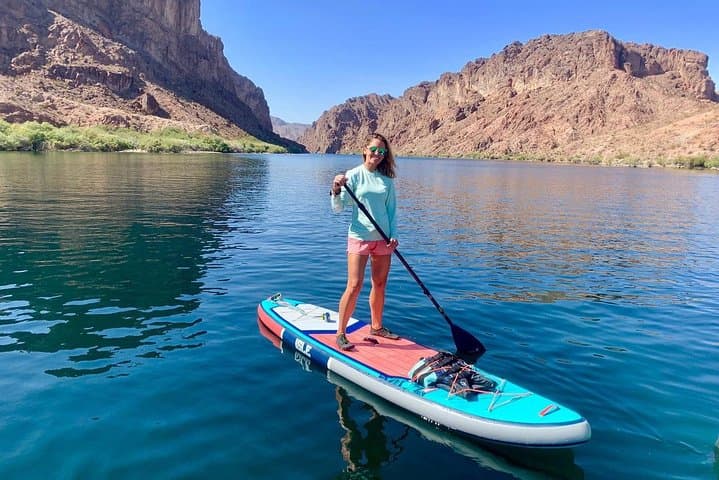
The river arrives before you do—slow, insistent, and carrying the canyon’s cool shade like a promise. At Willow Beach, the Colorado narrows, darkens and tucks itself between basalt walls that rise like ancient teeth. On a good morning the water’s surface is glass; first strokes feather out across an emerald corridor that seems to hum with history. You push off on a stable stand-up board, guided by a coach who reads wind and current the way a musician reads a score. For the next half-day, the river is your clock, the canyon your classroom, and Emerald Cave the reward.
This 5.5-mile half-day paddleboard tour is compact but layered: technique coaching for beginners and useful refinements for regular paddlers, a short onshore stretch to visit a historic river gauger’s house, a swim stop, and a hush-of-a-cove lunch at a secluded beach. The setting is Black Canyon—part of the greater Colorado River corridor below Hoover and Davis dams—where dark volcanic walls, sculpted by millennia of flow, create sudden pockets of shade and surprising green water. At times the current nudges you forward; at others the canyon’s walls hold stillness like a hand. Wildlife watches: bald eagles wheel above, bighorn sheep stand like sentries on ledges, and in quiet pools desert fish slice beneath the surface.
Geology here reads like a slow-motion blockbuster. Black Canyon’s basalt and andesite were laid down in volcanic eruptions long before the river mined its way through them. You can see the vertical columns and jointed faces that give the canyon a sculpted look—hard rock resisting the river’s insistence. Human history in the canyon is no less layered. River gaugers—people who measured and recorded river levels and weather—lived here in simple dwellings and kept watch over a river that was, until the dam era, the West’s major north–south artery. The gauger’s house you visit is a small, honest reminder of the everyday work that mapped this landscape before it was a playground.
Culturally, this stretch of river sits at a point where Nevada, Arizona and the Mojave Desert meet. Modern visitors often come from Las Vegas for a quick escape—this is a day trip with genuine wilderness moments. The tour takes advantage of those contrasts: the supersonic neon of Vegas gives way to basalt hush in less than two hours’ drive, and in that compression the Colorado becomes a proving ground for simple outdoor confidence—balancing, breathing, and reading water.
Practical specifics matter here. The trip covers roughly 5.5 miles on the river and runs about four hours door-to-door on the river (the operator lists a 240-minute tour length). Paddling is mostly flatwater with mild current; there are no long technical rapids, but wind can make sections choppier and require more effort. The short hike to the gauger’s home is under a mile round-trip over uneven, sometimes rocky ground—good trekking sandals or light trail shoes are useful. Expect swimming and beach time at Emerald Cave—bring a swimsuit or quick-dry clothing and a towel.
Why go? It’s an efficient, low-barrier way to experience a canyon that feels far wilder than the drive time suggests. You’ll paddle through different moods of the river—open sun, canyon shade, a green-lipped cove that begs for a float—and come away with a better feel for standing paddles and river sense. For families or mixed-ability groups, the coaching component makes this more than a rental: someone is watching the group’s lines, reading wind shifts, and teaching small technique tweaks that make the rest of the trip smoother and more fun.
The small practicalities add up: leave early or late in the morning to avoid full desert heat in summer; bring reef-safe sunscreen, a wide-brim hat that stays tied, and a hydration system you can clip to the board. Footwear should be grippy and quick-drying. Phones and cameras belong in a dry bag—this is an environment that will gladly accept an unprotected lens.
Local stewardship matters, too. The river and its banks support wildlife sensitive to disturbance—this operator emphasizes low-impact landings, keeping a respectful distance from nesting birds, and packing out anything you bring in. That matters: the canyon’s small, sheltered beaches are both part of the experience and part of a fragile shoreline ecosystem.
If you want to build this into a longer trip, combine it with time in Laughlin or a night in a small riverside lodge to watch canyon light at dusk. For photographers, the canyon’s overhead light after mid-morning brings the best color in the water; early morning and late afternoon create dramatic shadows on basalt faces. For paddlers looking to deepen their skills, this half-day is a practical, safety-focused introduction to reading wind and current on a flowing river.
At the end of the afternoon you paddle back to Willow Beach Marina with a little more balance under your feet and a clearer sense of how a river shapes both rock and mood. The day is tidy: instruction, exploration, a short hike, a cave’s quiet green, and a riverside lunch. It’s accessible, scenic, and it folds a chunk of Colorado River history into a straightforward adventure—one you can finish and still be back in Las Vegas in time for dinner.
Trail wisdom
Small choices, better day.
Start Early or Late
Avoid midday heat—mornings and late afternoons offer cooler temperatures and calmer winds.
Bring a Dry Bag
Protect phone, camera and layers in a waterproof bag clipped to your board.
Wear Quick-Dry Footwear
Expect beach exits and a short rocky hike—trail sandals or light shoes with grip work best.
Use Reef-Safe Sunscreen
Protect skin without harming aquatic life or vegetation in the river.
Local knowledge
Read the place, not just the route.
Watch for native species including Bald Eagle, Desert Bighorn Sheep.
Keep an eye out for wildlife during the transition between areas and habitats. Respect distance guidelines.
This stretch of river supports sensitive shoreline habitats; stick to designated landing areas, pack out all trash, and avoid disturbing nesting birds and shoreline plants.
Follow the guide's instructions on size limits, ethical handling, and leave-no-trace practices.
Emerald Cave’s shaded inner cove—best visited mid-morning for green water color. Short shore excursion to the historic river gauger’s house for hands-on local history
Locally recommended viewpoints and quiet spots known best to local operators.
The gauger’s homes in Black Canyon were part of early 20th-century efforts to record river flows—work that predated and informed large dam projects in the Colorado Basin.
Maritime roots and regional tradition shape the waterways and working coasts.
Seasonal guide
Four versions of the same landscape.
Spring
Best formild temperatures · wildlife viewing · comfortable paddling
Challengesvariable winds · possible higher flows depending on dam releases
Spring is the sweet spot for pleasant air temps, active wildlife and comfortable paddling; bring layers for cool mornings.
Summer
Best forlong daylight · swimming · family outings
Challengesextreme heat · strong afternoon winds
Summer offers swim-ready water but brings heat—plan early launches and pack plenty of water and shade.
Fall
Best forstable weather · fewer crowds · clear light for photography
Challengescooler mornings · shorter daylight
Fall provides stable paddling conditions and crisp light; middays are ideal for beach stops and cave swims.
Winter
Best forcrisp canyon light · quiet beaches · cool paddling
Challengescold mornings, chilly water · reduced swim comfort
Winters are quiet and clear—dress warmly in layers and bring neoprene or a wetsuit if you plan to swim.
Pack with intention
What to bring.
Good to know
Common questions.
No—this tour includes guided instruction for all levels; beginners receive technique coaching and safety briefing before launch.
Plan the edges
The details that make the day easier.
Black Canyon’s dark volcanic walls are primarily basalt and andesite, remnants of ancient lava flows that the Colorado River has carved through over millions of years.
After the trip, grab a casual meal at the Willow Beach Marina café or drive to Laughlin for riverside dining and local breweries; the region pairs simple pub fare with classic Southwestern flavors—think grilled fish, tacos and cold beer.
- Closest airport
- Harry Reid International Airport (LAS); Driving distance: ~75–90 minutes from Las Vegas; Trailhead
- Launch
- Willow Beach Marina; Cell service: limited in the canyon; Permits
- Passes
- possible Lake Mead National Recreation Area day-use fees—confirm with operator.
Pack out all trash, use reef-safe sunscreen, avoid disturbing shoreline vegetation and nesting birds, and follow operator guidance for low-impact landings to protect fragile river habitats.
Explore by topic
Follow the threads.
Keep exploring
Make the story part of the trip.
Set out from Bass Harbor for a private, customizable day on Blue Hill Bay — lighthouses, puffins, seals, and the chance to feel Acadia from the water. Small groups, local captains, unforgettable views.
In four hours you can move from shaded canyon ferns to wind-scoured coastal ridgelines, guided by someone who knows where the light—and the hidden views—live. This private half-day hike on the Monterey Peninsula or Big Sur is compact, curated, and perfect for travelers who want depth without a multiday commitment.
 Related story
Beneath a sky of shifting light, Skaftafell’s ice reads like a map of time. This three-hour guided glacier hike mixes technical instruction with geology and culture: compact, safe, and unforgettable.