
What the day feels like
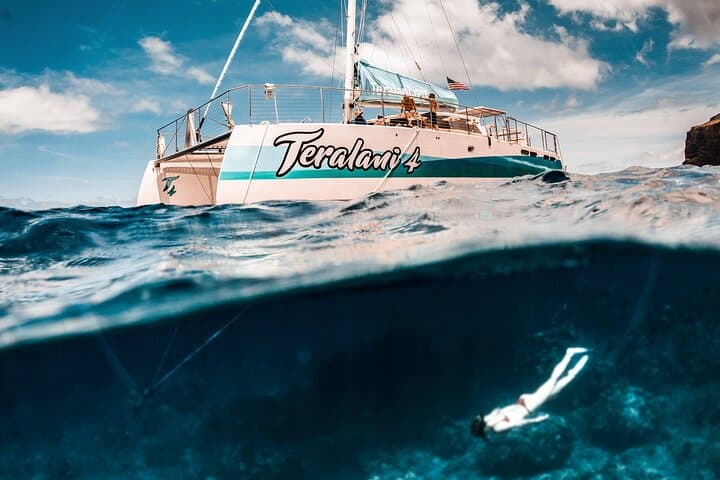
There is a moment just after dawn off Ka'anapali when the ocean seems to hold its breath. The catamaran slips away from the harbor in a slow, deliberate exhale; the hull parts a blue that looks both deep and honest, and the coastline of West Maui rolls past—black volcanic ridges softening into sugar-white sand. On this five-hour sail from Lahaina, the water does the talking. It invites, it dares, and it gives up glimpses of what lies beneath: coral gardens, turtle bows, and living color so bright it seems edited.
This is not a barebones snorkeling run. The tour is built around comfort and access—luxury, custom catamarans with room to stretch, shaded lounges, and an open bar that makes the transition from ocean to afternoon feel effortless. The itinerary is simple and smart: two prime snorkel spots near Ka'anapali, breakfast to start the morning, a hot lunch and dessert between swims, and a crew whose local hands make the logistics invisible so you can focus on reef time.
Geology and history are in the hull too. West Maui is a remnant of an ancient volcano; the coastline here is a braille map of lava flows, sea cliffs, and reef terraces. Coral shelves have built themselves over centuries on those volcanic bones, creating pockets of biodiversity that attract reef fish and honu, the green sea turtles that are as much a signature of Maui snorkeling as sunshine. Offshore reefs are living structures—delicate and patterned, hosting more than a thousand marine species around the island chain.
Lahaina lends the trip cultural weight. Once the capital of the Hawaiian Kingdom, this town retains a front-street charm and a sense of being a port town with stories. Black Rock, the dramatic outcrop at the northern end of Ka'anapali Beach, remains a focal point for tradition; its cliffs were places of ritual and ceremony long before it became a modern-day landmark for sunset cliff jumping. On the water you get a different perspective—fishermen's boats and reef markers,iwi and place names that the crew will often point out, turning a half-day outing into a small lesson in place.
Why book this particular sail? For starters, the ease. Five hours is enough time to reach two reefs without feeling rushed. The catamarans used for this route are designed for stability and social space; they reduce that choppy seasickness feeling and make it easier to gear up for snorkels. For families, it's accessible—the tour manages transitions with kid-friendly pacing and on-deck guidance—while experienced snorkelers appreciate the targeted spots that tend to hold fish life and visibility. And yes, the food and open bar turn the return leg into a slow, satisfying unwind.
Practical realities matter here. Expect 5 hours aboard, with a mix of shaded seating and open deck. There is minimal hiking—this is a boat-based adventure—so footwear is casual, but bring reef-safe sunscreen and a light wind layer for the ride back when the ocean cools. Visibility is best in calmer months, and operators will choose the two snorkel sites based on sea conditions, often favoring protected reefs on days with wind.
The logistics are forgiving: most travelers base themselves in Lahaina or Ka'anapali and launch from a nearby marina. If you fly into Kahului (OGG), plan roughly 45 minutes to an hour driving to the west side; traffic and island-time mean you should give yourself a buffer. Offshore cell service is patchy—disconnecting is part of the appeal—but the crew will provide a safety briefing and buoyed swim zones.
There are conservation realities to respect. Coral is fragile; touching, standing on, or feeding reef life damages ecosystems and is illegal in many parts of Hawaii. Use reef-safe sunscreen (or a rash guard), avoid plastic single-use items, and listen to crew guidance about where to enter and exit. The best souvenirs are photos and memories, not pieces of shell or coral.
Who should go? Anyone with a curious pulse and basic swimming comfort: couples who want an effortless half-day at sea, families looking for a stable catamaran with food included, and small groups aiming for a confident operator that balances leisure with a local touch. For the photo-obsessed, the morning light and turtle encounters are reliable rewards; for the planner, the instant confirmation and clear pricing make booking painless.
This sail is the kind of activity that opens the rest of your Maui day. Return to Front Street for fresh poke or a craft pint, or linger on the boat as the coastline slides by. Either way, the trip offers a compact, confident way to meet the Pacific: equal parts spectacle and respect, with enough creature comforts to leave you wanting more ocean rather than less.
Trail wisdom
Small choices, better day.
Bring reef-safe sunscreen
Choose mineral-based sunscreen and apply before boarding to protect coral and avoid the hassle of greasy lotion on rental gear.
Arrive early to check in
Marina check-in can be quick, but arriving 30 minutes early prevents last-minute stress and lets you stow bags.
Use anti-nausea measures if prone to seasickness
Take a non-drowsy motion-sickness pill beforehand or sit mid-boat where motion is minimized.
Pack a lightweight wind layer
Afternoon rides back to shore can be cool and breezy—bring a thin jacket to stay comfortable.
Local knowledge
Read the place, not just the route.
Watch for native species including Green sea turtle (honu), Reef fish such as parrotfish and butterflyfish.
Keep an eye out for wildlife during the transition between areas and habitats. Respect distance guidelines.
Coral reefs here are sensitive; operators encourage reef-safe sunscreen, no-touch policies, and responsible wildlife viewing to protect habitat.
Follow the guide's instructions on size limits, ethical handling, and leave-no-trace practices.
Snorkel the rocky coves near Kapalua for quieter fish life when conditions allow. Grab an early-morning shave ice in Lahaina before boarding to enjoy on the boat
Locally recommended viewpoints and quiet spots known best to local operators.
Lahaina was the capital of the Hawaiian Kingdom in the early 19th century and remains rich with missionary and whaling-era history that shaped modern Maui.
Maritime roots and regional tradition shape the waterways and working coasts.
Seasonal guide
Four versions of the same landscape.
Spring
Best forcalmer seas · fewer crowds · good visibility
Challengesoccasional north swell · variable winds
Spring is a sweet spot for visibility and milder crowds; ocean conditions are typically favorable for two snorkel stops.
Summer
Best forwarmest water · longer days · consistent calm mornings
Challengeshigher heat on deck · more tourists
Summer brings warm water and stable mornings, but expect fuller boats and stronger midday sun—shade and hydration are key.
Fall
Best forshoulder-season rates · good visibility · active marine life
Challengespossible early trade winds · shorter days
Fall balances good ocean clarity with fewer tourists; early-season trade winds can build, so morning sails are preferable.
Winter
Best forpotential whale sightings · dramatic coastal skies · less crowded land
Challengeslarger swells · choppier seas · site changes due to surf
Winter can be rewarding for wildlife watchers but can also bring larger swells that move snorkel sites to more sheltered reefs.
Operator details
What the booking data adds.
Included
- ✓Open Bar and bottomless sodas, juices and filtered water
- ✓Premium masks with snorkels and full-foot snorkeling fins included
- ✓Wagyu Beef Burger with Cheese or Ginger Chicken Sandwich or Beyond Burger (upon request with 24 hours notice ) or 100% Beef Hot Dog | Sides: Penne Pasta Salad, Ocean Salad, Maui Kettle Chips, dessert
- ✓Tropical Continental Breakfast: Fresh Brewed Coffee, Fresh Fruit, Maui Gold Pineapple Wedges, Seasonal Melon, House made Pastries, Fresh Baked Croissant & Blueberry Muffin
Not included
- —Validated parking at the Outrigger Resort ($8+HI Tax/6hrs)
- —Hotel pick-up and drop off
Good to know
- ✓Public transportation options are available nearby
- ✓Suitable for all physical fitness levels
- ✓Stairs are required to reach the vessel's deck from the beach
- ✓Please have all guests 21 and over bring a valid picture ID
- ✓Not recommended for travelers with mobility restrictions or cannot climb stairs
Pack with intention
What to bring.
Good to know
Common questions.
The sail is approximately five hours and typically includes two snorkel stops, breakfast, lunch, dessert, and an open bar.
Plan the edges
The details that make the day easier.
Lahaina served as the capital of the Hawaiian Kingdom until 1845, when the capital was moved to Honolulu; the town's whaling-era history is still visible along Front Street.
After the sail, stroll Lahaina's Front Street for fresh poke, fish tacos, or a local brew at a nearby pub—Kimo's and Lahaina Fish Co. are classic picks for seafood and sunset views.
- Closest airport
- Kahului Airport (OGG)
- Typical drive
- 45–60 minutes west to Ka'anapali
- Cell service
- limited offshore
- Permits
- none, but reef protections and 'no-touch' rules apply
This region's reefs are fragile; choose operators that use reef-safe sunscreen policies, follow no-touch rules, and minimize plastic. Pack out trash and respect marine life.
Explore by topic
Follow the threads.
Keep exploring
Make the story part of the trip.
Set out from Bass Harbor for a private, customizable day on Blue Hill Bay — lighthouses, puffins, seals, and the chance to feel Acadia from the water. Small groups, local captains, unforgettable views.
In four hours you can move from shaded canyon ferns to wind-scoured coastal ridgelines, guided by someone who knows where the light—and the hidden views—live. This private half-day hike on the Monterey Peninsula or Big Sur is compact, curated, and perfect for travelers who want depth without a multiday commitment.
 Related story
Beneath a sky of shifting light, Skaftafell’s ice reads like a map of time. This three-hour guided glacier hike mixes technical instruction with geology and culture: compact, safe, and unforgettable.