
What the day feels like
You step off the minivan and the air is different—thicker with river-smoke and the sweet decay of wet rice. Ahead, a scrim of limestone towers punctures the horizon, their bases softened by green fields and slow water. A wooden sampan waits, its boatman poised with a practiced sway; the river seems to inhale and invite you in. Over two days here, you trade Hanoi’s honking rhythm for rowed silence, steep stone stairs that make your lungs count, and a string of temples that map the region’s thousand-year arc. Ninh Binh is often sold as “Halong Bay on land,” but that comparison understates what makes the place work: the intimacy—narrow waterways threading karst caves, the patience of local farmers, the human scale of history written in small, worn stones.
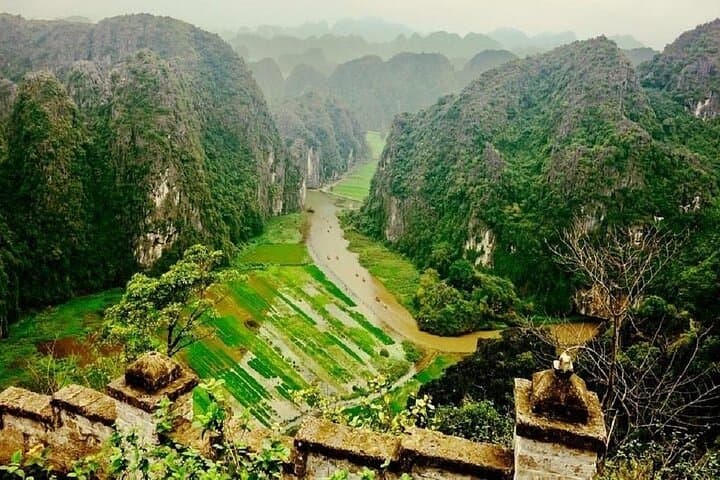
Geology has the starring role. The limestone towers around Tam Coc and Trang An are the product of millions of years of chemical weathering: subterranean rivers hollowing passages and then, over geological time, the ground collapsing into dramatic pinnacles. In the dry season, boats glide through caverns revealed by low water; in the wet season, the rivers swell and seem to rearrange the landscape overnight. This is a working landscape—rice paddies expand and recede in seasons, and water buffalo wallow like placid, mossy statues along the banks.
History threads beneath the scenery. The nearby Hoa Lu plain was the seat of Vietnam’s early medieval kingdom in the 10th and 11th centuries; low temples built of carved stone and blackened by centuries of incense mark an age when this valley was the political heart of the Red River Delta. In 2014, the Trang An Landscape Complex was designated a UNESCO World Heritage Site for its combined cultural and geological significance—an endorsement that has only increased visitor interest and the need for thoughtful tourism.
The tour is efficiently designed to give you texture: boat rides through Tam Coc’s three caverns or the longer, more contemplative Trang An circuit; a climb to Mua Cave’s viewpoint—roughly 500 steps if you count them honestly—for a panorama that reads like a watercolor of stacked ridgelines and patchwork paddies; and a visit to the sprawling Bai Dinh temple complex that quietly broadcasts the area’s religious life. Between those highlights, there are local markets, roadside stalls selling sticky rice and sweet tea, and the occasional flock of egrets that insist on stealing the best foregrounds for photos.
Practically speaking: the tour runs 48 hours, and it’s a compact education in pacing. Start early on the first day to avoid midday heat and heavy tour traffic on the waterways; afternoons are better for exploring temple courtyards or loosening up on village lanes. Bring footwear that can handle mud and slick stone—the climb to Mua Peak has uneven steps and a few narrow ledges—plus a daypack for water, sunscreen, and a lightweight rain layer. Bam—there’s your baseline.
Food and culture are part of the contour. Ninh Binh’s culinary character leans on local produce and rustic techniques: cơm cháy (crispy rice), mountain goat dishes in village eateries, and simple bowls of noodle soup that feel restorative after a day of moving. Accommodations range from quiet homestays and boutique riverside bungalows in Tam Coc to modest hotels in Ninh Binh town; the overnight component of the tour gives you a chance to sample slow-evening life when the day-trippers depart.
For photographers and quiet-seekers, sunrise from Mua Peak is the prize—light lifts the karsts like stage curtains. Rowboat rides at midday are better for people-watching and detail shots—hands on oars, ripples folding across reflections. For wildlife, mornings and dusk are when kingfishers, herons, and water buffalo are most vivid.
This tour isn’t mountaineering or hardcore trekking: it’s an immersive, moderate adventure that rewards curiosity and attentiveness. You’ll come away with a sharper sense of how geology shapes human life, how temples and rice paddies cohabitate with caves, and how slow travel—by boat, by foot—unfolds a region’s depth. If you have two days and want to recalibrate from urban tempo to a softer, river-timed rhythm, Ninh Binh is one of the best stops in northern Vietnam.
Trail wisdom
Small choices, better day.
Start before sunrise
Early morning light and thinner crowds make the Mua Peak climb and Tam Coc boat rides far more enjoyable.
Bring a dry bag
Boat trips are mellow but wet—store electronics and a spare layer in a small dry bag.
Wear grippy shoes
Stairs at Mua Peak and temple courtyards can be slick; trail runners or light hikers are ideal.
Carry local currency
Small vendors and some homestays prefer cash—withdraw in Hanoi or Ninh Binh town.
Local knowledge
Read the place, not just the route.
Watch for native species including Water buffalo, Egrets and kingfishers.
Keep an eye out for wildlife during the transition between areas and habitats. Respect distance guidelines.
Trang An is a UNESCO site; tourism grows each year, so stick to marked routes, avoid single-use plastics, and support local guides and homestays.
Follow the guide's instructions on size limits, ethical handling, and leave-no-trace practices.
Thung Nham Bird Park for quiet birdwatching at dawn. Van Long Nature Reserve for quieter, motor-free boat rides
Locally recommended viewpoints and quiet spots known best to local operators.
Hoa Lu was the capital of Vietnam in the 10th–11th centuries; stone temples from that era still stand in the valley, anchoring the landscape to human history.
Maritime roots and regional tradition shape the waterways and working coasts.
Seasonal guide
Four versions of the same landscape.
Spring
Best forFlowering rice paddies · Mild temperatures · Birdwatching
ChallengesSudden rain showers · High humidity by late spring
Spring brings green paddies and pleasant weather; expect occasional showers and rising humidity as the season progresses.
Summer
Best forLush landscape · Low river levels for cave passages · Long daylight hours
ChallengesHot afternoons · Monsoon rains and occasional flooding
Summer is vivid and green but can be hot; plan morning activities and keep flexible for afternoon storms.
Fall
Best forClear skies · Harvest colors in paddies · Comfortable hiking temps
ChallengesTourist season peaks in October–November
Autumn is the sweet spot—crisply lit landscapes and cooler weather; book accommodations ahead on busy weekends.
Winter
Best forQuiet trails · Cultural festivals · Cool, dry days
ChallengesChilly mornings and occasional fog · Shorter daylight
Winter offers serene waterways and fewer tourists; pack warmer layers for breezy dawns and nights.
Operator details
What the booking data adds.
Included
- ✓1 night at Bungalow/Homestay or Hotel
- ✓Pick up and drop off at your hotel by Limousine Bus with experienced driver
- ✓2-ways electric car for Bai Dinh pagoda
- ✓Lunch
- ✓English Speaking Guide
- ✓Dinner
- ✓Breakfast
- ✓Free usage of hat & umbrella, rain-coat during the trip
- ✓Free Wifi & Water on the bus
Not included
- —Beverages, tax & Travel insurance
- —Tips for guide and driver & personal expenses
- —Other things are not mentioned in our tour program.
Good to know
- ✓Public transportation options are available nearby
- ✓Infants are required to sit on an adult’s lap
- ✓Suitable for all physical fitness levels
- ✓FOC for under 5 years - old children, sharing with their parent.
- ✓2 adults can carry only 1 infant from 0 to 4 years old. From the 2nd infant will be charged 75% price.
- ✓Please note, the itineraries and schedules are subject to change without notice, depending on the weather and operating conditions.
- ✓Customers should provide their hotel name and address in the Hoan Kiem district for pick-up arrangements
- ✓All passengers should provide mobile phone or email address to the tour operator. The company will contact you directly after you make your reservation.
- ✓If you are vegetarian or have any special food requirements, please advise the local operator in advance.
- ✓Room policy: Standard 2-3 people per room
- ✓You can also finish your trip in Ninh Binh
Pack with intention
What to bring.
Good to know
Common questions.
Ninh Binh is about 90 km south of Hanoi—roughly a 2–2.5 hour drive depending on traffic.
Plan the edges
The details that make the day easier.
Trang An Landscape Complex was inscribed as a UNESCO World Heritage Site in 2014 for its combined geological and cultural values.
After a day on the water, look for cơm cháy (crispy rice) and local goat dishes in village eateries. Sit at a low plastic table for a cold bia hơi—an easy way to connect with locals and reset before another morning of exploration.
- Closest airport
- Noi Bai (Hanoi). Driving distance: ~90 km
- 2–2.5 hours. Cell service
- generally good in towns, patchy on waterways. Permits: no special permits; small entry fees apply.
This is a UNESCO-listed landscape—minimize waste, avoid single-use plastics, and hire local guides to ensure tourism dollars stay in the community.
Explore by topic
Follow the threads.
Keep exploring
Make the story part of the trip.
Set out from Bass Harbor for a private, customizable day on Blue Hill Bay — lighthouses, puffins, seals, and the chance to feel Acadia from the water. Small groups, local captains, unforgettable views.
In four hours you can move from shaded canyon ferns to wind-scoured coastal ridgelines, guided by someone who knows where the light—and the hidden views—live. This private half-day hike on the Monterey Peninsula or Big Sur is compact, curated, and perfect for travelers who want depth without a multiday commitment.
 Related story
Beneath a sky of shifting light, Skaftafell’s ice reads like a map of time. This three-hour guided glacier hike mixes technical instruction with geology and culture: compact, safe, and unforgettable.