
What the day feels like
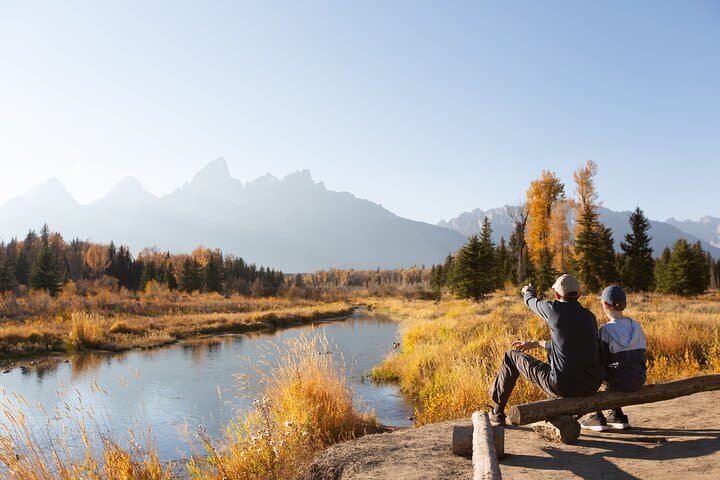
You feel the day before you see it: a cold, clean inhale as the van slides south from Jackson, the Tetons rising like an answer on the horizon. Early sunlight sharpens granite ridges into script; sagebrush fields hold their breath. On this eight-hour loop through Grand Teton National Park, the landscape does most of the talking. Your guide points the scope at a distant speck that resolves into a bison, then a cow moose picking through willows; a red-tailed hawk sails low and indifferent. The tour is equal parts patient search and sudden reward—wildlife often appears when you’ve stopped watching for it and started letting the park reveal itself. Guides here move with practiced quiet, tuning the group to the soft cadences of a place that is both vast and intimate.
The itinerary reads like a highlight reel for the park’s most photogenic and biologically active zones—Jenny Lake Overlook, Mormon Row, Oxbow Bend—each stop a short walk, a scope set up, a brief lesson in geology or behavior. The Teton Range itself is a lesson in urgency: one of the youngest ranges in the Rockies, its steep, uncompromising face was uplifted in a geologic blink compared with older neighboring ranges. The valley, meanwhile, is shaped by glaciers—U-shaped troughs, serrated arêtes and the fjordlike bowl of Jackson Hole testify to ice and tectonics. Human history is layered over that geology. You’ll hear about Mormon homesteaders who carved out modest farms on the valley floor and about the Shoshone people whose relationship to these mountains predates maps.
This tour is designed for people who want the cadence of a wildlife day without the logistical drain of doing it alone. Small groups capped at 10 give time for questions and better window access from the enclosed, climate-controlled vehicle; binoculars and a spotting scope are provided. Guides carry more than enthusiasm—they carry local knowledge about animal movement, safety protocols for bear country, and an eye for light and composition when a moose or eagle appears against the alpine backdrop. Picnic lunch—weather permitting—lands you in a quiet patch of meadow or riverbank; if the sky turns, you’ll eat indoors at a nearby restaurant. That flexibility is practical and necessary here, where weather can veer fast and wildlife doesn’t adhere to your schedule.
Why take this instead of driving the loop yourself? The answer is efficiency and education. Guides know the rhythms of the park: where elk graze at dusk, which side of the river deer favor in spring, and where grizzlies tend to linger. That translates into far more sightings per hour, and into context—what you’re looking at and why it matters ecologically. The tour is an easy entry point for families, photographers, and travelers who want to maximize one full day in the Tetons without sacrificing comfort.
Practicalities: the day is eight hours, most departures from Jackson Hole, and the terrain you’ll approach is vehicle-accessible with short, mostly flat walks from pullouts or overlooks. Expect moderate weather—bring layers—and be prepared to sit quietly for stretches. Shoes needn’t be technical mountaineering boots; sturdy trail shoes are sufficient. If you’re chasing photography, bring a telephoto lens and know how to stabilize shots from the vehicle or a low tripod.
Wildlife is unpredictable, and the tour doesn’t guarantee sightings, but the park’s density of species is exceptional: grizzlies and black bears, wolves, moose, bison, elk, eagles, bighorn sheep, fox and coyotes are all possible. Your guide will manage views and etiquette—keeping distance, using the vehicle as a buffer, and ensuring animals aren’t spooked. For those interested in culture, the Mormon Row barns—framed by the jagged skyline of the Tetons—are an icon of western homesteading and a poignant window into the valley’s agricultural past.
Tips that matter: plan for early starts (animals are most active at dawn and dusk), keep vocal volume low, and bring water and sunscreen even on cool mornings—mountain sun is sharp. If you’re sensitive to cold, add a down layer; if you want to stay nimble with gear, a comfortable camera strap and a small pack matter more than hauling a full-sized backpack.
This tour is as much about learning to read a landscape as it is about checking boxes. You’ll leave with more than photos: a clearer sense of the park’s seasons, the imperatives that drive animal movement, and an appreciation for the careful management that keeps this ecosystem functioning. For a day that stitches geology, history, culture and wildlife into something that is observant rather than showy, this is a measured way to spend a full Grand Teton day out of Jackson.
Trail wisdom
Small choices, better day.
Start Early
Wildlife is most active at dawn and dusk; earlier departures can yield moose, elk and bear sightings.
Layer Smartly
Bring breathable layers and a packable insulated jacket—mountain weather flips quickly.
Stabilize for Photos
Use a bean bag or window-mount for telephoto shots from the vehicle to reduce shake.
Respect Wildlife Distance
Follow guide instructions on spacing—never approach animals; the vehicle offers safe viewing.
Local knowledge
Read the place, not just the route.
Watch for native species including Moose, Grizzly Bear.
Keep an eye out for wildlife during the transition between areas and habitats. Respect distance guidelines.
Grand Teton National Park enforces strict wildlife viewing distances and food storage rules—follow park guidance to protect animals and yourself.
Follow the guide's instructions on size limits, ethical handling, and leave-no-trace practices.
Schwabacher Landing at sunrise for mirrored reflections. Menors Ferry Historic District for quiet riverside history
Locally recommended viewpoints and quiet spots known best to local operators.
The valley includes Mormon Row, settled by Mormon homesteaders in the early 20th century; their iconic barns remain framed by the Tetons.
Maritime roots and regional tradition shape the waterways and working coasts.
Seasonal guide
Four versions of the same landscape.
Spring
Best forNeonate sightings · Bird migration · Melting snow landscapes
ChallengesMud and variable road conditions · Cold nights
Spring brings newborns and migrating birds, but snowmelt and muddy access can limit where you stop—dress for damp conditions.
Summer
Best forReliable road access · Full services in Jackson · Extended daylight
ChallengesHigher visitor numbers · Afternoon storms
Summer offers consistent access to viewpoints and full visitor services, though crowds rise and storms can develop in the afternoons.
Fall
Best forElk rut and elk sightings · Crisp light for photography · Fewer crowds
ChallengesCooler temperatures · Some early snow at higher elevation
Late summer into early fall is prime for rutting elk and golden light—pack warm layers for chilly mornings.
Winter
Best forQuiet landscapes · Snow-blanketed scenery
ChallengesLimited road access · Cold and deep snow
Winter tours are rare and routes change; expect deep cold and limited stops but dramatic snowy vistas when available.
Operator details
What the booking data adds.
Included
- ✓Soda/Pop
- ✓Bottled water
- ✓Picnic Style Lunch
- ✓Snacks
- ✓Air-conditioned vehicle
- ✓Heated Vehicle
- ✓Use of binoculars and spotting scopes
Not included
- —National Park Entry Fee
- —Guide gratuity (10-15% of tour price recommended)
Good to know
- ✓Service animals allowed
- ✓Suitable for all physical fitness levels
- ✓Children 5 and younger are not allowed on this public tour.
Pack with intention
What to bring.
Good to know
Common questions.
No tour can guarantee wildlife, but experienced guides increase likelihood by following animal movement patterns and using optics to maximize viewing.
Plan the edges
The details that make the day easier.
The Teton Range began uplifting roughly 9 million years ago, making it one of the youngest mountain ranges in North America.
After the tour, grab breakfast or pastries at Persephone Bakery in Jackson, a riverside lunch at Dornan’s in Moose, and a pint at Snake River Brewing; the valley blends western ranching history with a small, lively arts and food scene.
- Closest airport
- Jackson Hole Airport (JAC); Driving: 10–40 minutes from Jackson to major park stops; Cell service: intermittent in the park; Permits
- Passes
- Grand Teton park entrance fee required (vehicle fee typically applies).
Keep distance from wildlife, store food securely, pack out all trash, and follow established pullouts to minimize habitat disturbance.
Explore by topic
Follow the threads.
Keep exploring
Make the story part of the trip.
Set out from Bass Harbor for a private, customizable day on Blue Hill Bay — lighthouses, puffins, seals, and the chance to feel Acadia from the water. Small groups, local captains, unforgettable views.
In four hours you can move from shaded canyon ferns to wind-scoured coastal ridgelines, guided by someone who knows where the light—and the hidden views—live. This private half-day hike on the Monterey Peninsula or Big Sur is compact, curated, and perfect for travelers who want depth without a multiday commitment.
 Related story
Beneath a sky of shifting light, Skaftafell’s ice reads like a map of time. This three-hour guided glacier hike mixes technical instruction with geology and culture: compact, safe, and unforgettable.