
What the day feels like
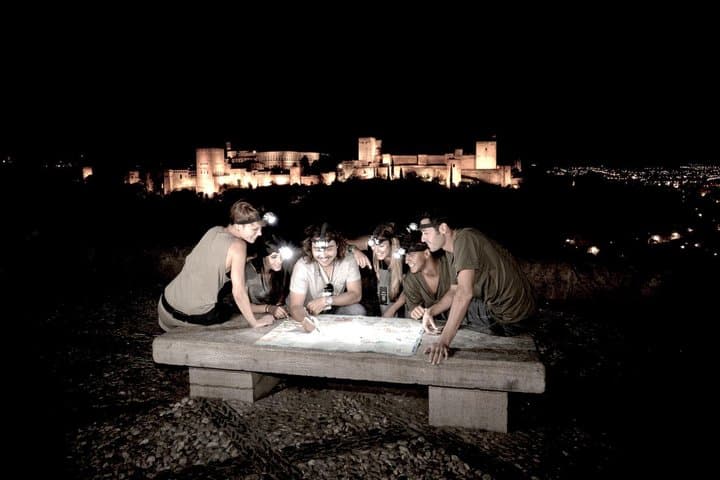
The city exhales differently after dusk. Where the day’s bustle dissolves into small, deliberate sounds—cups clinking in a tetería, distant guitar strings, shoes on history-worn cobbles—Granada becomes intimate and slightly mischievous. A Night Adventure Tour through Albaicín and Sacromonte is less a sightseeing checklist and more an invitation to move with the city as it slips into its evening persona: alleys drawing you forward, the moon peeking around the Alhambra’s silhouette, and rooftops holding quiet conversations.
You begin in a narrow lane where whitewashed walls still hold the imprint of Moorish hands. The guide—equal parts local raconteur and cartographer of offbeat corners—leads the way, but the neighborhoods do most of the storytelling. Albaicín, a tangle of Islamic-era streets, resists tidy lines. Buildings lean in as if to share secrets; potted geraniums and wrought-iron balconies punctuate passages that slope toward Mirador de San Nicolás, where the Alhambra’s red towers glow like embers across the valley. Sacromonte, perched opposite, listens like a patient neighbor and answers with cave-houses and flamenco’s raw throat.
Granada’s geography shaped its cultures. The city is a product of the Darro River slicing through a mountain courtyard, Moorish engineers carving terraces and water channels, and centuries of cultural layering—from the Nasrid courts to the Romani communities of Sacromonte. The Alhambra and the Albaicín were inscribed together as a UNESCO World Heritage Site in 1984; that designation helps explain why so many of the streets you walk are preserved rather than rebuilt. At night, that living history feels immediate: lantern light pulling out faded tilework, a cathedral bell soft and slow against the canyon of the streets, and echoes that make present-day life feel like the next verse in a very old song.
Geology and light conspire for drama. Granada sits at the foot of the Sierra Nevada; the nearby mountains hold snow late into spring, and they tilt the city’s climate and night-sky clarity. From certain viewpoints, the Alhambra is framed by a serrated skyline of peaks—the rock itself seems to crown the city, a sentinel that makes dusk more cinematic.
Culture here is tactile. Sacromonte’s cave venues are not theatre sets; they are homes turned into performance spaces where flamenco keeps a conversational rhythm with the city. Dining shifts toward tapas and late suppers, a communal ritual that extends the evening. The tour is a sampler platter: viewpoints, barrio histories, street-level anthropology, and a taste of Granada’s nocturnal habits.
Practicality underpins the romance. The Night Adventure Tour runs roughly three hours and is priced from about $29.57 USD. It’s an efficient way to cover neighborhoods that can be labyrinthine without local guidance, and it introduces you to quieter spots that most daytime itineraries miss. Expect uneven cobblestones, steep streets, and narrow stairways; this is urban hiking, not a gentle stroll. The best time to join is on a clear evening—sunset into early night—when the Alhambra’s floodlights come alive and the city warms into its nighttime rhythm.
Respect and etiquette matter in these neighborhoods. Albaicín is a residential quarter—keep voices moderate, avoid intruding on private patios, and ask before photographing people in intimate settings. In Sacromonte, the cue is to listen as much as look: flamenco in a cave is an art with deep roots and a communal economy; tipping performers or buying a drink supports a fragile cultural ecosystem.
Safety is straightforward: sturdy shoes, a light jacket, and a charged phone are the essentials. Hydrate beforehand—the city’s incline is subtle but persistent—and carry small bills for spontaneous tapas or a tip. For photographers, dusk is golden but quickly becomes low-light; a fast lens or a steady hand will help you capture both the Alhambra’s glow and the intimate face of the barrios.
Why go on a guided night walk instead of wandering alone? A local guide decodes architectural clues, points out in-the-know viewpoints (those tiny terraces where the city reads best), and keeps you from getting lost in the wonderful maze. For curious travelers who dislike rote tours, this one trades scripted facts for stories, cul-de-sac discoveries, and a pace that fits Granada’s after-dark personality.
If you want to push the experience further, combine the walk with a flamenco evening in Sacromonte’s cave venues or a late tapas crawl that begins near Plaza Nueva. For photographers, plan around a clear moon for silhouette shots of the Alhambra; for culture fans, ask your guide about Romani history and the Boccherini-era influences on local music. Ultimately, this night adventure is a form of urban immersion—it insists you slow down, look up, and listen.
Three hours and you will have a different map of Granada: one made of luminous viewpoints, living rooms turned stages, and alleys that keep their stories for those patient enough to knock. The city will feel less like a list of monuments and more like a companionable host. Walk respectfully, pack smartly, and let Granada’s night do the rest.
Trail wisdom
Small choices, better day.
Wear grippy shoes
Cobblestones and steep alleys demand sturdy, comfortable footwear—avoid slick soles.
Bring a small light
A compact headlamp or phone torch helps on stairways and in dim alleys without blinding others.
Carry small bills
Cash is handy for tapas, tips, or buying a drink at a local tetería after the tour.
Respect residents
Keep noise low in residential quarters and always ask before photographing people in private spaces.
Local knowledge
Read the place, not just the route.
Watch for native species including Urban bats emerging at dusk, Sparrows and urban songbirds in plazas.
Keep an eye out for wildlife during the transition between areas and habitats. Respect distance guidelines.
Preservation rules limit modern alterations in historic barrios—stay on paths, avoid picking plantings, and support local businesses to help maintain cultural landscapes.
Follow the guide's instructions on size limits, ethical handling, and leave-no-trace practices.
Mirador de San Nicolás at dusk for uninterrupted Alhambra views. Hidden teterías (tea houses) in Albaicín for mint tea and locals-only ambiance
Locally recommended viewpoints and quiet spots known best to local operators.
Granada’s Albaicín grew from the city’s medieval Islamic quarter and, along with the Alhambra and Generalife, forms a UNESCO World Heritage Site.
Maritime roots and regional tradition shape the waterways and working coasts.
Seasonal guide
Four versions of the same landscape.
Spring
Best forpleasant evenings · clear Alhambra views · flower-lined balconies
Challengescool nights · occasional rain
Spring evenings are mild and ideal for walking—layers are advised as temperatures drop after sunset.
Summer
Best forlate-night energy · longer evenings · al fresco tapas
Challengescrowds · hot daytime heat
Summer is lively and warm; night tours are a good way to explore once the heat eases, but expect more visitors.
Fall
Best forcomfortable temperatures · crisper skies · photography
Challengesshorter daylight · sporadic rain
Autumn balances cooler nights with clear skies—great for sunset-to-night transitions and fewer tourists.
Winter
Best forclear, dramatic nights · local winter cuisine afterwards
Challengescold evenings · possible snow in nearby peaks
Winter nights can be chilly, especially on viewpoints; bring warmer layers and prepare for brisk winds.
Operator details
What the booking data adds.
Included
- ✓Local guides
- ✓Phone charging station
- ✓City maps
- ✓Free WIFI and Vending machine
- ✓Flashlights
Not included
- —Food and drinks
- —Alhambra Ticket
- —Hotel pickup and drop-off
Good to know
- ✓Service animals allowed
- ✓Public transportation options are available nearby
- ✓Not recommended for travelers with spinal injuries
- ✓Not recommended for pregnant travelers
- ✓Not recommended for travelers with poor cardiovascular health
- ✓Travelers should have at least a moderate level of physical fitness
- ✓Tour is in English. Other languages are available with previous confirmation only
- ✓Children must be accompanied by an adult
- ✓No flip flops or heels
- ✓Comfortable clothing and sneakers footwear are recommended
- ✓Good vibes and smiles recommended all the time, let's make it The Day!
- ✓Not recommended for people with bad knees
Pack with intention
What to bring.
Good to know
Common questions.
The tour is approximately three hours long and covers Albaicín and Sacromonte neighborhoods at an easy-to-moderate walking pace.
Plan the edges
The details that make the day easier.
The Albayzín (Albaicín) neighborhood was designated a UNESCO World Heritage Site along with the Alhambra and Generalife in 1984.
After the walk, head to a tetería in Albaicín for mint tea, then descend toward Plaza Nueva for tapas—try traditional jamón and a local beer, or catch an intimate flamenco show in a Sacromonte cave to round out the night.
- Closest airport
- Federico García Lorca Granada-Jaén (GRX); Driving from Granada center: 10–25 minutes depending on meeting point; Cell service: generally good in city but patchy in narrow alleys; Permits: none required for the tour.
These historic barrios are sensitive to overtourism—stay on paths, respect private spaces, support local businesses, and avoid single-use plastics to help preserve neighborhood character.
Explore by topic
Follow the threads.
Keep exploring
Make the story part of the trip.
Set out from Bass Harbor for a private, customizable day on Blue Hill Bay — lighthouses, puffins, seals, and the chance to feel Acadia from the water. Small groups, local captains, unforgettable views.
In four hours you can move from shaded canyon ferns to wind-scoured coastal ridgelines, guided by someone who knows where the light—and the hidden views—live. This private half-day hike on the Monterey Peninsula or Big Sur is compact, curated, and perfect for travelers who want depth without a multiday commitment.
 Related story
Beneath a sky of shifting light, Skaftafell’s ice reads like a map of time. This three-hour guided glacier hike mixes technical instruction with geology and culture: compact, safe, and unforgettable.