
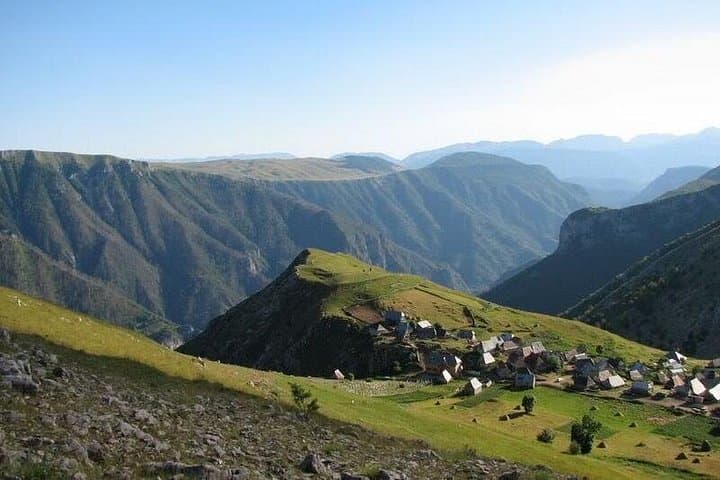
What the day feels like
You crest a low ridge and the world opens into a bowl of stone roofs and wind-carved meadows. Lukomir sits like an old secret on the shoulder of Bjelašnica, a scatter of grey houses threaded by sheep tracks and narrow stone paths. At roughly 1,500 meters, air here has a different weight: clearer, colder, and somehow calmer. The village doesn't rush to meet you. Rather, the place lets you arrive—on foot, by the rhythm of your breath, and by the slow click of wood on stone.
The Mountain Village Lukomir Full Day Adventure Tour is calibrated for that unhurried kind of travel. It’s a hands-on companion to Bosnia and Herzegovina’s high-country life: a daylong hike into an isolated community where traditional stone houses with wooden tile roofs still outnumber satellite dishes. The route crosses alpine meadows laced with seasonal streams, skirts the darker spruce stands on Bjelašnica’s lower slopes, and delivers you to a living museum of rural mountain culture. Expect 3–4 hours of guided activity within a full-day outing, and a mix of hiking, local hospitality, and downtime to explore the village by yourself.
Geology here is blunt and honest—limestone summits weathered into broad pastures and jagged ridgelines. That geology shaped how people lived: terraces, stone barns, and narrow lanes matched to the landscape’s contours. Lukomir’s human story stretches back centuries as a highland pasture community; Ottoman tax records mention shepherds who worked these slopes and deep snow that isolated the village in winter. Today, Lukomir is often described as Bosnia’s most remote village—an apt label for a place that, until recently, was reachable only on foot or by 4x4 in winter. The isolation is part history, part intentional preservation: locals maintain traditional practices—cheese making, shepherding, and home-cooked meals—that feel, in our global moment, quietly radical.
Culture here is tactile. You sit at a long table and the food arrives plain and sure: thick yogurt, tangy upland cheese, flatbread still warm from the hearth, and lamb or beans depending on the day. Hospitality is not a performance but a necessity—neighbors share supplies and songs when the snow keeps roads closed. On clear days, golden eagles quarter the thermals above; in spring the meadows breathe a carpet of wildflowers. The village’s compact footprint and stone construction give photography a pleasing restraint: no neon intrusions, just weathered textures and an honest palette.
Why go? For many travelers it’s a peaceful counterpoint to Sarajevo’s layered history and lively cafés. You get a taste of mountain life that isn’t sanitized into a souvenir but offered as a genuine exchange: walk with a guide who knows every muddied step, sit down for a home-cooked meal, and take in views that outstretch toward the Rakitnica valley and the higher peaks. Practical travelers will appreciate the clear logistics: the tour is available with instant confirmation, runs 3–4 hours of active time (full day on the itinerary), and is priced around USD 70.97—reasonable given transport into the hills and the local hospitality that’s included.
A few practical notes: trails are mixed—rocky in parts, grassy in others—so ankle support and steady footing matter. Elevation hovers around 1,200–1,600 meters depending on your approach; some participants report 300–400 meters of cumulative gain over the course of the hike, so a moderate level of fitness is best. Cell service is patchy; bring a paper map or rely on your guide’s local knowledge. Weather can flip in an hour, which is part of the appeal but also a planning consideration: afternoons can cloud over in summer, and winter snows close the access routes entirely.
The tour is more than scenic value. It’s an exercise in low-impact travel: supporting small-scale hospitality keeps traditional livelihoods viable. That means eating what locals offer, following the guide’s lead, keeping to paths, and packing out what you pack in. Many travelers leave having learned new foodways—how upland cheese is salted and pressed—or how the community manages pastures and seasonal grazing.
If you go, time your visit to make space for both the walk and the village. Arrive early enough to avoid afternoon cloud or wind, and leave room in your day for slow conversation and photography. Wear layers, bring snacks and a refillable water bottle, and save some appetite for the home-cooked lunch you’ll be invited to share. The best stories from Lukomir are ones that happen in the margins: a shepherd’s joke over black coffee, a curious goat stepping into frame, or the way old stones smell after rain.
This tour is ideal if you want a single, unforgettable day that combines nature, history, and human connection without the logistics of overnight backcountry travel. It’s an accessible way to cross a line from tourist to guest, from viewer to participant, and to learn how mountain communities endure on the edge of Europe’s weather. Lukomir doesn’t demand much—only that you come prepared to listen, to walk, and to sit awhile.
Trail wisdom
Small choices, better day.
Layer for mountain weather
Bring a light insulated layer and waterproof shell—conditions change quickly above 1,200–1,500 m.
Support the village
Buy a meal or local cheese from hosts—your spending directly sustains seasonal livelihoods.
Steady footwear
Wear hiking boots with ankle support; trails are a mix of rock, grass, and sheep tracks.
Conserve water
Bring a refillable bottle; village water is potable but carry enough during the hike.
Local knowledge
Read the place, not just the route.
Watch for native species including Chamois (in higher crags), Golden eagle.
Keep an eye out for wildlife during the transition between areas and habitats. Respect distance guidelines.
Tourism supports the local economy but bring minimal-impact practices—stay on paths, avoid picking wildflowers, and buy local products to help preserve traditional livelihoods.
Follow the guide's instructions on size limits, ethical handling, and leave-no-trace practices.
A quiet ridge above the village that looks east toward Sarajevo—ideal for sunrise photos. An improvised outdoor oven where villagers bake flatbread on certain days
Locally recommended viewpoints and quiet spots known best to local operators.
Lukomir is one of Bosnia’s highest and most remote traditional villages, founded centuries ago as a pastoral community on Bjelašnica’s slopes.
Maritime roots and regional tradition shape the waterways and working coasts.
Seasonal guide
Four versions of the same landscape.
Spring
Best forWildflowers · Birdwatching · Fewer crowds
ChallengesMud on trails · Late snow patches
Spring opens the meadows with wildflowers and newborn lambs; expect muddy approaches and variable weather.
Summer
Best forClear views · Warm daytime temps · Full hospitality services
ChallengesAfternoon thunderstorms · Stronger sun exposure
Summer is the most comfortable season for hiking and visiting homes—start early to avoid afternoon storms.
Fall
Best forAutumn colors · Cooler hiking conditions · Photographic light
ChallengesShorter daylight · Cold nights
Fall brings crisp air and dramatic light; pack warm layers for chilly mornings and evenings.
Winter
Best forSnow landscapes · Traditional winter life
ChallengesVillage access limited · Deep snow and icy paths
Winter transforms Lukomir into a snowbound place; access can be restricted, and the tour may be unavailable without specialist transport.
Operator details
What the booking data adds.
Included
- ✓Bottled water
- ✓Charming tour guide
- ✓Air-conditioned vehicle
Good to know
- ✓Service animals allowed
- ✓Infants are required to sit on an adult’s lap
- ✓Not recommended for pregnant travelers
- ✓Not recommended for travelers with poor cardiovascular health
- ✓Suitable for all physical fitness levels
Pack with intention
What to bring.
Good to know
Common questions.
The tour involves moderate walking over mixed terrain with some elevation gain (roughly 300–400 m cumulative); anyone in reasonable fitness who can handle uneven ground should manage well.
Plan the edges
The details that make the day easier.
Lukomir is frequently described as the highest and most remote traditional village in Bosnia and Herzegovina, sitting at roughly 1,500 meters above sea level and preserving centuries-old stone architecture.
After your hike, warm up with a bowl of local bean stew and homemade cheese in a family home; Sarajevo—30–60 minutes away—has a lively café scene where you can compare urban Bosnian coffee with the mountain’s simpler brew.
- Closest airport
- Sarajevo International Airport (SJJ); Typical driving time from Sarajevo: 45–75 minutes to the trailhead depending on route; Cell service: patchy to none near the village; Permits: none required, but follow guide instructions and respect private property.
This tour directly supports a small mountain community—pack out trash, buy local products, and follow the guide’s advice to minimize erosion and disturbance to grazing lands.
Explore by topic
Follow the threads.
Keep exploring
Make the story part of the trip.
In four hours you can move from shaded canyon ferns to wind-scoured coastal ridgelines, guided by someone who knows where the light—and the hidden views—live. This private half-day hike on the Monterey Peninsula or Big Sur is compact, curated, and perfect for travelers who want depth without a multiday commitment.
 Related story
Beneath a sky of shifting light, Skaftafell’s ice reads like a map of time. This three-hour guided glacier hike mixes technical instruction with geology and culture: compact, safe, and unforgettable.
 Related story
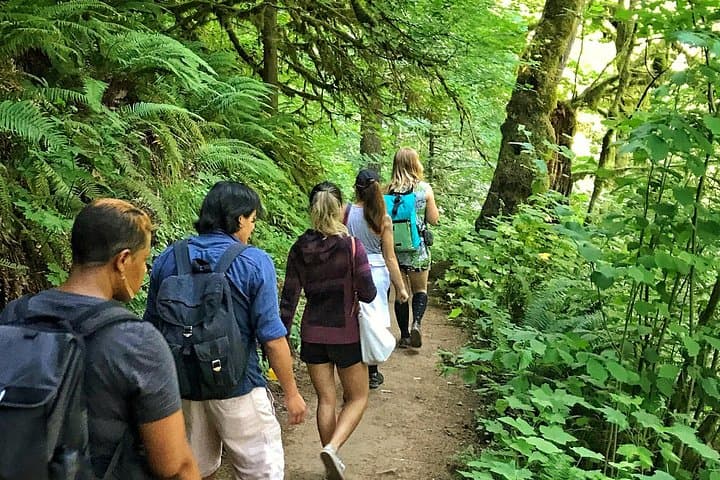
Lose the city for a few hours without leaving it: this 5-mile, 900-foot-gain Forest Park loop threads old-growth pockets, city viewpoints, and cultural landmarks for a compact taste of Portland’s wild side. Expect moss, roots, and stories.