
What the day feels like
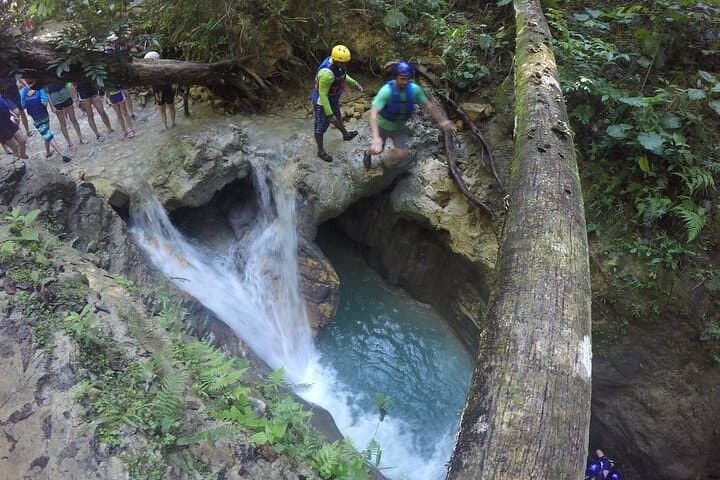
The river dares you first. It gurgles and gathers, narrowing into a ribbon of jade that threads through a canyon of volcanic rock and tropical brush. At the trailhead a guide tightens a harness and taps a safety helmet — not to frighten you but to mark a promise: whatever the falls throw at you, you’ll do it with a plan. That’s the rhythm of the 27 Waterfalls of Damajagua, a sequence of cascades and plunge pools about 30–40 minutes inland from Puerto Plata where the Caribbean’s warm damp breath meets steeper, older geology.
This is not a single waterfall to stand and photograph. It’s a stairway of water: jumps, natural slides, shallow swims and short scrambles that thread together in a 2–4 mile loop depending on which drops you take. Most commercial tours, including transfers from Puerto Plata and return, run between 3–5 hours door to door. In the gorge you’ll descend or ascend a few hundred feet overall; the trail is narrow, and the creek is both your path and your obstacle — which means wet shoes are a guarantee and a grin is optional.
Geologically, the canyon is a modest showpiece of Dominican topography. Rivers have cut through basalt and sedimentary seams, leaving ledges and deep, smooth pools where water has scoured the rock into natural chutes. The falls are a product of time and turbulence; each drop has its own personality. Some are gentle slides that seduce with a slippery satin of stone. Others have hidden depth, pools you can leap into from platforms three to seven meters high. Guides will point out how different falls were used by earlier generations: freshwater for washing, refuge during storms, and now a tourism lifeline for nearby villages.
The culture around Damajagua is as important as the geology. Local guides—often born and raised in the Puerto Plata province—run most operations. Their knowledge keeps the route safe: they choose jump lines, rig ropes where needed, and ferry tired hikers back up steep sections. Many tours, including private transfers like Hugo’s Private Taxi Service, combine a short scenic drive through plantation country with the canyon entrance; they’ll also handle your park fee and helmets. The economy here is intimate and immediate: your guide’s tip, the driver’s handshake, the bottled water you buy at the parking lot — it all filters back into the small towns that support the visitor trade.
Practicalities shape the joy of the experience. Expect slippery rock that tests your balance more than your lungs. Plan for repeated wetting; bring a dry bag for your phone and a spare pair of socks. The route is not technical climbing, but it is technical movement — think canyoning rather than a casual waterfall picnic. Most tours require a short safety briefing and basic harnessing for higher jumps. If you have a history of joint issues or freefall anxiety, there are dozens of lower-impact pools and slides that deliver the rush without the airtime.
Timing is part of the strategy. Visit in the dry season (roughly December to April) for lower flows, easier footing, and clearer water. Rainy months bulk the river; that can ramp up the adrenaline but also the risk and discomfort. Go early in the day to avoid crowds — groups can queue at the most popular jumps — and to catch the canyon in the cool, slanted light that makes the pools glow.
The payoff is granular and cumulative. You’ll remember the first cautious step into a cold pool, the surprised squeal of a friend when a slide spits you into a deep basin, the guide’s casual nod before a 4-meter jump, and the broad, wet smile you wear when you’re finally back at the trailhead. There’s a communal quality to the route: strangers become partners in a sequence of small challenges, cheering each ramp and helping one another out of the water. It’s accessible enough for most fit travelers, but deliberate enough to leave a mark.
For travelers who want to extend the day, Puerto Plata is a short drive away with sandy boardwalks, seafood shacks, and bars slinging local rum. Or pair the waterfalls with a longer inland route through coffee farms and mountain vistas. If you’re booking from a cruise ship, shore excursions that package transport, entry fees, and a guide are the most straightforward option — they remove the logistics and leave you the work of breathing and moving through the gorge.
The 27 Waterfalls offers a clean equation: little technical gear, a good guide, and a willingness to get wet yields an afternoon of tactile, joyous adventure. The river will keep daring you — but it also rewards careful curiosity with cool pools, carved stone, and that rare travel sensation of learning how far you can safely leap.
Trail wisdom
Small choices, better day.
Wear grippy water shoes
Sturdy, closed-toe water shoes with a sticky rubber sole make the rocky creekbed far less treacherous.
Bring a dry bag
Protect your phone, extra clothes, and documents in a waterproof bag—expect repeated submersions.
Listen to your guide
Guides choose safe jump lines and help with tricky scrambles; follow instructions and don’t improvise jumps.
Hydrate and pace yourself
Bring at least 1 liter of water per person—moving through humid canyon air is deceptively tiring.
Local knowledge
Read the place, not just the route.
Watch for native species including Kingfishers hunting the shallows, Green iguanas basking on sun-warmed rock.
Keep an eye out for wildlife during the transition between areas and habitats. Respect distance guidelines.
The area relies on responsible tourism: stay on marked paths, avoid sunscreen and oils in the water, and support local guides who help steward the canyon.
Follow the guide's instructions on size limits, ethical handling, and leave-no-trace practices.
Quiet upstream pools near the 20–27 cluster that require a short scramble and offer solitude. A roadside café near the parking area serving local fried fish and fresh coconut water
Locally recommended viewpoints and quiet spots known best to local operators.
Local guides often point out how Taino and early colonial communities used freshwater springs; in recent decades the falls became a key tourism site supporting nearby towns.
Maritime roots and regional tradition shape the waterways and working coasts.
Seasonal guide
Four versions of the same landscape.
Spring
Best forLower crowds · Mild river flow · Clear light for photos
ChallengesOccasional showers · Variable trail slipperiness
Spring (March–May) balances fewer tourists and good water levels; expect warm days and the odd brief shower.
Summer
Best forLush vegetation · Big water flow for slides · Vibrant jungle colors
ChallengesHeavier rains · Stronger currents making some jumps unsafe
Summer brings fuller falls and greener jungle, but higher flows can alter route safety—go with an experienced guide.
Fall
Best forWarm water · Off-peak visitation · Good visibility between storms
ChallengesTropical storms possible · Trail runoff increases slipperiness
Fall can offer warm water and fewer crowds, but monitor local weather for passing tropical systems.
Winter
Best forDry-season stability · Easier footing · Sunny skies
ChallengesHigher tourist numbers · Slightly cooler mornings
Winter (Dec–Feb) is the dry season—ideal for safer, clearer canyoning and predictable conditions.
Operator details
What the booking data adds.
Included
- ✓Private air-conditioned transportation from Amber Cove or Taino Bay terminals.
- ✓Full access to Damajagua Falls & Ziplines (including all entry fees).
- ✓Refreshments (Bottled water and Soda/Pop).
- ✓Round-trip transportation from Amber Cove or Taino Bay cruise terminals
- ✓All safety equipment: Helmet, life jacket, and professional adventure gear.
- ✓Traditional Dominican Buffet Lunch with local flavors.
Not included
- —Gratuities (optional but appreciated).
- —Professional photos and videos (available for purchase).
- —Alcoholic drinks (available at the restaurant for an extra cost).
Good to know
- ✓Not recommended for travelers with spinal injuries
- ✓Not recommended for pregnant travelers
- ✓Not recommended for travelers with poor cardiovascular health
- ✓Travelers should have at least a moderate level of physical fitness
Pack with intention
What to bring.
Good to know
Common questions.
No specialized climbing experience is required; most operators guide you through safe routes for varying comfort levels, but you should be comfortable with basic scrambling and swimming.
Plan the edges
The details that make the day easier.
The 27 Waterfalls of Damajagua is a sequence of natural cascades formed along the Damajagua River and popularized as a multi-drop canyoning route near Puerto Plata.
After the canyon, head back to Puerto Plata’s Malecón for shrimp fritters and cold local beer, or stop at a roadside colmado for sweet mango and Dominican coffee; try a rum flight or fresh ceviche near the waterfront.
- Closest airport
- Gregorio Luperón International Airport (POP) in Puerto Plata
- Trailhead
- ~30–40 minute drive from Puerto Plata city
- Driving distance
- ~25–35 km depending on route
- Cell service
- patchy in the canyon, reliable near town
- Permits
- entrance fee and guided access typically required and often included in tours.
This canyon depends on local stewardship—pack out all trash, avoid single-use plastics, and choose locally owned operators who employ trained guides.
Explore by topic
Follow the threads.
Keep exploring
Make the story part of the trip.
Set out from Bass Harbor for a private, customizable day on Blue Hill Bay — lighthouses, puffins, seals, and the chance to feel Acadia from the water. Small groups, local captains, unforgettable views.
In four hours you can move from shaded canyon ferns to wind-scoured coastal ridgelines, guided by someone who knows where the light—and the hidden views—live. This private half-day hike on the Monterey Peninsula or Big Sur is compact, curated, and perfect for travelers who want depth without a multiday commitment.
 Related story
Beneath a sky of shifting light, Skaftafell’s ice reads like a map of time. This three-hour guided glacier hike mixes technical instruction with geology and culture: compact, safe, and unforgettable.