
What the day feels like
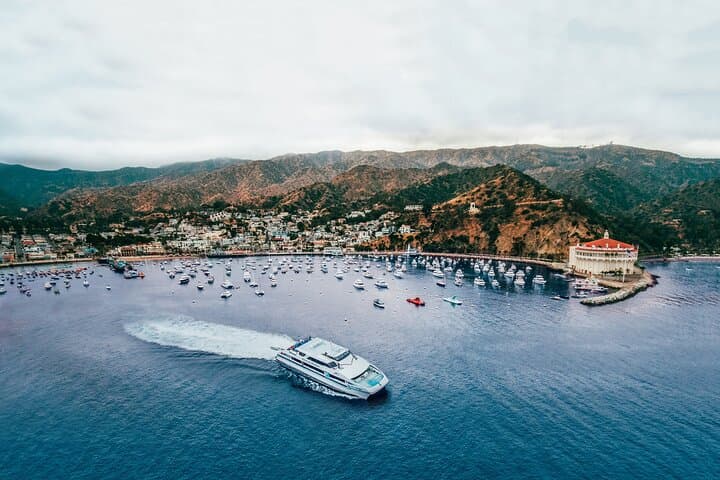
The ferry slips away from Avalon like a patient animal, engines humming low and hull parting a mirror of late-afternoon sun. Houses on the hill shrink into postcard shapes and Catalina’s inland hills—burnt gold in summer, green in spring—seem to watch you go. On deck, gulls wheel and call; the Channel’s salt-and-citrus air finds the small gaps in your jacket and insists you pay attention. For an hour, the Pacific frames the trip: oil rigs and container cranes on the horizon, a coastline that keeps a secret of suburban sprawl until it reveals itself in a flash of harbor cranes and San Pedro’s sturdy piers.
This is not just a transfer. The Catalina Express one-way run from Avalon to San Pedro is a transition between two moods: island slow and mainland motion. The ferry offers a unique hour to take stock—of water you’ve spent your day on, of a coastline you’re about to re-enter, of what it feels like to be on an outpost of California that still holds its own distinct culture.
Santa Catalina Island’s human story begins long before yachts and weekenders. The Tongva (Gabrielino) people inhabited the island for millennia, travelling between islands and mainland by plank and canoe. In the 20th century, the island was remade by entrepreneurs and showmen—most famously William Wrigley Jr., who developed Avalon and commissioned the 1929 Catalina Casino, a circular, art-deco icon that still presides over the harbor. Geologically, Catalina is a chunk of uplifted and eroded island arc rock—layers of ancient seafloor and volcanic material folded and faulted into the steep ridges that rise sharp from the water. From the ferry, those ridgelines have a tectonic bluntness that reads differently than the rolling mainland hills.
Culture on Catalina is concentrated and particular. Avalon’s streets are short on cars and long on walkers; there is a fisherman’s cadence to mornings, a family-friendly hum in the afternoons, and a quiet that falls early compared to Los Angeles. The Conservancy’s reach—protecting roughly 88% of the island—is visible in the intentional patches of scrub and habitat left to regenerate. Even as tourist services and souvenir shops line Avalon’s waterfront, there’s a palpable effort to preserve what makes the island feel like an island.
Practicalities live inside this venal joy. The voyage is scheduled at 60 minutes, a tidy hour that feels longer if the sea is glassy and shorter if you’re watching porpoises, which often follow in the wake. Tickets start at about $47 one-way; note that this listing is a one-way fare—book the return separately. Snacks and light refreshments are sold onboard, but if you’re on a schedule (and most travelers are), plan a bite before boarding if you have a tight itinerary.
Timing is everything. The sea greets the morning with calm and the late afternoon with wind; if you’re prone to motion sickness, the calmer mid-morning sailings are kinder. San Pedro drops you into the port side of Los Angeles County—convenient for onward drives to downtown LA, the South Bay, or the freeways to the north. Bring layers: the wind on deck will cut through a hoodie when Avalon feels warm.
For photographers, the ferry is a linear photo walk. Shoot the casino and harbor as you depart for classic island-framing; turn the lens to starboard mid-crossing for Catalina’s escarpments and to port for glimpses of Palos Verdes and the Palos Verdes Peninsula. The light changes fast—early morning and late afternoon are richest—but the open sky gives you a kind of even, forgiving illumination much of the day.
Few trips are purely practical or purely poetic, and that blend makes the Catalina Express journey appealing: it gets you from island to mainland efficiently while serving a mini-salon in the round—land, sea, and a brief community of travelers exchanging stories. For families, it’s an easy, comfortable ride with restrooms, snacks, and a flat, stable motion. For the solo traveler, it’s a window into Southern California’s maritime geography; for the day-tripper, it’s the last exhale before the urban hum.
Book in advance during summer and holiday weekends when Avalon crowds swell; the ferry still runs in all seasons but with altered rhythms. If you plan to stay in Avalon overnight, remember the island’s supply chain leans seasonal—book restaurants and accommodations early. And when you leave, treat the ferry not as a necessity but as the sensible encore it is: an hour to look back, to count gulls, to feel the lift of homecoming as San Pedro’s piers come into view.
Practical snapshot: one hour at sea, regular departures, light refreshments onboard, wheelchair-accessible vessels on many sailings, and an easy transfer to Los Angeles county roads on arrival. Expect decent cell reception near land but spotty service mid-channel. The ride is short enough that you can plan your day with confidence: a morning hike or zip line in the island interior, lunch in town, and a late-afternoon ferry back to the mainland.
This is a small, tidy taste of island travel—nothing extravagant but everything true to place. If you go, leave time for a last coffee on the deck and squint at the serrated back of Catalina as it recedes, because the memory is exactly what this ferry delivers: an hour of ocean between two lives, a clean seam between island slow and city fast.
Trail wisdom
Small choices, better day.
Arrive Early
Boarding opens 30–45 minutes before departure—get a good seat and time to stow luggage.
Dress in Layers
Ocean wind can be sharp even on warm days—pack a windbreaker or fleece.
Motion-Sickness Prep
If you’re susceptible, take medication or ginger an hour before sailing; choose morning sailings for calmer seas.
Book Return Separately
This listing is one-way—reserve your return leg early, especially on summer weekends.
Local knowledge
Read the place, not just the route.
Watch for native species including California sea lion, Dolphin (common dolphin or Pacific white-sided dolphin).
Keep an eye out for wildlife during the transition between areas and habitats. Respect distance guidelines.
The Catalina Island Conservancy protects most of the island’s interior—stick to trails, keep dogs leashed where allowed, and pack out all trash to support fragile habitats.
Follow the guide's instructions on size limits, ethical handling, and leave-no-trace practices.
Wrigley Memorial & Botanic Garden – quieter than the harbor and great for native plants. Descanso Beach Club – a small, less-crowded beach spot on Avalon with kayaks and lounges
Locally recommended viewpoints and quiet spots known best to local operators.
Avalon grew rapidly under 20th-century development by William Wrigley Jr.; the iconic Catalina Casino (1929) still anchors the waterfront.
Maritime roots and regional tradition shape the waterways and working coasts.
Seasonal guide
Four versions of the same landscape.
Spring
Best forWildflower viewing on island trails · Milder seas and fewer crowds
ChallengesOccasional spring winds · Cooler mornings
Spring offers green hills and comfortable temperatures, though winds can pick up—pack a light jacket.
Summer
Best forBeach time and water sports · Extended daylight for exploration
ChallengesPeak crowds and higher fares · Limited restaurant and accommodation availability
Summer is busiest and warmest—book tickets and lodging well in advance and expect crowded sailings.
Fall
Best forCalmer seas and clearer views · Milder temperatures and fewer visitors
ChallengesShorter business hours on-island after Labor Day · Occasional fog early morning
Fall is ideal for quieter travel and pleasant sea conditions—September is especially favorable.
Winter
Best forBudget travel and solitude · Storm-watching on dramatic days
ChallengesChoppier seas during storms · Some island services reduce hours
Winter trips can be atmospheric but bring rainproof layers and check schedules for cancellations.
Operator details
What the booking data adds.
Included
- ✓ONE-WAY RETURN ferry service from Avalon to San Pedro
- ✓Public transportation
- ✓Restroom on board
Not included
- —DEPARTURE TICKET from Avalon to San Pedro
- —Parking. Subject to change
- —Hotel pickup and drop-off
- —Food and drinks (onboard snack bar available to purchase)
Good to know
- ✓Infants and small children can ride in a pram or stroller
- ✓Service animals allowed
- ✓Public transportation options are available nearby
- ✓Suitable for all physical fitness levels
- ✓Infants will be provided their own seat and safety seats are not required.
Pack with intention
What to bring.
Good to know
Common questions.
The crossing is scheduled for about 60 minutes one-way; time can vary slightly with weather and harbor conditions.
Plan the edges
The details that make the day easier.
The Catalina Island Conservancy protects roughly 88% of Santa Catalina Island, preserving its native habitats and wildlife.
In Avalon, grab fresh fish tacos or a cold beer at a harbor-side restaurant; on arrival in San Pedro, try the waterfront’s casual seafood spots or wander 22nd Street for taquerias and craft breweries—both sides of the ride reward low-key, local food and relaxed bars.
- Closest major airport
- LAX (45–60 minutes by car); Departure: Avalon Harbor; Arrival: Port of San Pedro; Typical drive from downtown LA to San Pedro: ~25 miles; Cell service: good near shore, spotty mid-channel; Permits: none required for ferry travel—book return separately.
Support the Catalina Island Conservancy by staying on designated trails, packing out waste, and selecting local businesses that follow sustainable practices; avoid feeding wildlife and respect marine protected areas.
Explore by topic
Follow the threads.
Keep exploring
Make the story part of the trip.
 Related story
Less than two hours from Nairobi, Kereita Forest pairs hands-on canopy adventure with quiet montane trails and a sobering colonial history—perfect for families, teams, and curious travelers seeking a full-day pulse of nature.
Set out from Bass Harbor for a private, customizable day on Blue Hill Bay — lighthouses, puffins, seals, and the chance to feel Acadia from the water. Small groups, local captains, unforgettable views.
In four hours you can move from shaded canyon ferns to wind-scoured coastal ridgelines, guided by someone who knows where the light—and the hidden views—live. This private half-day hike on the Monterey Peninsula or Big Sur is compact, curated, and perfect for travelers who want depth without a multiday commitment.